
| Nr | Name | Beschreibung |
|---|---|---|
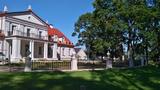 |
Der Park des Gutes Ilzenbergas, so wie er heute besteht, geht auf eine Anlage der zweiten Hälfte des 19. Jahrhunderts zurück. Die Struktur wird durch das deutliche Relief zwischen den Seen Ilgis und Apvalasas geprägt. Bei der Rekonstruktion wurde Wert darauf gelegt, die räumliche Gliederung unverändert zu belassen. Der Park umfasst ein Territorium von 10 ha und besteht aus zwei Teilen. Zum einen das annähernd rechteckige Gelände am Herrenhaus, eingerahmt von einer Reihe Winterlinden und mit Grünanlagen aus einheimischen und fremdländischen Gehölzen. Zum anderen aus naturnahem, waldartigen Grünanlagen. Die größte in diesem Park wachsende Eiche wurde als staatlich geschütztes Naturerbe eingetragen. Dieser mächtige Baum hat einen Stammumfang von 6,3 m, einen Durchmesser von 2 m und eine Höhe von 30,5 m. |
|
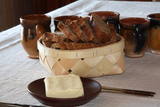 |
Dieser Hof ist ein authentischer Hof aus dem Anfang des 20. Jhs. mit einem Wohnhaus, einer Kornkammer, einem Stall, einer Sauna und einer Schmiede. Hier kann man den Vorführungen einer Folkloregemeinschaft zuschauen, die Sommersonnenwende feiern, an Jahrmärkten des Tages von Mikelis (Herbstsonnenwende) teilnehmen und verschiedene Gewerbe erlernen. Lettische Küche: Klöße, Graupen mit verschiedenen Zutaten, selbstgebackenes Brot, Butter, Käse, Kräutertees und das lettgallische Hausbranntwein Šmakovka. Das besondere Gericht: Brot von Andrupene. |
|
 |
Atrodas Cēsu rietumdaļā – pie ceļa, kas ved uz Cīrulīšiem. Piedāvājumā – plašs ēdienu klāsts no brokastīm līdz vakariņām. |
|
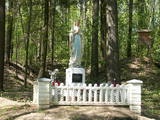 |
The castle hill of Milka is situated near Lake Sālaja and River Malta; 27m above the lake level. Local
businessman cleaned the hill and placed the statue of Mother of God there. It is a a symbol of Latgalian
strong faith into God and Virgin Mary.
|
|
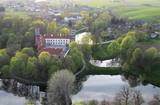 |
Gebaut in 1610, später umgebaut. Eins der hervorragenden Gebäuden Litauens der Renaissance. Eine Ausstellung der Kunstakademie Vilnius. Ein Aussichtsturm. |
|
 |
Skaisto un mūsdienās atjaunoto zilā krāsojuma ēku Karaīmu ielas 5 malā sākotnēji (1810. g.) cēla Dominikāņu mūki. Kopš 1864. g. tajā 23 gadus saimniekoja policija, līdz 1887. g. te izvietoja pastu un telegrāfu. Šobrīd ēkā atrodas nacionālā parka administrācija. |
|
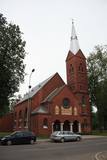 |
Das Gotteshaus war von 1932 – 1938 an der Stelle einer alten Holzkirche nach einem Projekt von J. Cīruļis erbaut worden. Bis 1994 befand sich hier ein Filmverleih. Heute kann man in der Kirche eine Fotoausstellung über den Bau der Kirche besichtigen – „Vom Fundament bis zur Turmspitze, alte lettische Kirchenbauämter in Fotografien. Vom 37m hohen Glockenturm aus hat man einen Blick über die Stadt . |
|
 5 Tagen
|
This route passed along many places where events directly related to the emergence of the Latvian state and to the subsequent freedom battles occurred. The historical route from Rīga to Liepāja via Dobele, Saldus, Skrunda, Durbe and Grobiņa was used as long ago as the 13th century. People in the Kurzeme region of Latvia have always eat sea, river and lake fish, particularly smoked fish. Potted smoked cod, served in a clay pot, is a particular delicacy, as are smelts, sea pike, sprats, herring and salmon, available all year long. Ladies of the house bake tasty rye bread, sourdough bread and tasty carrot buns, and they also cook various porridges from barley. Dairy products, Summer Solstice cheese and “white butter” has an important role. Fresh goat milk cheese is prepared with dills and garlic, and goat milk cheese is also tasty. Menus will include local domestic fowl and meat dishes, including roasts, ribs, sausages, as well as more exotic dishes such as pig’s tongue and bull testicles. Fancy taverns will offer pheasant and wild game with mushrooms, lingonberries, juniper berries and wild herbs. In Kurzeme you will be greeted with delicious pies, sheet cakes, poppy seed pastries and honey cakes, biscuits with poppies and cranberries, dessert from rye bread, lingonberries or cranberries and sweet cream.Blackberry dumplings are popular. More unusual are marmalades made from wild plants such as mountain ash, cranberries and even fir needles. Slake your thirst with aromatic herbal teas with honey and enjoy a mug of beer or some homemade wine. |
|
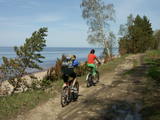 |
Das größte NATURA 2000 Territorium in Lettland bedeckt 6% der Landesfläche. Es befindet sich in den Regionen von Limbaži, Valmiera und Valka und ist ein Gebiet mit einer großen Vielfalt an Landschaften, Biotopen und Arten. Der Fluß Salaca ist einer der wichtigsten Flüsse in der gesamten Ostseeregion hinsichtlich der Laichplätze für Lachs. Das Flußtal und seine Sandsteinfelsen ziehen viele Besucher an. Es ist kein Zufall, daß der Salaca der zweitbeliebteste Fluß für Wassertourismus in Vidzeme ist. Die Küste der Bucht von Riga, die nicht sehr lang ist, weist auch eine große Vielfalt an Landschaften und Biotopen auf. Am nördlichen Ende finden wir die Randu Auen. Im zentralen Teil befinden sich Sandstrände, aber am südlichen Ende – 22 km felsige Küste. Die sogenannten Nördlichen Moore befinden sich an der Grenze zu Estland, während die Seda - Heide einer der wichtigsten Plätze in der Region zum Rasten und zur Futteraufnahme für Vögel während des Vogelzugs ist. Das Reservat weist auch einen mannigfaltigen Wald auf, in dem man alle Waldtypen, die in Lettland verbreitet sind, findet. Naturpfade und Aussichtstürme oder – plattformen findet man in den Randu Auen, am Ufer des Sees Burtnieks, entlang den Planči- und Niedrāji-Pilka- Mooren, an den Ufern der Seen Dziļezers und Lielezers und anderswo. Der Skaņākalns Park in Mazsalaca ist einer der beliebtesten touristischen Ziele in Nordvidzeme. Das Gebiet hat viele wichtige Kulturdenkmäler aufzuweisen, einschließlich eine der ältesten bekannten Ansiedlungen Lettlands – eine Fischersiedlung und ein Gräberfeld, die auf die Zeit zwischen dem 5. und 2. Jahrtausend v.Chr. rückdatiert werden.
|
|
 |
Das Café befindet sich im Zentrum von Tukums. Lettische Küche: Gekochte Zunge, Zungensalat, hausgemachter gemischter Salat Rasols, Kabeljauleber-Salat, Suppen (Suppe mit Fleischbällchen, Bohnensuppe, Ampfersuppe), geschmorte Pilze, hausgemachte Frikadellen, dünne Pfannkuchen, knusprige Haferflocken, Erdbeersuppe. |
|
 |
Leuchtturm von Tahkuna befindet sich an der Nordspitze von Hiiumaa. Der eiserne Turm wurde aus Frankreich gekauft und im Jahr 1875 in Tahkuna errichtet. Es ist der höchste Leuchtturm an der Küste von Estland – 42,7 m über Meeresspiegel. |
|
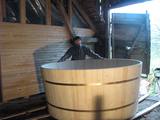 |
The craftsman represents the fifth generation of the oldest dynasty of Latvian barrel makers. The family began such work in the early 19th century, and he is continuing on with traditions related to barrels that are made of oak and ash. He will talk about the various aspects of making a barrel, and you will be able to watch him at work. The craftsman produces barrels, wooden tubs, scoops for saunas, etc. You can order and purchase these items. |
|
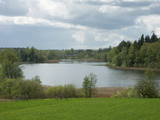 |
This restricted area protects the eutrophic Lake Istra and the biotopes that are alongside it – various kinds of forests and meadows. This is a particularly lovely part of the Latgale region. Interestingly, the so-called system of “rope farms” can still be seen in the nature park.
|
|
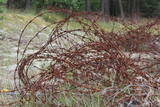 |
The former air defence missile base took up a large territory to the South of Pāvilosta in its day, but today that land has been abandoned and degraded. It can be dangerous for visitors.
|
|
 |
The café is in the centre of Balvi on the side of Brīvības Street (in the direction of Viļaka). It offers homemade dishes and is a popular dining venue. |
|
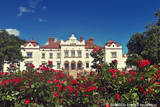 |
This is one of the most important cultural centres in Augštaitija, and the nobility of the buildings is emphasised by a park and ponds. |
|
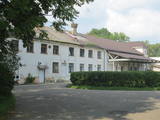 |
The first Mālpils dairy began operations in 1923 and manufactured butter and cheese. During the 1970s, the first soft and unfermented cheese in Latvia, “Mālpils Cheese” was produced here. Apply in advance for a tour of the company and a tasting of its products. You can purchase the products from the company’s warehouse. |
|
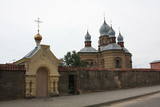 |
The Orthodox Church and Cloister of the Holy Spirit and the Orthodox Church of St Nicholas the Miracle Maker are found at Brīvības Street 200 in Jēkabpils. The Byzantine Church of the Holy Spirit was built between 1853 and 1886 to replace a wooden church which had been built in the latter half of the 17th century and burned down in 1773. Duke Jacob of the Duchy of Courland supplied the timber for the old church. The cloister was alongside the church. On Second Easter in 1903, the church caught on fire, and the only icon rescued was a painting of the Virgin Mary. The church suffered damage during World War I and was restored in 1933. Alongside the Church of the Holy Spirit is the oldest church in Jēkabpils – the oldest stone church in the city, which is named after St Nicholas the Miracle Maker and was erected in 1774. This is a very small church, just 17 x 19.5 m. The cloister of the Church of the Holy Spirit operates the church today, and it can be viewed from the inside. The stone fence that surrounds the complex is massive, but atypical of urban environments in Latvia.
|
|
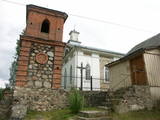 |
Daugavpils – Krāslavas (A 6) ceļa malā redzamais dievnams uzcelts ar Plāteru dzimtas pārstāvju – Vaclava un Kazimira Plātera atbalstu 1811. gadā. Dievnamu ieskauj metālkaluma un no ķieģeļiem mūrēts žogs, kā arī divi zvanu torņi. Labās puses zvanu tornī karājas vecs zvans. No baznīcas iekārtas ir jāpiemin galvenais altāris, ko rotā Dievmātes skulptūra, trīs biktskrēsli, četras evaņģēlistu sienas freskas un Lurdas Dievmātes glezna. Ikdienā apskatāma no ārpuses. |
|
 |
This farm offers apple, pear, cherry and plum trees, black currants, red currents, gooseberries, raspberries, quince, chokeberries and sweet mountain-ash. The owners will teach you about establishing fruit orchards and growing fruit trees. Candies made at the farm are for sale. |
|


