
| Nr | Name | Beschreibung |
|---|---|---|
 |
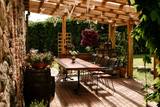
Traditionelles estnisches Essen aus den Produkten von Bio-Bauernhöfen Saare Ubin und Vatsliku. |
|
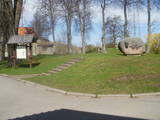 |
Hier befindet sich ein Gedenkstein für K. Valdemārs, der von den Verdiensten von K. Valdemārs für den Werdegang und die Entwicklung der Republik Lettland zeugt. An dieser Stelle befand sich einst die Seefahrtschule von Roja bzw. Lubezere und neben der Schule – ein Lehrerhaus, das bis heutzutage erhalten ist. Jetzt sind hier die Privatpraxen der Familienärzte von Roja. Die Seefahrtschule existierte vom Jahr 1873 bis zum Jahr 1915, aber während des Ersten Weltkriegs vernichtet wurde. Die Seefahrtschule bereitete die Steuermänner der Küstenschifffahrt vor. Hier konnte man kostenlos und auf Lettisch lernen. Lettische Seeleute waren in Russland und im Ausland sogar auf dem amerikanischen Kontinent bekannt. Sie wurden wegen der Sachkenntnis, Ehrsamkeit und Ergebenheit geehrt. (Die Quelle: Roja TIZ) |
|
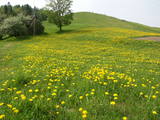 |
This is a view worth a journey from a distance. This is an impressive terrain for Latvia, and here you will see as far as the Hanja highlands of Estonia, where the Great Munameģis Hill – the highest surface in the Baltic States – can be found.
|
|
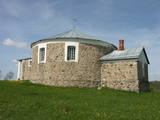 |
This chapel is interesting in form and made of field stones. It was built in the 19th century and is not open to the public. |
|
 |
Dieser Ort befindet sich am südlichen Ufer des zweitgrößten Sees in Lettland und bietet eine schöne Aussicht auf diesen See. Hier werden lettgallische Gerichte aus lokalen und aus selbstgezüchteten Produkten vorbereitet. Lettische Küche: Gefüllte Kartoffelpfannkuchen Gulbešnīki und Klöße mit Sauerrahmsoße. |
|
 |
Lauku sēta ar pirti atrodas Merkys upes krastā, ciema nomalē meža tuvumā. Piedāvā programmu "Griķu ceļš no sēklas līdz galdam", iespējams nobaudīt tradicionālos ēdienus. Piedāvā arī nakšņošanu. |
|
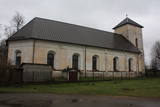 |
Atrodas Grobiņas centrā, Dzērves laukuma malā. Pirmā baznīca Grobiņa bija celta jau ap 1560. g., bet nākamā – 1596. g. celtā iznīcināta 1659. g. zviedru iebrukuma laikā. Pēc Kurzemes un Zemgales hercoga Jēkaba Ketlera iniciatīvas 1664. g. tiek uzcelts jauns dievnams, ko atjauno 1892. gadā. Tas dedzis 2. pasaules kara laikā, bet vēlāk atkal atjaunots. Šobrīd notiek altāra restaurācijas darbi. |
|
 |
Der Hof bietet seinen Gästen Führungen durch die Brauerei des Gutes Butautai, Fahrradtouren, Spaß im Wasser und Angeln im Fluss Levuo sowie Gerichte mit Hopfen. |
|
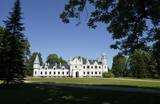 |
Das Schloss Alatskivi zeigt eine Exposition in drei Stockwerken, die über das Leben und Geschichte einer Familie im Gutshof erzählt. Lassen sie sich von den Schlossguides durch die Legenden und Geschichten führen, basteln sie sich selbst ein persönliches Souvenir. Das märchenhafte Schloss im östlichen Teil von Estland erwartet sie! |
|
 |
Es befindet sich am Ufer des Usma-Sees und bietet eine Vielzahl von Freizeitaktivitäten auf dem Wasser und auf dem Land, kostenlose Lagerfeuerplätze, Kamin im Freien und Catering-Service an. |
|
 |
The “Lamb Club” is a farm in Mazsalaca, and it is special because the sheep live in a real club! The owners offer the atmosphere of a farm at which the sheep play major roles. Enjoy mutton and sheep milk foods and beverages, feel how comfortable it is to read your favourite while sitting on a fluffy sheepskin, and, in order not to get cold by the campfire in the evening, you can purchase warm woollen socks and woven woollen cloaks. The owners hope that people from Latvia and all around the world will spend more time at the farm, because accommodations involve a new glamping tent that is as close as possible to nature and the healthy rural environment. Don’t lose a lick of the comfort that you are used to in your everyday life! The owners, Ilze and Valters, will be happy to give you a tour during which they talk about herding sheep. If you contact them in advance, they will prepare a tasty mutton meal for you. The tour can also be supplemented with various activities such as games, quizzes and creative workshops at which sheep wool is utilised. |
|
 3 Tagen
|
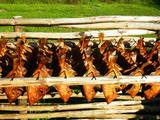
The Liv Coastline involves a series of shoreline villages from Ovīši to Ģipka along the shores of the Baltic Sea and the Bay of Rīga. Like Latvians, Livs are an indigenous population in Latvia, with ancestors who lived here at least 5,000 years ago. They populated extensive parts of Kurzeme and Vidzeme, and the area in which they lived the longest was Northern Kurzeme, on the shores of the Baltic Sea. Today visitors to the Liv Coastline mill meet real Liv fishermen, feel the aroma of smoked fish, enjoy traditional dishes, look at diverse ancient fences, learn about the reticent charm of the local landscape, enjoy the place where two seas, birds and people meet at Cape Kolka, hear the Liv dialect of the Latvian language, see rounded hillocks and swampy areas, visit the Šlītere lighthouse, and see the green-white-blue Liv flag, red bilberries, bird migration routes and blue cows. The oldest evidence of the life of Livs can be found in the Liv centres. The Liv language and culture are still alive in place names, handicrafts, folk costumes, and the world view and lifestyle of people who live in the area. The Liv language and cultural values are part of Latvia's national cultural heritage, and traditional Liv culture is part of the Latvian Canon of Culture. |
|
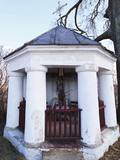 |
The Crucifix of Kurpinīki is known also as the place where Janis Streičs
shot some scenes of the movie „The Child of a Man”. Long time ago this crucifix
was situated in the courtyard of writer’s grandfather Donat Klidzejs in the USA.
|
|
 |
The craftsman produces bespoke and elegant interior design objects such as wooden furniture (closets, beds), stairs and other useful items. He will be happy to share his knowledge and experience. Among other things, Andris Prikulis has built several wooden altars for churches. |
|
 |
Alūksnes novada saimniecībā "Pauguri" kokamatnieks Jānis Vīksne izgatavo koka virpojumus - cibiņas, pulksteņus, pildspalvas, spēles, šūpoles un citas saimniecībā noderīgas lietas. Iespējams iegādāties kokamatniecības suvenīrus - dekoratīvus un praktiskus virpojumus no koka. Senlietu muzeja apskate - seni galdniecības darba galdi, ēveles, āmuri, sirpji, grābekļi, sējmašīna, pulksteņi, trauki u.c. Saimniecībā ir izveidota skatu platforma, no kuras paveras skats uz Hānjas augstienes ainavām Igaunijā, kā arī atpūtas vieta vasaras piknikam ar galdu, uguskura vietu un skulptūrām. |
|
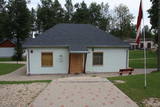 |
Das Museum ist noch ein Ort (in der A. Brodeles Straße 7), den die Reisenden besuchen müssen, die sich für die Kultur der historischen Region Sēlija interessieren. Das Museum ist im Jahr 2000 eingerichtet worden und ein bedeutender Teil der ständigen Ausstellung befindet sich in dem ehemaligen Gebäude des Schmalspurbahndepots (gebaut im Jahr 1948; die Bahn arbeitete von 1916 bis 1972), in dem die erneuerte Lokomotive, ein Personenwagen, eine Draisine u.a. Platz gefunden haben. In dem Museum kann man Ausstellungsgegenstände besichtigen, die das Leben der bekanntesten Einwohner, die Ereignisse und das Kulturerbe der Umgebung von Viesīte widerspiegeln, In dem Museum befindet sich eine Werkstatt für Holz- und Textilverarbeitung. An dem Museum haben sich ein kleiner Teil der Schmalspurbahnschienen und eine Wasserpumpe erhalten. |
|
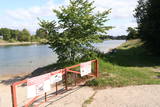 |
Der Kanal der Karaosta und die in diesem Objekt gelegene Station der Seeflote und U-Boot Station wurden auf Befehl der Zar Rußlands vor dem ersten Weltkrieg ausgegraben. Heutzutage ist der Hafen der Unterseeboote ein geschlossenes Territorium und er wird zum wirtschaftlichen Zweck genutzt. Der Kanal von Karaosta ist von der Seite der Pulvera Straße aus, als auch von der Seite der Klapaka Brücke aus zu sehen.
|
|
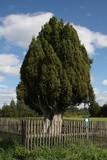 |
This is the thickest common juniper (Juniperus communis) in Latvia and the Baltic States. It stands in the middle of a field and looks wonderful. The tree is sometimes known as the Rieteklis juniper, because the Latvian poet Rieteklis (Jūlijs Eduars Balodis, 1856-1940) like to sit under it.
|
|
 |
Das Gebäude der Kneipe Viitna ist eine der ältesten gleichartigen Kneipen unter ihresgleichen in Estland. Im linken Flügel des Hauses gibt es zwei Herrenkammer und einen Pferdestall, heute befinden sich dort die Eßstube und ein Verkaufsstand für estnische Handarbeiten. Rechts, wo früher Volkskammer und Stall für die Pferde der Bauern war, ist heute die Kneipe, wo man unter anderem auch estnische Spezialitäten essen kann. |
|
 |
Located in one of the most untouched corners of northern Latgale. Already from the spring they offer worker bee and later both, young and producing bee, propolis and wax mixture candles, pollen bread and propolis in butter. The workshop produces bee hives and other apiary equipment. |
|


