
| Nr | Name | Beschreibung |
|---|---|---|
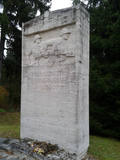 |
Befindet sich am Rande der Landstraße P 100 (unweit von der Landstraße A 8, Richtung Ozolnieki und Jelgava). Das Denkmal ist den Schützen des 6. Rigaer Infanterie-Regiments gewidmet, die am 17. November 1919 im Kampf gegen der Truppen der Bermondts Armee nahe der ehemaligen Schule Skujas gefallen und vermisst wurden. Das Denkmal (Autor – Nikolajs Voits, Autor des Flachreliefs – Mārtiņš Šmalcs, Berater – Kārlis Zāle) wurde am 24. Oktober 1937 eröffnet und 2009 erneuert. |
|
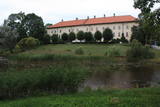 |
One of the largest castles in Kurzeme, this building has been preserved in fairly good shape. Work on its began in the mid-13th century, and it was commissioned by the heads of the Dome Cathedral in Rīga. In 1434, the estate was bought by the bishop of Kurzeme. The Maidel and Osten-Sacken dynasties owned it from the 16th to the 20th century. The Dundaga Castle burned down twice and has been rebuilt many times. The last reconstruction was in 1905, after the castle was burned down during the revolution. Of interest on both sides of the castle’s door are stone carvings of a knight and a bishop. In recent years, the hotel in the castle has been renovated, as has the second floor hallway and a terrace that is popular for weddings. There are many legends about the castle, including one about a wedding of elves and another about the Green Lady. Today the building houses the Dundaga School of Music and Art, a hotel, party rooms, the Dundaga Tourism Information Centre and various exhibitions. It is worth finding a guide to tour the castle. Groups of tourists can also order tastings of local foods. |
|
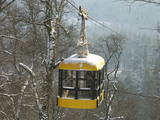 |
The aerial tram across the Gauja is the only vehicle of its type in the Baltic States. It was installed in 1969 with the help of engineers from Georgia. The crossing is 1060 m long, and the cable which crosses the river is just one cable without any supports. The tram rides about 40 metres above the river, and it offers an outstanding look at the local landscapes. During the evening, the tram is used by Bungee jumpers. |
|
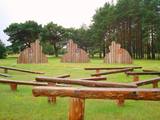 |
The environmental object “SUITI MEETING PLACE” was established during an international arts plénière in Jūrkalne, and the originator of the idea was the musician Igo. Sculptor Ivars Miķelsons with assistants Didzis Grodzs and Juris Krafts produced the environmental object. The idea of marking out the Suiti cultural space among Gudenieki, Alsunga and Jūrkalne in nature began in 2013, when the first Suiti meeting place was established where the Gudenieki-Ēdole and Alsunga-Basi roads cross. The second meeting place was established the next year where the Kuldīga-Alsunga-Jūrkalne road crosses the town in the direction of Jūrkalne past the Alsunga centre. The third Suiti meeting place was established in Jūrkalne. The objects were established in partnership with local governments and landowners by the “Vēju sēta” association. |
|
 |
Sēlijā, 5 km attālumā no Aknīstes, mājā "Skārdupītes" atrodas biedrība “Sēlijas laivas”. Kamēr teritorijā vēl tikai tiek attīstīta aktīvā tūrisma bāze, jau tagad viesiem tiek sniegts ieskats laivošanas kultūras attīstībā, kā arī ir iespējama dažādu laivu veidu noma un laivošanas tehnikas apmācība. Papildus: vides gida pakalpojumi ar iespēju laivojot iepazīt upes ekosistēmu, floru un faunu. |
|
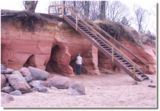 |
Ainavisks jūras viļņu izskalots smilšakmens atsegums
dienvidos no Zaķupes ietekas.
|
|
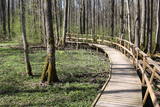 |
The excessively damp forests at this place include the Vēršupīte River bog, and this is one of the most diverse biotopes in Latvia in terms of the number of species that can be found here. The fact that the area is regularly flooded is shown by the fat roots of black alders – indeed, the place looks like a stand of mangroves. The wooden pathway that is the Dumbrāju trail starts at the Forest House for those who wish to examine the bog. The most impressive views are seen during spring floods or rainy seasons at other times of the year. The little river breaks out of its bed and floods a large territory. The Lake Sloka hiking trail is another place where you can study the Vēršupīte bog. The circular trail is 3 km long, and its beginning is at the Lake Sloka bird watching tower. |
|
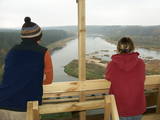 |
The viewing tower was built quite recently. At its foot is a location for relaxation. It offers a good view of one of the curves of the Daugava River – the Adamova curve. A bit beyond is the Curves of Daugava Nature Park. Along the tower is the “Saulkrasti Trail” bicycle route.
|
|
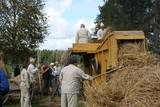 |
Im Hofmuseum Kurgja können Sie übers Leben und Werk der wichtigen estnischen Persönlichkeit des 19.Jahrhunderts Carl Robert Jakobson erfahren. Heute beschäftigt sich der Bauernhof sich auch mit Tieren. Hier sind Kühe, Schafe und Pferde, sowie restaurierte historische Gebäude wie Ställe, Lagergebäude, Tennen und eine Mühle besuchen. Bauernarbeit kann ausprobiert werden. Nationale Küche zum Geniessen gibt es auf Vorbestellung. |
|
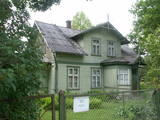 |
Das Museum von Miervaldis Ķemers (1902
– 1980) – das dem bekannten lettischen
Kulturaktivisten, Pfarrer und Maler gewidmete
Memorialmuseum auf der Durbes Straße 211
|
|
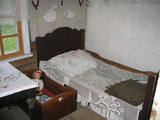 |
Der älteste Teil der jetzigen Wohnriege ist die Riegenstube mit dem Erdfussboden aus 19.Jh. Das Wohnzimmer mit Kammern wurde in der II. Hälfte des XIX. Jahrhunderts gebaut. |
|
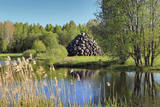 |
In den Steinen der Pyramide sind die Namen der örtlichen Häuser eingraviert. Eine 9 m hohe Anhäufung von großen Feldsteinen ist seiner Art ein Denkmal für Krišjāns Barons und seinen Erkenntnissen zum Besten des Volkes. Im Landgut von Valpene hat die Mutter von K. Barons und der künftige Sammler der lettischen "Dainas" (traditionelle lettische Volkslieder oder Gedichte) gelebt. In den Steinen der Pyramide sind die Namen der verschwundenen Häuser eingraviert. Die Richtung der Namen in der Pyramide zeigt einen Standort der ehemaligen Häuser. Der Ideenautor der Pyramide von Valpene war Imants Ziedonis, der Bildhauer – Vilnis Titāns. |
|
 |
Der Bauernhof befindet sich in der Nähe von Sangaste rukkiküla mitten in der unberührten Natur. Auf dem Bauernhof können Sie leckeres Essen kosten, Fisch angeln, saunieren sowie übernachten. Sowohl Liebhaber der aktiven Erholung als auch einfache Genießer werden geeignete Aktivitäten für sich finden. |
|
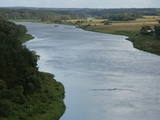 |
Eine schöne malerische Flussstrecke zwischen Alytus und Pakuoni, wo der Fluss mehrere breite Mäanderkrümmungen mit bis zu 40 m hohen Mörenenabdeckungen macht (Balbieriškio-Abdeckung u.a.). |
|
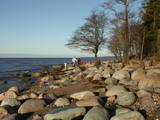 |
Neliels, bet ļoti ainavisks un ar lieliem laukakmeņiem klāts
zemesrags. No raga iztālēm redzamas Veczemju
klintis.
|
|


