
| Nr | Name | Beschreibung |
|---|---|---|
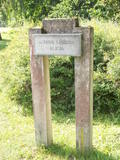 |
Das Alleezeichen im Park von Ķemeri von
Janis Lībietis. J. Lībietis war der Leiter der
Staatlichen Schwefelquellenbehörde von 1928
bis 1944.
|
|
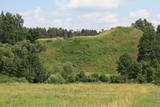 |
Das alte zemgalicshe wirtschaftspolitische Zentrum, das eine stark befestigte Siedlung vor der Ankunft der Kreuzritter war. Die Ruinen der Burg des Livländischen Ordens. |
|
 |
Dieses Schloss wurde von 1878 bis 1881 (Baumeister Jānis Meņģelis; deutsch ist Sigulda Segewold) gebaut. Der Inhaber war der Fürst Kropotkin. Im Jahr 1937 wurde der Schlossturm erhöht (Architekt Alfrēds Birkhāns). Von 1923 bis 1940 befand sich in dem Gebäude das sogenannte Schloss der Schriftsteller (die Wirtschaft hat hier damals die Lettische Pressegesellschaft geführt), aber während der Sowjetzeit – ein kardiologisches Sanatorium. Im Jahr 1993 zog in das Schloss die Stadtverwaltung von Sigulda ein, seit 2003 befindet sich hier die Kreisverwaltung von Sigulda. In dem Landgutkomplex haben sich ein Wohnhaus aus Holz (Mitte des 19. Jhs.), wo die Familie von Kropotkin wohnte, eine Kornkammer (Jahrhundertwende 18.-19. Jh.), ein Gartenhaus (19. Jh.) und ein gemauerter Zaun (19. Jh.) erhalten. Das Neue Schloss von Sigulda, genauso wie die Burgruinen von Sigulda und Krimulda, das Landgut von Krimulda und die Burg von Turaida gehören zum Komplex der historischen Zentren von Sigulda, Turaida und Krimulda. |
|
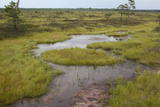 |
Very wide territory for a nature restricted area where extensive forests and several bogs can be found. The territory is important living space for many bird species. Vasenieku bog path with observation tower is the most attractive sites of the restricted area and offers unique landscape of the bog for its visitors. Waterproof shoes are recommended for visitors as the first 500 m of the path is molded turf rampart. Information stands are significant source of information along the path. It is suggested to visit also Stikli (Glass) village where glass factory used to be. Chandelier of Stende church has been made in this factory (by memory of Inese Roze).
|
|
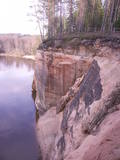 |
Mit einer Länge von 700 m und einer Höhe bis zu 22 m ist dieser Felsen einer der beeindruckendsten Sandsteinfelsen Baltikums. Der Felsen wird vom Fluss Gauja umgespült. |
|
 |
The Līgatne Paper Factory is located at Pilsoņu Street 1 in Līgatne. The factory was first built in place of an old paper windmill by two tradesman from Rīga who also built dormitories for residents. These structures are an important component in the urban environment of Līgatne. The rapid flow of the Līgatne River allowed the factory to produce writing paper, stationary and wrapping paper. In 1858, the factory was brought by a local nobleman who brought in new equipment from Scotland. If some 100 people worked at the factory during the first half of the 19th century, then that number rose to 600 by the end of the century and 800 at the beginning of the 20th century. Writing paper was the primary product from the factory, although there were sometimes special orders. During World War I, for instance, the factory produced paper on which the Russian military printed its maps. This allowed the factory to hold an important role in the Russian market. During the Soviet era, the factory at Līgatne produced notebooks and other products that were sent all over the USSR. Today the factory mostly produces wrapping paper of various kinds from waste paper. The Līgatne Paper Factory is the only functioning entity of its kind in Latvia, and there are guides available to give you a tour. The historical centre of the campus on which the factory sits is a cultural monument. The Līgatne Tourism Information Centre (_371-6415-3313) offers tours of the centre during which you will learn about the lives of the factory's workers and administrators in the late 19th and early 20th century. Back then there was major construction work at the factory to build residences for workers, a school, a childbirth facility, a hospital, a club, a guesthouse and other buildings which have survived to the present day. |
|
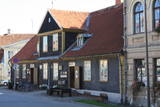 |
Das in dunklen Tönen gestrichene Gebäude wird im 17. Jh. erstmalig in Dokumenten erwähnt, in dessen Keller befand sich das erste Gefängnis der Stadt. Der historische Ratsplatz daneben war der wichtigste Treffpunkt und auch Strafvollzugsplatz, denn in der südöstlichen Ecke des Platzes gab es einen Pranger. Heute befindet sich hier das Touristeninformationszentrum und eine Weberwerkstadt. Hier kann man in Kurzeme hergestellte Waren und Souveniere erwerben, in der Werkstatt bei der Webearbeit zusehen. |
|
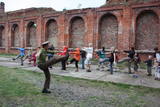 |
Ein beeindruckender Komplex von Militärbauten, der zwischen der Ostsee, Liepāja und den Tosmare Seen gelegen ist. Ende des 19.Jh. begann man, die Festungsanlage, die 45 Millionen Goldrubel kostete, auf Befehl des russischen Zars Alexander III zu bauen. Sie bestand aus einer Wohnsiedlung und Befestigungsbauten – Kanonenpositionen, Bunkern, Pulverkellern, Kanalsystemen, einer Schmalspurbahn und mehr. 1908 wurde der Betrieb der Festung eingestellt, da die Bauweise nach den neusten Bestimmungen der russischen Verteidigungskonzepte als strategisch fehlerhaft eingestuft wurde. Im Ersten Weltkrieg versuchte man, die unterirdischen Bauten zu sprengen, dies gelang jedoch nicht recht. So gelangten hier einige Bestandteile im lettischen Freiheitskampf zu großer Bedeutung. Heute sind noch einzelne Abschnitte der Festung erhalten: Die Nord-Forte, das Mittel-Fort, das Ost-Fort, das Süd-Fort, die Uferverteidigungsbatterien (Nr.23., 3.), der Redan, die Lünette u.a. Der größte Teil davon ist in schlechtem Zustand, so dass eine Besichtigung teilweise auch gefährlich sein kann. Der Nordteil der ehemaligen Festung umfasst auch den Kriegshafen, der sieben verschiedene Armeen und Mächte erlebt hat. In der Sowjetzeit war der Kriegshafen eine geschlossene Zone und für Zivilpersonen unzugänglich. Hier befinden sich viele bemerkenswerte Denkmäler der Militärgeschichte, das bei Touristen beliebte Gefängnis des Kriegshafens bietet auch Bildungsveranstaltungen an. |
|
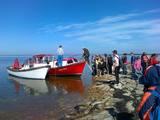 |
Der Unternehmen bietet auf Indrl Saaremaa unterschiedliche Naturtouren zum Kennenlernen der Natur-und Kulturerbe: Robbenbeobachtung, Naturwanderungen zu Fuss oder mit Fahrrädern, Skitouren, Schlauchboottouren zu den Holmen im Nationalpark Vilsandi,Orchideetouren etc. Im Waldpark Miku im Nationalpark Vilsandi kann man Forstarbeit beobachten und auch selbst ausprobieren. |
|
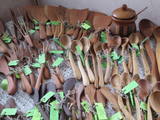 |
The spoon workshop offers useful objects such as wooden spoons, cutting boards, butter knives, pans, spatulas, etc. You can produce your own wooden spoon and look at finished spoons made of more than 17 different types of wood from Latvia. During the summer the owners offer “pancake tours” with tasty jams. You can purchase spoons and homemade wine. |
|
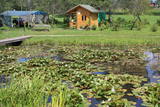 |
On the edge of the Bērzkrogs-Madona road in the centre of Vecpiebalga, you will find a pond full of various types of water lilies of different colours. The owner will tell you all about the popular folk song about water lilies from Vecpiebalga, offer plants for sale and offer practical advice. The pond also has carp which children can feed by hand while their parents are listening to the stories. |
|
 5 Tagen
|
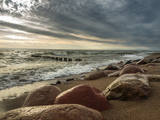
Historiker behaupten, dass die Liven auf dem alten Territorium Lettlands seit dem 10. Jh. treten. Die Liven besiedeln Nordkurland, Unterläufe von Daugava und Gauja. Sie fragen die ersten ankommenden deutschen Kaufmänner sachkundig – Wieviel kostet zur Zeit Walkstoff auf dem Markt in Visby? Das bedeutet, dass den Liven die schwedische Insel Gotland bekannt ist. Die Liven sind gute Seefahrer, mutige und starkherzige. Nur ein starker Mensch kann mit dem Meer gut auskommen, auf Fischfang und Robbenjagd gehen, in den keineswegs ergiebigen Sanden der Meeresküste festwurzeln. |
|
 |
Zemnieku saimniecība "Dzirnas" nodarbojas ar bioloģisko putnkopību, audzē zemenes un dārzeņus. Saimniecība apsaimnieko 11 ha zemes. Tajā iegūtās olas ar zīmolu "Vistu olas", sīpoli un ķiploki tiek pārdoti veikalos "Klēts" Rimi hypermārketos Rīgā. Savukārt zemenes pārdod dzimtajā Alsungā, kā arī pēc pieprasījuma piegādā Rīgā. Iespējams arī apmeklēt un apskatīt saimniecību, taču nepieciešmaa iepriekšēja pieteikšanās. |
|
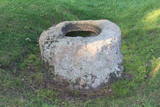 |
The Pinnu (Dievekļa) Sacrificial Stone is at Ulmale, some 300 m from the Liepāja-Ventspils highway (there are signs). This is a very beautiful and distinct bowl-type rock, and the indentation at the top is 15 cm deep and up to 61 cm in diameter. It is thought that this was an ancient cult location, particularly between the 16th and 18th centuries. |
|
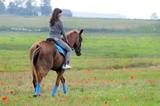 |
Das Gestüt erwartet als Gäste nicht nur professionelle Reiter oder Leute die Reiten lernen. Für Schüler ab der 6. Klasse werden Führungen angeboten, bei denen diese mit den Tieren bekannt gemacht werden, sie gefüttert werden können und man probieren kann zu reiten. Bei älteren Schülern kann das Programm auch etwas anspruchsvoller sein und Details zur Evolution und Biologie der Pferde enthalten und zur Arbeit mit den Tieren. Zudem werden Reittouren durch die Umgebung auf einfachen Strecken angeboten. |
|
 |
Ein Familienunternehmen, das sich mit der Herstellung von kulinarischen Köstlichkeiten und Süßwaren in der Gemeinde Jaunannas der Region Alūksne beschäftigt. Leckere Fleischrouladen, die nach Großmutter-Rezepten zubereitet werden, und sonstige Fleischwaren in großer Auswahl sowie spezielle Süßwaren aus der Konditorei Gustiņš kann man im Geschmacksladen Gustiņs in Alūksne kaufen. Man kann köstliches und leckeres wie hausgemachtes Essen und für die Region Alūksne typische „malenische“ Gerichte (nach vorheriger Anmeldung) im Café Gustiņš genießen. |
|
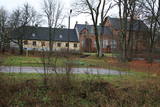 |
Виргская господская усадьба как лен была передана вассалу Ливонского ордена Конраду Нолду. До наших дней сохранился дворец господской усадьбы «Виргас», в котором с 1935 года до наших дней разместилась школа. Во дворце находятся три двери, украшенные красивой резьбой по дереву, с гербами рода Нолдов и портреты баронов. В бывшей клети господской усадьбы в 1983 г. обустроен Дом традиций - теперь Дом культуры. Господскую усадьбу окружает парк, в котором находится место могилы барона Нолда и баронессы с памятником. В центре Вирги установлен сапог Карла XII с двумя направленными друг от друга пушками и ядрами, которые вещают о временах Северной войны, когда в Вирге в 1701 г. был лагерь шведского войска. |
|
 17 Tagen
|
Diese Tour bietet die Möglichkeit, hinter den gewöhnlichen Sehenswürdigkeiten zu schauen und die drei baltischen Staaten näher kennenzulernen. Die Tour fängt in Riga – in der historischen Hauptstadt Lettlands an, danach führt sie durch den Nationalpark Gauja mit seinen Burgen, Schlössern und Naturpfaden. Steigen Sie auf den Turm der mittelalterlichen Burg von Turaida und genießen Sie die wunderbaren Aussichten über das Urstromtal des Flusses Gauja und besuchen Sie den Meisterschmied der antiken Schmuckstücke in der Burg der reizvollen Stadt Cesis. Wenn Sie die Grenze nach Estland überquert haben, können Sie einen Spaziergang durch den Kurort Parnu unternehmen und seine eleganten Villas besichtigen, und danach die Fähre zu der Insel Saaremaa nehmen. Die typische Landschaft der Insel zeigt sich in dem ethnographischen Dorf Koguva, in den alten Kirchen und Windmühlen. Dann ist die Zeit für Tallinn mit ihrer mittelalterlichen Altstadt und für den Nationalpark Lahemaa mit seinen Fischerdörfern und Landgütern gekommen. Probieren Sie estnische Küche in der Kneipe Altja. Wenn Sie zurück fahren, besichtigen Sie die Universitätsstadt Tartu. Wenn Sie wieder in Lettland sind, besuchen Sie Ziegenzüchtereien und eine Bäckerei, die das lettische Schwarzbrot traditionell backt. Danach führt die Tour Richtung der westlichen Küste mit den Städten Liepaja und – auf der anderen Seite der Grenze, in Litauen – mit Klaipeda. Der nächste Stopp ist die wunderschöne Kurische Nehrung. Vor der Stadt Vilnius können Sie einen Abstecher zum Grutas Park mit seinen eigenartigen Skulpturen aus der Sowjetzeit machen. Beenden Sie Ihre Tour an der malerischen Burg Trakai in Litauen und an dem Schloss Rundale in Lettland. |
|
 |
Das Café befindet sich neben dem Burgberg von Rezekne und dem Zentrum für kreative Dienstleistungen von Ostlettland Zeimuls (gebaut am 1. September 2012). Schöne Innenausstattung und Aussicht auf die historischen Objekte von Rezekne. Das Café ist im Namen der Festung Rositten genannt worden, die hier im 13.Jh. der Heermeister des Livländischen Ordens gebaut hatte. Hier werden alle Mahlzeiten des Tages, gastronomische Waren und Konditoreiwaren angeboten. |
|
 |
Latviskais pirts rituāls ozola ieskautā lauku pirtiņā. Pirts procedūrās tiek izmantoti dabīgi un pašgatavoti materiāli (augu un zaru slotiņas, skrubīši, lāvas paklājiņi, tējas u.tml.), skaņu instrumenti (sajūtu bunga, zvanga, lietus koki, zvaniņi u.c.), klūgu slotiņas, latviešu tautas dziesmas, labi un stipri vārdi. |
|


