
| Nr | Name | Beschreibung |
|---|---|---|
 |
Die Restaurant-Bar befindet sich in einem Wohnviertel des Zentrums von Jelgava. Sie ist mit ihrer interessanten Innenausstattung und ihren Musikabenden und anderen Veranstaltungen bekannt. Lettische Küche: Bauernomelette, gebratene Schweinefleischstücke mit Pfifferlingen und Steinpilzen, Graupenrisotto, Erdbeersuppe mit Eis, dünne Pfannkuchen. Das besondere Gericht: Kuss von Charlotte: Dessert, in dem Ei-Quark-Creme und Saftgelee geschichtet sind. |
|
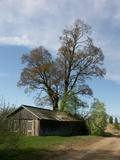 |
This is a large, outstanding and expressive tree, Latvia’s thickest Norway Maple (Accer platanoides).
|
|
 |
Einen malerische Sandsteinfelsen bis 600 m lang und 21 m hoch am linken Flussufer vom Gauja. |
|
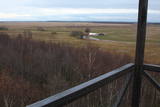 |
Suitsu tornis celts 1979. g. kā pirmais Matsalu rezervāta metāla tornis. To atjaunoja 1998. g. Torņa augstums ir 21 m, tādēļ no tā paveras izcila dabas un kultūrainava uz Kazari deltas niedrājiem un blakus esošo Suitsu upi (Suitsu jõgi), kuras krastā ir uzceltas vairākas zvejnieku laivu būdas. |
|
 |
Das Café ist auf Fischspeisen spezialisiert. Bei den Verkostungen werden mindestens sieben Fischspeisen angeboten: Schnitzel, Salate, Kanapees, Frikadellen, Marinaden, Piroggen u.a. Lettische Küche: Kalte Suppe, Strömlinge in Marinade, gebratene Flunder, gebratener Kabeljau, geschmortes Schweinefleisch, dünne Pfannkuchen, Kartoffelpfannkuchen. Das besondere Gericht: Soljanka von Būda. |
|
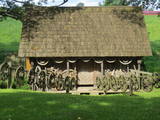 |
Saimnieks Valentīns Kuklis savā viensētā izveidojis no koka un citiem materiāliem un vēsturiskiem priekšmetiem veidotu brīvdabas kolekciju, kas savākta g.k. no Latgales lauku sētām. Daļa no vēsturiskajiem priekšmetiem ir izvietota saimnieka veidotā muzejā. Piedāvā ekskursiju un stāstījumu par savāktajiem darbarīkiem un sadzīves priekšmetiem. |
|
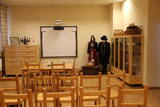 |
This collection features the heritage of the Suiti people, including an exhibition of folk costumes. Visitors can learn about the costumes and try them on. This is a cosy place for meetings, with well-equipped rooms for seminars and various types of training sessions. |
|
 |
Seno un mūsdienīgo amatu prasmju popularizēšana, izkopšana un tālāknodošana. |
|
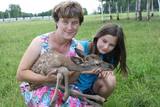 |
Some 250 deer graze on 100 ha of land in the Umurga Parish. The farm also offers a look at peacocks, rabbits, sheep, goats and a pony. Biological products are on sale, and visitors are welcome all year round.
|
|
 |
Seit über 60 Jahren wird im historischen Gebäude der Molkerei von Rūjiena aus dem Jahr 1912 Eiscreme hergestellt. Alle sind herzlich willkommen, den Betrieb zu besuchen, in dem bei einer Führung über die Rūjiena-Eiscreme erzählt und ein Video über den Produktionsprozess gezeigt wird. Natürlich werden alle mit der Rūjiena-Eiscreme verwöhnt. |
|
 |
Die dritlängste (in seiner Zeit auch eine der modernsten Brücken) Backsteinbrücke Europas (164 m), gebaut 1873 – 1874. |
|
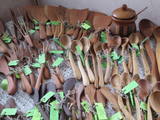 |
The spoon workshop offers useful objects such as wooden spoons, cutting boards, butter knives, pans, spatulas, etc. You can produce your own wooden spoon and look at finished spoons made of more than 17 different types of wood from Latvia. During the summer the owners offer “pancake tours” with tasty jams. You can purchase spoons and homemade wine. |
|
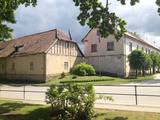 |
Known as Alšvanga in the past, this place was mentioned for the first time in 1231 in an agreement that was signed between the deputy legate of the pope in Rome and the Courlandian tribes of the region. The Livonian Order ruled the territory until 1561, and from 1573 until 1738 the order’s castle belonged to the von Schwerin dynasty from Pomerania. It during the rule of this aristocratic family that a stone church was built in honour of Archangel Michael, and local residents began to convert to Catholicism. Alsunga became the Catholic centre for all of Kurzeme, and local residents became known as the Suiti (from the Schwerin suite). For nearly 400 years, Alsunga has been the historical centre of the Suiti territory. This is Latvia’s most conservative region and is widely known with unusual songs, colourful folk costumes and various folk traditions and beliefs. The Suiti have their own dialect, foods and many other things that have been long since abandoned or forgotten elsewhere in Latvia. The religious has commingled with the folk here in one unique whole. The Alsunga District covers 191 km2 and has some 1,500 residents. |
|
 1 Tag
|
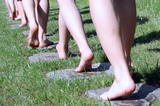
The Barefoot Path begins at the Valguma Pasaule Recreation Centre by Lake Valgums, which is surrounded by forest. The recreation centre includes a hotel and restaurant, and offers nature-based services such as the Barefoot Path and other walking trails. The Barefoot Path is a 2.6 km long trail through the natural environment, along which visitors walk barefoot and experience a variety of surfaces including pine cones, glass balls, small stones and shingles of various shapes, moss, fine sand, clay, river water, turf, gravel, reeds, chipped wood, pinewood logs, wooden poles and millstones. Walking barefoot has a number of positive health effects: it strengthens the immune system; it improves blood circulation and stabilises blood pressure; it strengthens the leg and foot muscles, joints and ligaments; and it enhances relaxation, and aids mental and physiological stability. The walk is led by an English-speaking guide. Before the walk, visitors receive a briefing. It is recommended that visitors wear comfortable outdoor clothing, appropriate for the weather. After walking the barefoot path, visitors usually feel energised, strong and happy. The walk finishes with a relaxing herbal foot bath. |
|
 3 Tagen
|
Here you will learn about home-based manufacturers, farms, companies and others in northern Vidzeme that produce various dairy products such as milk, yogurt, cottage cheese, cheese, ice cream, etc. You’ll start out in Cēsis with its Medieval old town, castle ruins, St John’s Lutheran Church and other destinations. Wind your way through the Gauja National Park (Ungurmuiža, Lake Ungurs, the Medieval castle and church at Straupe). You’ll hit the seashore at Saulkrasti and then drive along it to Tūja, where you will turn inland again. In Limbaži you will find Medieval castle ruins, a monument to the great folklorist Krišjānis Barons and other objects. Drive on to Valmiera (St Simon’s Church, castle ruins, a museum, Emotion Park, etc.), Rūjiena and Naukšēni (the Naukšēni Estate). Along the “Northern Pathway” you will reach Kārķi and then Smiltene and legendary Rauna (the Raunas Staburags cliff) before returning to your starting point. |
|
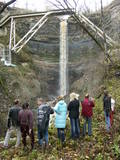 |
This is a cliff with various levels. Known as the North Estonian cliff, it stretches all along the shore of the Bay of Rīga in Estonia, including some of the local islands. The most expressive part in geological and landscape terms is the Saka-Ontika-Toila cliff, which is around 22 km long and offers an unusual natural environment. The cliff is as much as 53 m high, and it has a fairly virginal forest along its slopes. The layers of clay, sandstone, limestone, etc., come from the Cambrian and Ordovician periods. The Valaste juga (Valaste waterfall) is 24 metres high. After a longer period of freezing temperatures, the waterfall has a particularly impressive appearance. Seasonal waterfalls (8-10 m) can be found near the villages of Ontika and Toila.
|
|
 7 Tagen
|
Diese Tour zeigt die besten Pfade und Sehenswürdigkeiten des Nationalparks Gauja. Die Wanderungen sind so organisiert, dass der Reisende ständig in Bewegung ist. Die “Arterie” des Parks ist das Urstromtal des Flusses Gauja mit vielen Nebenflüssen und Schluchten in den massiven Sandsteinfelsen aus der Devonperiode. Die Wanderung beginnt an einer der ältesten Kirchen in Lettland, führt dem Fluss entlang und endet an der Bobbahn von Sigulda. Auf Ihnen warten malerische Aussichten auf den Fluss, die Felsen und Naturpfade. Der Naturpfad des Flusses Amata schlängelt sich durch unberührte Wälder und bietet die Möglichkeit, die Ikone der lettischen Naturlandschaft – den Felsen von Zvarte – zu besichtigen. |
|
 |
The restaurant-cafe Moka is situated in Estonia, in the city of Tartu, not far from Tartu university and offers a wide variety of foods. |
|
|
|
Pie Melekiem sākas dabas lieguma teritorija. Meleku
krastmala būtiski mainījās 2005. g. orkāna laikā.
|
|
 |
Pitas ir pēc inovatīvas žāvēšanas tehnoloģijas radītas augļu, ogu un garšaugu garšvielas, kuras ražo mājražotāja Lorita Miķelsone. Mājražotāja labprāt ļaus nodegustēt un iepazīstinās ar Pitām jebkuru interesentu, uzņemot apmeklētājus Skaisto un praktisko ideju dārzā Dobelē. |
|


