
| Nr | Name | Beschreibung |
|---|---|---|
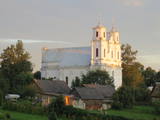 |
Die größte Ortschaft im Südosten Lettlands, die vom Süden vom Fluss Daugava umgeströmt wird. Der Fluss ist gleichzeitig die Grenze zwischen Lettland und Weißrussland. Die Mitte des Flusses ist die Grenze zwischen zwei Ländern. Piedruja besteht aus zwei Teilen – Piedruja und Aleksandrova, die von der Zentralstraße (Straße V 631 ) getrennt sind. Piedruja hat sich als ein gegenüberliegendes Territorium der Stadt Druja entwickelt, die sich am linken Daugava-Ufer befindet. Zwei Teile gehörten im 17. Jahrhundert dem Hochadelgeschlecht Sapieha des Großfürstentums Litauens. Die Häuser mit wenig Stockwerken von Druja und eine zerstörte Kirche sind gut vom Piedruja-Ufer zu sehen. Es lohnt sich, Piedruja und die Umgebung, zu Fuß zu gehen, weil die Holzhäuser mit wenig Stockwerken stellenweise an die Häuser in den Freilichtmuseen erinnern. Piedruja sieht gepflegt aus, zwischen zwei Kirchen ist ein malerischer Garten angelegt. Mit bedeutenden Objekten – mit zwei Kirchen und Daugava-Stein macht der Piedruja-Pfad bekannt. Im Teil Aleksandrova befindet sich das Hotel „Piedruja”, das ein besonderes touristisches Produkt anbietet – eine Abendunterhaltung im lettgallischen, russischen und weißrussischen Stil. Vor der Reise nach Piedruja muss man die Aufenthaltserlaubnis fürs Grenzgebiet erhalten. Eine Grenzkontrollstelle befindet sich in Piedruja am Daugava-Ufer, wo noch relativ vor nicht langer Zeit eine der Überfahrten über den Fluss Daugava in Betrieb war. |
|
 |
Gäste werden herzlich erwartet in die im Jahr 1887 erbaute Riegenstube Ketta. Erfahren sie mehr über die die Schmiedarbeit und wie macht man Holzkohle, was ist eine Riegenstube, wie heizt man Riegenofen, was ist Dreschen und Absieben. |
|
 |
Atrodas Ostas ielas rietumu galā. No laukakmeņiem veltīto kompozīciju uzstādīja 1938. g. (idejas autors – bijušais Ventspils ostas kapteinis V. Ābelnieks) un tā ir piemiņa visiem zvejniekiem un jūrniekiem, kuriem atdusas vieta ir jūras dzelme. |
|
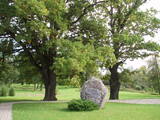 |
Der deutsche Pastor Glück vollendete während seiner Amtszeit in Alūksnē eines der bedeutendsten Werke seine Lebens – er fertigte die erste lettische Bibelübersetzung an. 1685 hatte er das Neue Testament, 1689 das Alte Testament übersetzt und jeweils zum Gedenken an die vollendete Arbeit eine Eiche gepflanzt, beide wachsen dort heute noch. |
|
 |
You can learn about the lives of bees and buy honey made from all kinds of flowers, propolis, propolis blankets and wax candles. Apian therapy is offered here. This is an ancient method which involves a bed under which there are beehives. The bees create warmth, vibration and a biofield. |
|
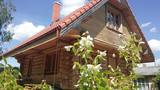 |
Brīvdienu māja "Jasmīnu nams" atrodas pie pašas Jelgavas robežas - tikai 7 minūšu braucienā līdz pilsētas centram. Brīvdienu māja ir lieliska vieta mierpilnam dabas baudījumam, kas rit roku rokā ar iespēju stiprināt veselību pirtī vai alternatīvā SPA - āra kublā. Brīvdienu mājā ir 3 istabas, savrupa teritorija vienai līdz divām mājsaimniecībām – līdz 6 personām, īpašu uzsvaru liekot uz atpūtu kopā ar bērniem. Nav paredzēts skaļām ballītēm un jauniešu tusiņiem. Namiņā ir viss nepieciešamais maltītes pagatavošanai gan iekšā, gan ārā svaigā gaisā. Tuvumā atrodas Svētes upe un atpūtas zona - Svētes palienes pļavu koka laipu celiņu tīkls. |
|
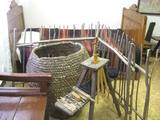 |
Local History Museum of Nautrēni. Permanent exposition of the
local history of the district, school and parish.
Working hours: on request |
|
 |
Ein Ort in der Innenstadt von Tartu, an dem man kleine und leichte Speisen à la fish & chips genießen kann, die mit den Produkten der Peipussee-Gegend zubereitet werden. Im kleinen Laden werden die Essenstraditionen aus der Peipussee-Gegend mit der modernen Küche vereint. Dazu werden nur die besten örtlichen Produkte benutzt. Einen riesigen Erfolg genießen bereits fish & chips aus Zanderfilet, saftiger Burger und Wrap. |
|
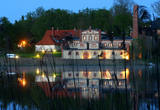 |
The renovated historic distillery at Mooste Manor (1909) is home to the Estonian Photo Tourism Centre. The guesthouse on the second floor of Mooste Distillery offers cosy rooms with all modern conveniences. |
|
 |
The craftsman typically produces objects that are of use on an everyday basis. They have laconic forms and reticent decorations. You can take a tour of the workshop and kiln, watch demonstrations, and work with the clay yourself. You can purchase finished products, look at the beekeeping operation, and taste and purchase honey. |
|
 3 Tagen
|
Маршрут предусмотрен для опытных туристов, кому нравиться объединять наплюдения за природой с познанием культурной среды и истории. Это путешествие по самой впечатляющей речной долине в Балтии – древней долине Гауи. Маршрут начинается в Сигулде, которую с давних пор называют «Видземской Швейцарией». В окрестностях Сигулды открываются одни из красивейших пейзажей в Латвии. Маршрут пересекает глубокие овраги многих притоков Гауи и открывает внушительные в масштабах Балтии обнажения песчаника девонского периода. Природные тропы Лигатне – это единственное место в Латвии, где в условиях, максимально приближенных к естественной жизни в природе – в широких вольерах – можно увидеть разные виды диких животных. Поселок бумажной фабрики Лигатне – это великолепный пример индустриального наследия европейского масштаба со своеобразной средой поселка 19-го – 20-го веков. Цесисский средневековый замок – это мощная крепость средневековой Ливонии с современным центром для посетителей. Конечный пункт маршрута в Валмиере, одном из старейших городов Латвии. Информация о маршруте от Latvijas Lauku forums |
|
 |
The Līgatne Paper Factory is located at Pilsoņu Street 1 in Līgatne. The factory was first built in place of an old paper windmill by two tradesman from Rīga who also built dormitories for residents. These structures are an important component in the urban environment of Līgatne. The rapid flow of the Līgatne River allowed the factory to produce writing paper, stationary and wrapping paper. In 1858, the factory was brought by a local nobleman who brought in new equipment from Scotland. If some 100 people worked at the factory during the first half of the 19th century, then that number rose to 600 by the end of the century and 800 at the beginning of the 20th century. Writing paper was the primary product from the factory, although there were sometimes special orders. During World War I, for instance, the factory produced paper on which the Russian military printed its maps. This allowed the factory to hold an important role in the Russian market. During the Soviet era, the factory at Līgatne produced notebooks and other products that were sent all over the USSR. Today the factory mostly produces wrapping paper of various kinds from waste paper. The Līgatne Paper Factory is the only functioning entity of its kind in Latvia, and there are guides available to give you a tour. The historical centre of the campus on which the factory sits is a cultural monument. The Līgatne Tourism Information Centre (_371-6415-3313) offers tours of the centre during which you will learn about the lives of the factory's workers and administrators in the late 19th and early 20th century. Back then there was major construction work at the factory to build residences for workers, a school, a childbirth facility, a hospital, a club, a guesthouse and other buildings which have survived to the present day. |
|
 |
Atrodas Skuķu ezera ziemeļaustrumu krastā. No torņa labi saskatāms aizaugušais Skuķu ezers ar nelielām ūdens lāmām un ūdeņiem bagātos pavasaros pārplūstošā Dvietes paliene. Laba putnu vērošanas vieta. |
|
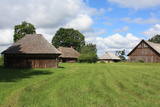 |
Das Dorf befindet sich 7km nördlich des Zentrums von Vecpiebalga. Hier kann man für die Gegend typische Landhöfe und Handwerkerhäuser des 19.Jh. mit Arbeitsgeräten und Gegenständen des täglichen Lebens besichtigen, auch eine kürzlich erneuerte Windmühle. Im Dorf leben auch heute noch einige Bewohner. Es empfiehlt sich, das Museum mit einem ortskundigen Führer zu besuchen. |
|
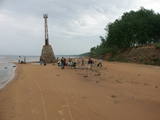 |
Ķurmrags is one of the most distinct capes along the Vidzeme shore of the
|
|
|
|
The Boulder of Subinaite can be found in Sakstagala rural municipality opposite Vaļenieku House that
is on the left side of the river Rēzekne. The base of the boulder is below the river level; it is 5,2 m long, 4,4
m wide, it rises about 1,6 m above the water level, about 2,5 m below the water level, capacity 26 m3.
Reddish surface is heavily eroded and full of moss. Protected since 1977.
|
|
 |
Construction of the Neibāde resort in 1823, started up hospitality traditions. The park, designed in an English style, was created by the gardener Akerbergs, who was brought from Estonia by Baron August von Pistohlkors. In the 1920s – 1930s the Pēterupe – Neibāde Seashore Aid and Improvement Society looked after the restoration and care of the monument and the park of the resort that was ruined during the war, the appearance of Saulkrasti, the organisation of different events and foundation of the theatre and the choir, led by Olga Cīrule. Saulkrasti open-air stage has always been a place for festivities. 16 July 1933 is a date that deserves special attention as it was on this date that the open-air stage became the place where Neibāde and Pēterupe were renamed Saulkrasti. The open-air stage was repeatedly rebuilt and improved. Both during the Soviet era, as well as later, this was a meeting place for locals on joyful moments, on moments of change and remembrance. The stage was the place of origin of the Popular Front of Latvia (Latvijas Tautas fronte) Saulkrasti branch. Now the stage is a meeting place and holds different events on summer weekends. Each year Saulkrasti town festival concert takes place on this open-air stage. |
|
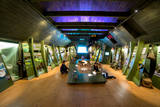 |
The Baltic Sea gave this territory one of the old names of Jūrkalne – Felixberg, and people still talk about the interesting legend that is the origin of the name. Several wrecked ships have been found in the Baltic Sea off the coast of Jūrkalne. An exhibition in the museum visualises the underwater world as the deck of a ship that has sunk into the depths of the sea. The exhibition focuses on the cultural and historical heritage of underwater Latvia, allowing visitors to learn all about the history of sailing ships, steamships and other objects that have been raised from the depths. Small children will start to learn about the underwater world, and researchers with broader knowledge will find something new here. |
|
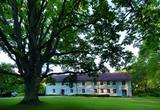 |
The first mention of Pēterupe Rectory goes back to the late 17th century. The Manor Park and the buildings have partially survived to the present day, including a linden alley at the end of Smilšu Street, planted by the pastor Jānis Neilands in 1879 and the grand oak planted by Johann Wilhelm Knierim in 1869. After the fire of 1908, the Rectory was restored and partially rebuilt. In Soviet times, the property was removed from the parish and the house was named “Līgotnes”. During German times the Rectory was occupied by legionnaires. After the war, the building of the Rectory was turned into a hospital, then into a secondary school and later it was transformed into a block of flats for teachers. Now the building again belongs to the parish and it is inhabited by a priest of the parish and his family. |
|
 |
Auf dem Hof wird Hanf angebaut und es wird angeboten, sich mit der Geschichte und den vielfältigen Verwendungsmöglichkeiten bei der Ernährung und in der Sauna bekannt zu machen. Zu den Erzeugnissen des Hofs gehören Hanfbutter und Hanfmilch. Es gibt Führungen und man kann die Produkte des Hofs kaufen. |
|


