
| Nr | Name | Beschreibung |
|---|---|---|
 2 Tagen
|
Eine herrliche Küstenlandschaft der Region Vidzeme mit vielen steinreichen Erdzungen und Steinen im Meer. Sie werden von kleinen, sandigen Buchten abgelöst, in denen die im Sommer austrocknenden Bäche und kleinen Flüsschen münden. An einigen Stellen ist der Strand vollständig mit grauen Steinen bedeckt. In Zvejniekciems müssen Sie einen Abstecher zur Mündung des Flusses Age und zum Hafen von Skulte machen. An manchen Orten gibt es kleine Abschnitte mit Schilf, aber in der Nähe von Tūja werden Sie die ersten Sandsteinfelsen sehen. Einen Teil der Route kann man über den Strand oder über einen Pfad zurücklegen, der durch einen Dünenwald mit alten Kiefern führt. Im Anschluss kann man den Fischzaun für Neunaugen in Svētupe besuchen. |
|
 |
For the groups of gourmandes the owner offers to participiate in different culinary workshops (2-3 hours): „The sweet cake workshop”, „The untraditional seasonal vegetable foods workshop”, „Pizza workshop”, Preparing hemp butter”, etc. Those who don’t wish to cook themselves are offered a lazy countryside dinner in combination with watching the farm, the grapes garden and talks about countryside life. |
|
 |
Līdz 40m augsta ar mežu apaugusi Gaujas labā pamatkrasta nogāze ar vairākiem smilšakmens atsegumiem. Viens no tiem atrodas nogāzes lejasdaļā un veido 7m platu 5m dziļu nišu. Otrā krastā – vairākus metrus augstais Leimaņu iezis. Abi atsegumi atrodas aiz Amatas ietekas.
|
|
 |
The farm "Kronīši" is located in Viļķenes Parish, Limbažu County. The farm grows organic vegetables that are processed into various home preserves. Teas are produced from plants collected from organic meadows, jams, preserves, syrups and juices are also on offer. Fruits and berries are collected from the garden itself, as well as from local farmers and the nearby Rūstuži and Blome marshes. The farm welcomes tourists and exchange groups with prior application. For family events, incl. a teahouse is available for children's parties, creative workshops and other activities. Offers tours with Soviet-era cars and retro cars. |
|
 1 Tag
|
Die Route schlängelt sich zwischen einer mit Schilfen und Gräsern stark bewachsen steinigen Seeküste auf einer Seite und bewaldeten Dünen auf der anderen Seite hindurch. An manchen Abschnitten ist der Strand mit kleinen runden Steinen gepflastert, in anderen können Sie graue Dünen mit einer großen Pflanzenvielfalt sehen. In der Nähe des Dorfs Bērzciems gibt es große Küstenwiesen mit weit entfernt im Meer zu sehenden Untiefen, die zur Vogelbeobachtung geeignet sind. Auf dieser Route ist es möglich das Fischer-Gehöft „Dieninas“ zu besuchen. Dort können Sie regionalen Räucherfisch kaufen. Außerdem lohnt es sich den Hafen von Engure und die evangelisch-lutheranische Kirche von Engure zu besichtigen. |
|
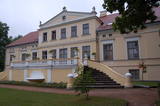 |
Das Wohnhaus des Landgutes ist im 19. Jh. gebaut worden. Im Jahr 1932 hat das damals vernachlässigte Landgut der lettische Zeitungskönig Antons Benjamiņš gekauft. Heute befindet sich das Landgut wieder im Besitz der Familie Benjamiņš und dort ist eine private Fotoausstellung über die Reisen und das Leben von Antons Benjamiņš eingerichtet. |
|
 |
Baltijas valstīs lielākie brāļu kapi, kur izveidots (1974. - 1984. g.) piemiņas memoriāls (tēlniece P. Zaļkalne, arhitekti A. Zoldners, E. Salguss un dendrologs A. Lasis) 8 ha platībā. Šeit apglabāti ~ 23 000 cīņās par Kurzemes cietoksni jeb Kurzemes katlu (1945. g. pavasaris) kritušie Sarkanās armijas karavīri. Memoriāla centrā novietots12 m augsts Mātes - dzimtenes tēls, bet uz granīta plāksnēm iegravēti kritušo vārdi, starp kuriem ir atrodami arī daudzi mūsu zemes un kaimiņvalstu dēlu vārdi un uzvārdi. |
|
 |
Das Café befindet sich im Zentrum von Ventspils, in einem Gebäude aus Holz, das im Stil Klassizismus im 19. Jh. gebaut worden ist und der Familie Kupfer gehört hat. Lettische Küche: Bauernfrühstück, Haferflocken- oder Grießbrei, Kartoffelpfannkuchen, dünne Pfannkuchen mit Marmelade. Das besondere Gericht: Spiegelei mit einem Schinken und einer eingelegten Gurke. |
|
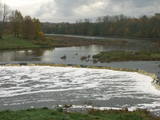 |
The recently renovated old brick bridge and the viewing area that is on the left bank of the Venta beyond the castle guard’s hut offers a lovely view of the widest and most impressive waterfall in Latvia – the Venta falls. It is worth visiting during the spring floods, when fish are migrating.
|
|
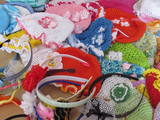 |
The Crafts Chest store offers crafts produced by women in Sabile – knit and crocheted mittens, stockings, hats, shawls, and other useful items that will be wonderful gifts and souvenirs. |
|
 3 Tagen
|
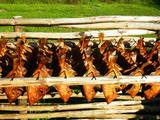
The Liv Coastline involves a series of shoreline villages from Ovīši to Ģipka along the shores of the Baltic Sea and the Bay of Rīga. Like Latvians, Livs are an indigenous population in Latvia, with ancestors who lived here at least 5,000 years ago. They populated extensive parts of Kurzeme and Vidzeme, and the area in which they lived the longest was Northern Kurzeme, on the shores of the Baltic Sea. Today visitors to the Liv Coastline mill meet real Liv fishermen, feel the aroma of smoked fish, enjoy traditional dishes, look at diverse ancient fences, learn about the reticent charm of the local landscape, enjoy the place where two seas, birds and people meet at Cape Kolka, hear the Liv dialect of the Latvian language, see rounded hillocks and swampy areas, visit the Šlītere lighthouse, and see the green-white-blue Liv flag, red bilberries, bird migration routes and blue cows. The oldest evidence of the life of Livs can be found in the Liv centres. The Liv language and culture are still alive in place names, handicrafts, folk costumes, and the world view and lifestyle of people who live in the area. The Liv language and cultural values are part of Latvia's national cultural heritage, and traditional Liv culture is part of the Latvian Canon of Culture. |
|
|
|
Atrodas Inciema centrā. Piedāvā maltīti visām ēdienreizēm. Lielas porcijas, garšīgs ēdiens. Iecienīta tuvākas un plašākas apkaimes maltītes ieturēšanas vieta. Klāj galdus. |
|
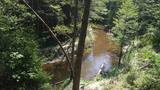 |
Nature trail "Curves of Riva" starts at Ulmale-Labraga Lutheran Church and continues 3 kilometres down the picturesque downstream of river Riva. Rīva here flows in a canyon-type ravine which reaches 12 meter rise at some points. The trail reveals countless river twists and turns and steep coastal cliffs. The trail is partly accessible with an assistant and is marked with green paint. |
|
 |
Atrodas blakus Kalnamuižas baznīcai. Dienvidos no tās redzama grāfa Pālena kapliča, uz kuras salasāms vecs uzraksts krievu drukā “Savu mieru dodu jums”. Šajos kapos atdusas daudzi ievērojami cilvēki – mikrobiologs Kristaps Helmanis, A. Brigaderes tēvs, Tērvetes ainavu parka veidotājs Miķelis Kļaviņš u.c. |
|
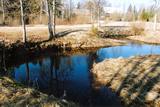 |
One of the largest karst areas in Estonia is found here. The unique Witch’s well is one of the most interesting parts of this area. During spring floods (not every year, and for only a short period of time), the well erupts with underground river waters to create an unusually powerful karst stream that can pump out as much as 100 litres per hour.
|
|
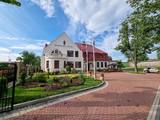 |
The only Art Nouveau building in Aluksne, built at the beginning of the 20th century, now works as a hotel. Historically, the building once housed a Railway hotel, so the original name of the hotel - "Bahnhofs Hotel" (transl. from German - "Railway" hotel) was kept. The hotel has 9 rooms (some of which extra beds can be arranged). At an additional cost an English-style breakfast is available. Hotel guests are offered a half-hour free access to the swimming pool at hotel "Jolanta", which is nearby, as well as electric scooter and bicycle rental. A banquet hall is also available for various events. N.B. Hotel bookings must be made at least 12 hours before arrival. |
|
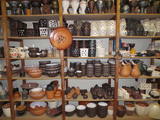 |
This old brickmaking kiln is used to prepare clay that is used by many ceramics artists. The owners also produce handmade household and design objects. Tours are available with attractive stories and creative workshops. Individual orders are also accepted. |
|
 |
Das Café befindet sich an der Straße Riga – Ventspils (A10): an der evangelisch-lutherischen Kirche von Strazde, in einem schönen Gebäude mit großen Fenstern. Es arbeitet mit lokalen Bauern zusammen. Hier werden Musikabende organisiert. Lettische Küche: Haferbrei, Kartoffelpfannkuchen, Omelette nach dem Geschmack der Bauer, Bauernfrühstück, gebratener Kabeljau, geschmorter Lachs, gebratene Schweinefuß-Scheibe, gegrilltes Schweinefleisch mit Rhabarbersoße, der heiße und knusprige Rhabarbernachtisch, lettische Biersorten. |
|
 |
Diese Schänke befindet sich in dem Haus des Verwalters des Landgutes von Koknese und ist im Namen des lettischen Novellenschreibers Rudolfs Blaumanis genannt worden, der auf dem Landgut gelernt und hier zwei Jahr gelebt hat. Lettische Küche: Gemischter Salat Rasols, Heringssalat, Bohnensalat, Salat der Stadt Valmiera, Zwiebelklops, Schweinrippen, hausgemachte Frikadellen, Braten im Meerrettichsoße, gebratene Leber, Hering mit Quark, geschichtetes Haferflocken-Dessert. Das besondere Gericht: Scheibe des Schänkwirtes. |
|
 |
No Vilces muižas pa pastaigu taku var aiziet līdz pilskalnam (12 m virs apkārtnes, labiekārtots), kas atrodas Vilces un Rukūzes upīšu satekā. Atradumi liecina, ka cilvēku apmetne šeit ir pastāvējusi jau vidējā dzelzs laikmetā. Pilskalna piekājē atrodas atpūtai labiekārtotā Zaķu pļava. Nostāsti vēsta, ka Vilces grava bijusi laupītāja Kaupēna slēpšanās vieta. |
|


