
| Nr | Name | Beschreibung |
|---|---|---|
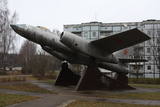 |
Im Dorf von Skulte ist ein seltenes Denkmal erhalten geblieben – Düsenflugzeug (Bombenflugzeug) aus der Zeit der Sowjetunion IL-28), das möglicherweise auch die geflügelten Raketen tragen könnte. Das Flugzeug ist auf drei betonierten Postamenten aufgestellt.
|
|
 |
Lauku mājā "Celmiņi" iespējams dzirdēt farmaceites Valentīnas Dāboliņas stāstus par veselību stiprinošiem ārstniecības augiem. Tiek piedāvāta augu atpazīšana un tēju vākšana, kā arī tēju degustācija un iegāde. |
|
 |
Das Wirtshaus befindet sich am Rande der Straße Murjani – Valka (A3) und man kann es dank dem Gebäude und den Märchenfiguren leicht erkennen, die sich auf dem Hof des Wirtshauses aufgestellt sind. Lettische Küche: Suppen (kalte Rote-Beete-Suppe, Bohnen-, Sauerkraut-, Ampfersuppe), gebratener Schweineschenkel, Blutwürste, Schweinrippen, Beerenkompott mit gerösteten Haferflocken, geschichtetes Roggenbrot-Dessert. Das besondere Gericht: Die feurige Suppe von Raganas ķēķis (Übers.: Hexenküche). |
|
 |
Die Mikaitas GmbH ist ein Familienunternehmen, das Zuchtschafe züchtet und im Jahr 2005 gegründet wurde. Das Unternehmen bietet Zuchtmaterial an Herden, die Fleisch herstellen, und dieses Zuchtmaterial gibt frühreifende Lämmer mit ausgezeichnetem Fleisch. In der Wirtschaft wird die Schafsorte Oxforddown gezüchtet. Hier kann man Zuchtlämmer im unterschiedlichen Alter, Zuchtschafe, Zuchtböcke, Garne, Waren aus Wolle, bearbeitete Schaffelle, Schafe für Weide, Lammfleisch und verschiedene Fleischerzeugnisse kaufen. |
|
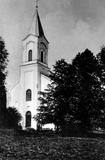 |
The first building of the church was built in 1641. The fourth building of the church was only built in 1856 – during the times of Pastor Johann Wilhelm Knierim. Its altar painting – The Crucified Christ (Golgotha) was painted in 1856 by Jozeps Millers, who was influenced by the altar piece in Munich Louis Church created by his teacher Peter Cornelius. An epitaph of Baroness Auguste Amalija von Pistohlkros, the sister of the owner of Bīriņi Manor and the patroness of the church, was immured in the memorial wall. Construction of the tower was completed on 11 June 1856, as evidenced by a memorial plaque on the wall of the church with an inscription “Erbaut von August Pistolkors 1856”. The church was consecrated in 1864. And a year later an organ by Martin Company with 8 registers, which was extended to 14 registers in 1903, was installed in the church. Unfortunately, the organ was destroyed in WW2. Saulkrasti (Pēterupe) Evangelical Lutheran Church survived both World War 2 and the Soviet period. The Soviet era was one of the most difficult times for the church, because many churches in the area were destroyed, pastors were discharged and the congregation fell apart. The Pēterupe congregation remained. As an architectural monument the church was lucky enough to undergo roof repairs of the tower even during Soviet times. Funds were granted by the Chairlady of the Executive Committee Ņina Manzūrova. |
|
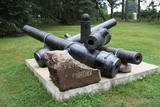 |
Auf der Insel von Dole (die größte Insel auf einem Fluss Lettlands) befindet sich das Wohnhaus des Landgutes von Dole (gebaut im Jahr 1898) – das Besitz der Familie Lēvisi of Menāri. Im Gebäude ist ein Museum eingerichtet mit reichlichen Exponatesammlungen, die über das Leben der Menschen am Ufer von Daugava erzählen. Daneben liegt einen Park (etnographische Gebäude, Fischzäune für Lachse und Neunaugen), wo auch fünf einzigartige Geschütze aufgestellt sind, die in Salaspils beim Bau des neuen Stadions gefunden worden sind. Im Jahr 1910 war an diesem Ort die Niederlassung der Armee der Zar und wurde das Denkmal für Peter I enthüllt. Eins von den hier gefundenen Geschütze ist auf der Exposition des Museums ausgestellt.
|
|
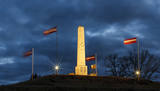 |
Befindet sich auf einer Anhöhe, an einem schönen Ort, am Ufer des Alūksne Sees bei der Pleskavas Straße (P 40). Das Denkmal wurde am 20. Juni 1923 vom Staatspräsident Jānis Čakste eröffnet. Das Denkmal wurde nach einem Entwurf des Bildhauers J. Miesnieks errichtet. Im Zentrum des Denkmals ist ein Schild mit einem gekreuzten Schwert dargestellt. Auf dem Sockel ist die Inschrift angebracht: “Den für Lettland gefallenen Kriegern des 7. Infanterieregiments von Sigulda. 1919 – 1920”. Auf einer anderen Seite ist folgende Inschrift angebracht: “Besser sein Leben geben, als unser Vaterland verlieren”. In der Sowjetzeit (1953) wurde das Denkmal abgerissen. Das Denkmal wurde 2009 erneuert. |
|
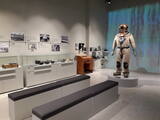 |
Das größte Wasserkraftwerk Lettlands, der erste Bauabschnitt begann 1936 am rechten Daugavaufer (Architekt E. Laube). Das erste Maschinenhaus (mit einer Leistung von 17 MW das größte im gesamten Baltikum) wurde 1936 in Betrieb genommen. Von 1976 – 1979 fand der zweite Bauabschnitt des Kraftwerkes statt, dabei wurde ein neues Gebäude am linken Daugava-Ufer errichtet, drei neue Turbinen mit Generatoren aufgestellt und somit die Leistung des Kraftwerkes auf 260 MW gesteigert. Weitere Rekonstruktionen am Kraftwerk fanden von 1998 – 2001 am linken Daugava-Ufer statt, wo sich jetzt auch das Energetik- Museum befindet. |
|
 |
Starp cilvēku un zirgu valda īpaša saikne, ne velti zirgs cilvēkam spēj būt gan draugs, gan palīgs, gan sabiedrotais dažādās dzīves situācijās. Saimniecība “Imanti” piedāvā braucienus zirga kamanās ziemā un ratos – vasaras sezonā. |
|
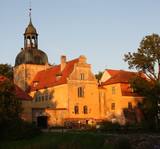 |
Das Schloss von Lielstraupe (deutsch Groß-Roop) ist das einzige erhaltene Gebäude in Lettland, das eine mittelalterliche Burg mit einer Kirche in sich verbindet. Mit dem Bau des Schlosses wurde im Jahr 1263 begonnen. Die Bebauung hat im 17. und 18. Jh., sowie in den Bauernaufständen von 1905 wesentlich gelitten. Der Gebäudekomplex wurde im Jahr 1909 laut den Plänen des Architekten Wilhelm Bockslaff erneuert. In der Kirche von Lielstraupe befinden sich mehrere Kunstdenkmäler, z.B. Malereien eines Orgelchors aus dem 17. Jh. und einer Kanzel aus dem 18. Jh. Im Jahr 1944 wurden in der Kirche die von dem Künstler Sigismunds Vidbergs geschaffenen Glasgemälde Golgatha und Geburt Christi aufgestellt. Auf dem Schlossturm kann man eine Uhr sehen, die der einheimische Uhrmacher Aide gemacht hat, aber auf der Kirchenwand – eine Sonnenuhr besichtigen. Im Schlosspark muss man den im Jahr 1744 aus Holz gebauten Glockenturm besichtigen. Im Jahr 1938 wurde in der Kirche eine Gedenktafel an die im Ersten Weltkrieg und in den Freiheitskämpfen Gefallenen enthüllt. Seit 1963 befindet sich in dem Schloss ein Krankenhaus für Narkologie. Die Kirche kann man während der Gottesdienste, aber die anderen Gebäude nur von außen besichtigen. |
|
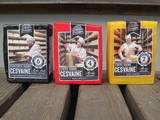 |
In Cesvaine bestehen alte Traditionen von Käseherstellung, da das Unternehmen „Cesvaines piens” auf der Basis der Käserei des Landguts von Cesvaine gegründet wurde. Das Unternehmen stellt Butter, Quark, Käse, hausgemachten Käse, saure Sahne her. Die Produktion kann man in einem zum Unternehmen nahegelegenen Geschäft „Pie Arkas” kaufen. |
|
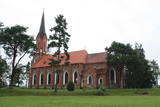 |
The Velēna Lutheran Church is at the crossing of the Smiltene-Gulbene-Lizums roads. It is said that the roof of the first wooden church at this location had a peat moss roof. The organ from the Sauer company still works, and it is one of the best organs in Latvia. The organist offers guided tours of the church. |
|
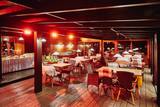 |
Das Restaurant befindet sich am Rand der Straße von Vidzeme (A2). Es ist ein schönes Blockhaus mit Strohdach und Innenausstattung aus alten Zeiten. Für die Vorbereitung der Speisen werden alte Traditionen mit den heutigen Anforderungen der Kunden verbunden. Lettische Küche: Kalte Suppe, Suppe mit Fleischbällchen, graue Erbsen mit Speck, Gerstengrütze, Neunaugen in Senfsoße, auf Kohlen gebackener Zander, gebratenes Schweineohr, Schweineschenkel-Braten, Hähnchenleber in Sauerrahmsoße, geschichtetes Roggenbrot-Dessert, Quarkdessert mit Moosbeerensoße. |
|
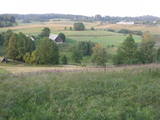 |
Dieses Territorium schützt die höchsten Erhebungen im Alūksne – Hochland, den Dēliņkalns – Berg, sowie seine Biotope an seinen Hängen. Die örtliche Landschaft ist auch geschützt. Es gibt hier Abfahrtsski – Routen und seine südliche Seite ist besonders reizvoll.
|
|
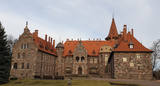 |
Schloss Cesvaine ist eines der schönsten Schlösser Lettlands (stilistisch dem historischen Eklektizismus zugehörig), sein Besitzer Adolph von Wulf hatte es seiner Frau geschenkt. Es wurde nach einem Projekt der Architekten Hans Grisebach und August Dinklage in den Jahren 1893 bis 1896 erbaut. Nach einem verheerenden Brand ist das Schloss nun in neuer Qualität „wiedergeboren“. Am Ufer des Flüsschens Sula erstreckt sich der Park von Cesvaine, dort gibt es auch einen ehemaligen Burghügel, der heute mit Wald bewachsen ist. Hier ist die Grabstätte des Schlossherrn Adolph von Wulf. Es lohnt sich, das Schloss in Begleitung eines Führers zu besuchen. Die Umbauarbeiten für das Dach der Burg Cesvaine wurden abgeschlossen. Das Schloss steht Besuchern in Begleitung von Spezialisten des Tourismuszentrums Cesvaine telefonisch zur Verfügung. 26172637 oder Pils Street 2. Im Frühjahr 2020 werden die Bauarbeiten fortgesetzt und das Schloss ist möglicherweise vorübergehend für Besucher nicht verfügbar. Informationen zu Änderungen www.cesvaine.lv |
|
 |
The ship "Baltā Kaza" transports tourists along the Daugava and also acts as a ferry from Jaunjelgava to Skriveri. In the summer season it runs at regular times. Excursions and trips to the Love Island, Aizkraukle castle ruins, Ķegums HPP, etc. are also possible. Other routes are possible. 25 passenger seats. During the trips you can get acquainted with the narration of cultural-historical, historical and biological objects on both banks of the Daugava. The owner organizes events and concerts both on the Daugava and on the bank of the Daugava. Possibility to rent SUP boards, rowing and canoe boats, catamarans at the berth. |
|
 |
The mouth of the most beautiful river of Vidzeme. On the seashore between the mouths of River Gauja and River Daugava, one of the largest dune ranges in Latvia with distinctive parabolic dunes overgrown with forest (wooded dunes) is situated. The Mouth of River Gauja is unique as it is one of the few major rivers in Latvia and in EU countries to flow into the sea naturally. There is no harbour or other hydro-engineering construction. It is a popular recreation area in the vicinity of Riga and Saulkrasti while, unfortunately, the lack of infrastructure makes it suffer from anthropogenic load. Not far from the rivermouth, hidden in dunes, there are pillboxes which were built in 1920 or 30ies as anti-airborne barriers. There was a whole range of them along the coastline from the mouth of the River Lielupe to the mouth of the River Gauja forming a part of the Daugavgrīva Fortress fortifications. The pillbox is made of concrete, ca 1.5m thick. Every year, on the 3rd Sunday in August, a lamprey festival takes place in Carnikava town by the Gauja rivermouth. Carnikava is called the Lamprey Capital as it is famous for its lamprey fishing tradition and generous catches. The Mouth of the River Gauja is a good bird-watching area, especially in spring and autumn when one can observe the highest variety of species. Just few of the many bird species that can be observed near the Gauja rivermouth |
|
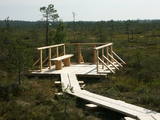 |
At the end of a wooden footpath in the Planči swamp is a viewing area and place for leisure. This is the place where you can enjoy landscapes of the high-type swamp and breathe the unusual air of the swamp. This is the only outdoor infrastructure object in Latvia with information posted in Braille. It is in the ZBR.
|
|
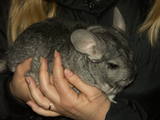 |
The owners breed chinchillas, which originated in the Andes in South America. They offer a tour and a story about the lives and growth of chinchillas. Animals and their pelts can be purchased. The lady of the house is also a painter. |
|
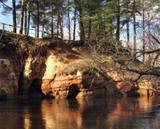 |
Taka ved gar Vaidavas krastu, kur iespējams veldzēties dabas skaistumā, kāds vērojams tikai šeit. Starp Apes vidusskolu un kapsētu Vaidavas upes kreisajā krastā ir izveidojušies 8 - 10 m augsti, līdz pat 100 m gari smilšakmens atsegumi - Raganu klintis. To lejasdaļā upes straume izskalojusi nelielas nišas. Pie klintīm pāri upei izveidots gajēju tiltiņš uz otru krastu, no kura klintis paveras visā savā krāšņumā. Te ir teikām un nostāstiem apvīti avoti un alas. Avots ar skaidru ūdeni iztek no vietas, kur Vaidavas upes smilšu klints krasts ir augsts un stāvs. Senāk vietējie ticējuši, ka tas ir veselības avots, jo daudzi to lietojuši dažādām acu slimībām.Dīvainos dabas objektus – Vilkaču priedi un Dvīņu priedes, Raganu slotu, “raganu apļus”, “raganu kaulus” u.c. te var apskatīt un vides gida vadībā mēģināt izprast to veidošanos
|
|


