
| Nr | Name | Beschreibung |
|---|---|---|
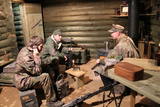 |
Pie Vidzemes šosejas pirms Melturu tilta pāri Amatai ir privātais muzejs "Mežabrāļu bunkurs". Bunkurs izveidots, lai varētu vēstīt par Nacionālo partizānu mežabrāļu cīņu laikā no 1944.-1956. gadam, kad mežos pret okupācijas varu cīnījās ap 20 000 Latvijas patriotu. Nacionālo partizānu bunkurs izveidots balstoties uz savāktajām mežabrāļu atmiņām, dienasgrāmatu pierakstiem un fotogrāfijām. Uz bunkuru ved meža taka ar informāciju par dažādiem mežabrāļu piedzīvojumiem un cīņām. Bunkura pazemes daļā apskatāmi vēsturiskie priekšmeti, kas viņus pavadīja dzīvē un cīņā. Saimnieks piedāvā pastaigu pa meža taku, kur izvietota informācija par mežabrāļiem un slēpņu spēle bērniem. Ar iepriekšēju pieteikšanos iespējams iekļūt bunkurā un apskatīt iekārtotu bunkuru ar mežabrāļu izmantoto ieroču, munīcijas un citu priekšmetu ekspozīciju. Stāstījumu papildina savāktās mežabrāļu interviju videoieraksti. Apmeklētājiem iespējams pasūtīt mednieku desiņu cepšanu lapenē pie bunkura. |
|
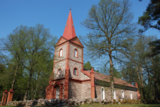 |
The church was built in 1835, and its greatest treasure is the organ, which was built by Karl Bittner in 1854. The manse is being restored. Boats are available for rental. |
|
 |
The trail tells about grey dunes which have survived thanks to the border restrictions and the presence of military. The trail starts from the parking place at the mouth of the Užava river. It is one of the few natural rivermouths in Europe. One can also see the „tacis”, an industrial installation for lamprey (Lampetra fluviatilis) fishing during their spawning migration period. The 3km long trail is circular. It winds for 1.5km from the Užava rivermouth to the North, along the coastline (the beach is covered with sand and pebbles), and returns to the starting point by a gravel road through grey dunes. Along the trail, one can observe a distinct white dune with rare plant species Linaria loeselii, Lathyrus maritimus, Anthyllis arenaria, Tragopogon heterospermus. About 1km from the rivermouth, in the sea, one can see a wrack of a sailing ship (parts of frame). The visibility depends on the flow of sand in the sea. The way back opens a beautiful view of the range of grey dunes. Unfortunately, Scots Pine starts taking over the area. There are three important biotopes of EU significance: „Fixed dunes with herbaceous vegetation 2130”, „Decalcified fixed dunes with Empetrum nigrum 2140” and „Dunes with Salix arenaria 2170”, forming a unique mosaic. Typical species here: mountain Alison ‘(Alyssum gmelinii), Pasqueflower (Pulsatilla pratensis), Sand Pink (Dianthus arenarius), Rosemary Leaved Willow (Salix rosmarinifolia), Dark Red Helleborine (Epipactis atrorubens), Kinnikinnick (Arctostaphylus uva-ursi). As a former military site, some military constructions can be seen here like horseshoe-shaped sand ramparts by the road in gray dunes. They were built to disguise military vehicles in case of sea attack. By the Kangroti graveyard, towards the Užava river, there is an underground pillbox. It is a one-man fortification to fire along the coastal perimeter. The Mouth of River Užava walking route is in the nature reserve „Užava” |
|
 |
The landlady of this farm will tell you about healthy herbal teas and home-based goodies. If you wish to spend the night under the stars, we offer a place for tents and a campfire on the banks of local river by the old Lūkas windmill. “Aploki” will welcome anyone who wants to relax in a peaceful and quiet atmosphere. |
|
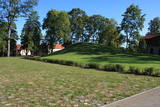 |
An dieser Stelle hatte der Deutsche Ritterorden 1242 eine Steinburg erbaut, von der bis heute nur einzelne Mauerfragmente erhalten sind und ein Kellergewölbe, in dem man nach vorheriger Anmeldung örtliche Weine probieren kann. Später befand sich hier das Schloss des Herzogs von Kurland, das im Nordischen Krieg zerstört worden war (1701). Dank eines umfangreichen Rekonstruktionsprojektes wurden im Park hölzerne Stege, kleine Brücken und Informationstafeln errichtet, eine Laube und ein Springbrunnen erbaut. Im Park wurden 22 Skulpturen und Skulpturengruppen der Bildhauerin Līvija Razevska aufgestellt. |
|
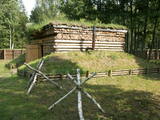 |
Errichtet an der Stelle, an der im Ersten Weltkrieg 1916 die sogenannte Weihnachtsschlacht der russischen gegen die deutschen Truppen stattfand. Nach dieser Schlacht wurde der Mut und die Heldenhaftigkeit der lettischen Schützen weit über die Landesgrenzen hinaus bekannt . Auf dem Ložmetējkalns (Maschinengewehrberg) ist eine Gedenkstätte für die lettischen Schützen errichtet und ein Aussischtsturm erneuert worden. Von dort aus sieht man das Maztīreļa purvs (Kleinheide Moor), die Stelle, an der ehemals eine deutsche Schmalspurbahn in Nord-Süd Richtung kreuzte, ist noch gut zu erkennen. Hier kann man sich auf eine Wanderung mit oder ohne Führer begeben, das Mangalis-Haus des Weihnachtsschlachtmuseums besuchen, in dessen Nachbarschaft eine Erkundungsroute errichtet ist, oder an thematischen Bildungsveranstaltungen und Schlachtimitationen teilnehmen. Zu besichtigen sind Denkmäler, Soldatengräber, Ausgrabungen, Fortifikationen, Erdhütten und mehr. Es gibt auch einen an autentischer Stelle rekonstruierten Abschnitt eines Befestigungssystems – einen Schutzbau und einen Teil der ersten deutschen Schutzlinie, den sogenannten „deutschen Wall“. |
|
 |
Hauptstadt von Hiiumaa. |
|
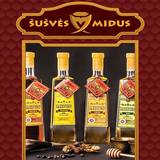 |
Der Hausherr ist Imker und stellt das älteste edle litauische Getränk her: Met. Es gibt Veranstaltungen zur Verkostung von Honig und Met. Und natürlich kann man auch die verschiedensten Bienenprodukte erwerben, darunter auch Kerzen aus echtem Bienenwachs und verschiedene Sorten Met. |
|
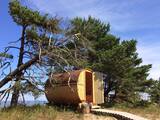 |
Ein ökologischer, einem Fass ähnlicher Bau aus Fichtenholz, der sich am Strand befindet. Das Bett befindet sich am Fenster, um romantische und der Natur nahe Gefühle zu erwecken. Ein ausgezeichneter Ort zur Beobachtung des Sonnenuntergangs und Sonnenaufgangs, sowie zum Genuss der Nähe der Ostsee. |
|
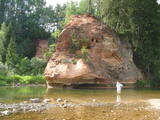 |
Der schönste Platz des Amata-Urstromtals mit Blick auf den Felsen, sowie auch vom Felsenabschuß (200 m lang und bis zu 44 m hoch). Am gegenüberliegenden Ufer befindet sich das Besucherzentrum. |
|
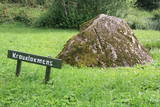 |
Rīgas – Daugavpils šosejas (A 6) malā (vietā, kur no Zemkopības institūta nogriežas ceļš uz Skrīveriem) redzama zema ieplaka ar Kraukļu akmeni, kas ir sena kulta vieta. Pie akmens veikti arheoloģiskie izrakumi, kuru laikā atrastas senlietas. Vecākā ir no 12. gadsimta. Akmens aprakstīts slavenajā Andreja Upīša (1877. – 1970.) darbā „Sūnu ciema zēni”. |
|
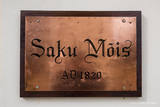 |
This manor is a prime example of classical architecture in Estonia. Since 2002 Saku manor is also a recreational centre. |
|
 16 Tagen
|
Diese Tour ist ein Roadtrip von Rīga nach Vilnius. Unterwegs werden Sie kleine Abschnitte des baltischen Diese Tour eignet sich für Reisende, die die Natur, sowie die urbane Landschaft besichtigen möchten, die aber nicht auf längere Wanderungen mit Rucksäcken, Zeltengehen u.ä. bereit sind. Ein Auto bringt Sie von einer kurzen Wanderung zur nächsten. Ein weiterer Transfer ist von der Insel Rusnė in das Dubysa-Flusstal geplant, wodurch die litauischen Abschnitte des baltischen Küstenwanderweges und des Wald-Wanderweges miteinander verbunden werden. Die Tour umfasst die lettischen und litauischen Naturwerte – die Nationalparks Ķemeri und Slītere, das Kap Kolka, den Naturpark Pape, die Kurische Nehrung, die Insel Rusnė, den Fluss Nemunas, den Regionalpark des Dubysa-Flusstals mit seinem hügeligen Gelände, sowie das waldreiche und menschenleere Gebiet Litauens – den Nationalpark Dzūkija. Neben den Hauptstädten beider Länder führt Sie die Route zu anderen großen Städten – Ventspils, Liepāja, dem beliebten Kurort der Kurischen Nehrung – Nida, sowie zu historischen Badeorten: Ķemeri, Birštonas und Druskininkai. Sie werden auch die Stadt Kaunas und die wunderschönen Flusslandschaften des Flusses Nemunas (dt. Memel) sehen. |
|
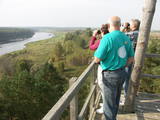 |
The old wooden tower at this site was torn down and replaced with the one that is there now. The restored tower offers one of the loveliest views in Eastern Latvia – one of the eight curves of the Daugava. This is the Rozališki curve. Here you will get a whole new sense of the Daugava River and its mighty valley in a place where the waters of a hydroelectric plant bubble away in our present day and age. It is claimed that the scene that is seen on the 10 lats note is based on the view which can be seen to the West from the tower. |
|
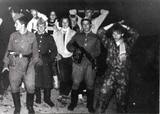 |
The Soviet Border Guard arrived at Lapmežciems (its border with Ragaciems) in the mid-1960s and left in 1991. Some 50 military personnel were stationed here. The military personnel and local residents organised various events and celebrations. The only thing that worried locals was a radar which was said to cause various problems. The zenith missiles were dismantled and taken away in 1991. An apartment building is still on what was then the military base. |
|
 5 Tagen
|
Historiker behaupten, dass die Liven auf dem alten Territorium Lettlands seit dem 10. Jh. treten. Die Liven besiedeln Nordkurland, Unterläufe von Daugava und Gauja. Sie fragen die ersten ankommenden deutschen Kaufmänner sachkundig – Wieviel kostet zur Zeit Walkstoff auf dem Markt in Visby? Das bedeutet, dass den Liven die schwedische Insel Gotland bekannt ist. Die Liven sind gute Seefahrer, mutige und starkherzige. Nur ein starker Mensch kann mit dem Meer gut auskommen, auf Fischfang und Robbenjagd gehen, in den keineswegs ergiebigen Sanden der Meeresküste festwurzeln. |
|
|
|
Entstanden als eine 6 km entfernte Arbeiterstadt des schon geschlossenen Ignalina-Atomkraftwerks. In der Stadtbebauung dominieren die für die Sowjetzeit typischen architektonischen Formen und Monumentalbauten. |
|
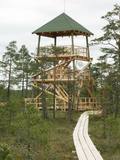 |
This is part of a hiking trail along the Cena bog. It is on the western side of the bog, at the centre of the 5-kilometre circular trail. You can see the vast swamp, as well as a military road that was installed during World War I and is marked by an “alley” of large pine trees. Alongside the tower is a fragment of the road that was installed more recently.
|
|
 |
Ein Ort, wo man die Natur und gutes Essen genießen kann. Die Kneipe Kogre bekam ihren Namen von der Sieben-Fische-Suppe – die Karausche (koger) ist der siebte Fisch. Der Gastgeber ist ein Angler und bereitet zusammen mit seiner Frau verschiedene Fischgerichte aus seinem Fang zu. |
|
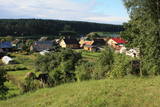 |
Karņicka kalns pēc savas izcelsmes nav kalns, bet gan Daugavas ielejas nogāzes daļa ar labu skatu uz Krāslavas mazstāvu koka apbūvi. Ar šo vietu saistīts traģisks nostāsts par poļu virsnieka Josifa Karņicka un grāfa Plātera meitas mīlestību, kurai nebija lemts piepildīties tā laika „paražu” dēļ. Tā rezultātā abi nelaimīgie nolemj izdarīt pašnāvību. Virsnieks nošaujas, bet Emīliju pēdējā brīdī izglābj kalpone, neļaujot tai izlēkt pa pils logu. J. Karņicka pašnāvības vietā ir uzstādīts piemineklis. Nedaudz tālāk – rietumu virzienā guļ t.s. Austriņa akmens, pie kura 1909. gadā iedvesmojies un radījis latviešu rakstnieks Antons Austriņš. |
|


