
| Nr | Name | Beschreibung |
|---|---|---|
 |
Die Idee des Zentrums besteht in der Stärkung der Gesundheit durch reine Lebensmittel. Deshalb wird hier geschmackvolle Feinkost aus leicht verarbeiteten, vitaminreichen Lebensmitteln angeboten. Hauptsächlich werden die im Garten des Zentrums und in den benachbarten Betrieben angebauten frischen Produkte verwendet. Speziell entwickelte Kuren bestehen aus leckeren Gemüsesuppen und Eintöpfen sowie verschiedenen Breien. Die Heilkuren sehen nicht nur bestimmtes Essen, sondern auch Prozeduren und Übungen vor. Sie müssen deshalb im Voraus bestellt werden. |
|
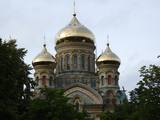 |
Das Gotteshaus ist von 1900 bis 1903 im byzantinischen Stil als eine Kirche der Kriegsgarnison gebaut worden, bei deren Einweihung Zar Nikolai II teilgenommen hat, indem der Heilige Nikolai – der Schutzpatron der Seeleute geehrt wurde. Das prachtvolle Gebäude wurde während des Ersten Weltkriegs von den Deutschen ausgeraubt. Während der Ersten Republik Lettlands diente die Kathedrale als das Gotteshaus der Garnisone von Liepaja. Die Sowjetarmee hat die Räume des Gotteshauses als das Kino des Sport- und Matrosenklubs und als ein Lager benutzt. Es gibt Erzählungen darüber, dass die Sowjetsoldaten aus den Heiligenbildern der Fassade Teile von Goldmosaiken herausgebrochen haben. Heute wirtschaftet in der Kirche die orthodoxe Gemeinde. Beim Bau der Kathedrale ist eine einzigartige Technologie der ununterbrochenen Betonierung verwendet worden, darum haben die Baukonstruktionen keine Stützsäulen und ihr Gewicht nur auf die Gebäudewände stützt, die die vier sich kreuzenden Bogengewölbe halten. Heute ist dieses Gotteshaus die höchste orthodoxe Kathedrale in Lettland. |
|
 |
The farmstead "Vitolini" specializes in horse breeding, as well as horse-riding lessons. It is possible to go horse-riding in the forest or to take a ride in a horse team. |
|
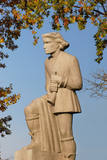 |
Ein vom Bildhauer Kārļis Zemdega errichtetes Denkmal (1937) hat eine Volksbenennung übernommen. Ursprünglich hatte das Denkmal den Namen „Das Denkmal für die Befreier von Rūjiena und die gefallenen Krieger”. In der Sowjetzeit wurde das Denkmal nur deswegen nicht demontiert, da ein auf der gegenseitigen Straßenseite auf einer größeren Erhebung stehendes Denkmal für Lenin “zupresste” das Denkmal für den Trompeter von Tālava. |
|
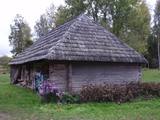 |
This is the home of singer and oral tradition keeper Lidija Jansone, who is a holder of the Latvian Order of Tree Stars and a fierce defender of the cultural heritage of the Suiti people. She will tell you about her community’s history and traditions and about the special bourdon singing of the Suiti. Lidija will also talk about how beer was once brewed by our ancestors for various celebrations. |
|
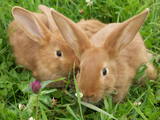 |
This is the most modern rabbit farm in the Baltic States. The animals live in cages in a shed, but there are also cages outside where they can be viewed. Children will love contacts with 24 types of rabbits, as well as an opportunity to study the surrounding area from a viewing tower. If you apply in advance, you can purchase fresh rabbit meat, sausages, dried meats and pâté. A new thing at the farm is the Mangalicas breed of wild pigs from Hungary. |
|
 |
The steep shores of Jūrkalne are one of the most popular tourist destinations in Kurzeme. The shores are up to 20 m high, washed by the waves and mostly made of sand and narrow bands of pebbles and stones. Opposite the centre of Jūrkalne is a viewing platform and a set of stairs that lead to the sea. The shore continues in the direction of Pāvilosta and Ventspils. |
|
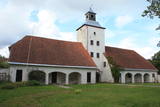 |
The complex dates back to the 17th and 18th century, when a fortress was replaced by a mansion and other buildings. The rectangular yard that is in the centre of the state is surrounded by the mansion, two granaries with columns that were built opposite one another, a stable and a wheelhouse. The stable and wheelhouse, the bell tower and the gate create the most impressive part of the buildings. Bells were rung because of religious rituals, but also to inform people at the estate about everyday issues. The silhouette of the building is reminiscent of cloisters, city halls and churches that were common in Europe in the 18th century. In 1780, the estate was taken over by the family of Karl Otto von Löwenstern, and the mansion can only be viewed from the outside. There is a hiking trail near the estate. |
|
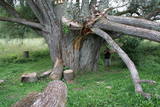 |
This is certainly the thickest White Willow (Salix alba) in Latvia and perhaps the thickest one in the Baltic States. Many of its mighty branches are resting on the ground, and the enormous monolithic trunk has been split. There’s a small information stand alongside the tree. A pathway which starts at the Raganu cliffs can be taken to the tree.
|
|
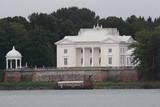 |
Das heute gesehene Ensemble (im Stil des Neorenaissance gebautes Gutshaus) entstand im wesentlichen in der Zeit zwischen 1897 – 1902 als ein Eigentum vom Grafen Joseph Tyszkiewicz und seiner Frau. Ein Park. |
|
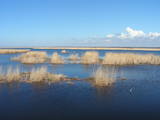 |
Das ist ein flacher, lagunenartiger See, der mit dem ihn umgebenden Feuchtgebiet von internationaler Bedeutung ist. 271 Vogelarten wurden in diesem Gebiet gezählt, einschließlich 43 Vogelarten, die in der Lettischen Roten Liste aufgeführt sind und 15 aus der Europäischen Roten Liste. Zum Park gehören das Nida-Moor und der Teil des Meeres, das sich längsseits des Parks befindet. Zwischen dem Pape-See und der Ostsee befindet sich Lettlands älteste Vogelberingungsstation, wo nicht nur Vögel beringt werden, sondern auch Fledermäuse. Der Pape-See ist das erste Territorium in Lettland, wo Rückzüchtungen von Wildtieren ausgewildert wurden, um die überschwemmten Wiesen des Sees sachgerecht verwalten zu können. Zuerst waren es Wildpferde (Konik-Pferde), dann Auerochsen und der europäische Bison. Durch den Pape-See führt auch Lettlands einzige markierte Wassertourismusroute. Besucher können Vogel- und Naturbeobachtungstürme nutzen, Naturpfade usw. Das Dorf Ķoņi ist ein einzigartiges Beispiel für ein am Meer gelegenes Fischerdorf. Der Pape-See ist unter den Vogelbeobachtern beliebt. Das Besucherzentrum wurde im “Haus der Natur “ des WWF eingerichtet.
|
|
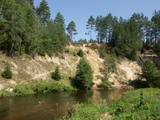 |
Gegründet für den Schütz des von Wäldern reichtesten Gebietes Lituens und der mit der Bewirtschaftung des Gebietes verbundenen Volkstraditionen. |
|
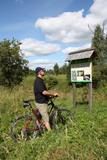 |
Taka veidota gar Gaujas labo krastu augšpus un lejpus Gaujienas un tā iepazīstina ar nogāžu mežu un dažādu pļavu biotopiem. Visā tās garumā izvietoti informatīvi stendi. Takas daļu lejpus Gaujienas var braukt ar velosipēdu.
|
|
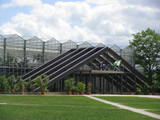 |
The National Botanical Garden in Salaspils ranks as the largest botanical garden in Latvia and in the Baltics with a territory of 136 hectares. The National botanical garden collection consists of about 14 thousand different varieties. More than 5,000 plants are found in the arboretum, as well as various other exhibitions, such as orchards, rosaries, ornamental plants. Botanical Gardens can inspire you to uprade your own garden assortment with new plant varieties and offers the experience of learning about botanical knowledge in nature. In addition, it presents opportunity to expand your personal photo archive with an exclusive background photographs and close-ups. There is a playground for children, comfortable cycling paths, nordic walking paths, picnic possibilities. |
|
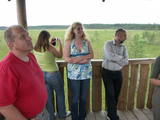 |
The tower is beyond the Oleri estate, in the small Oleri swamp, where at the end of a wooden footpath you can step upward a bit and learn about the landscape of a transitional swamp. This is part of the ZBR.
|
|
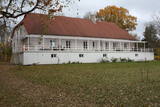 |
Muiža vēsturiskajos avotos ir minēta jau 1560. gadā. Tagad redzamā kungu māja ir celta no akmens 1805. g. Padomju laikos tajā atradās Matsalu rezervāta administrācija, bet mūsdienās ēkā ir izveidota viesnīca. Līdz muižai nokļūstam pa skaistu aleju, kuras apkaimē ir redzamas citas muižas kompleksa ēkas. |
|
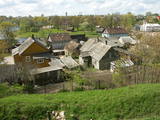 |
The Ludza castle hill offers one of the most interesting views in Latgale – that of the oldest town in Latvia and its historical centre, Great Lake Ludza and Small Lake Ludza, the ruins of the castle of the Livonian Order, Baznīckalns hill, churches, the regional research museum, the craftsmen’s centre, etc.
|
|
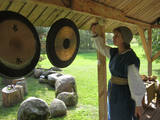 |
Natālija Rutule owns this workshop in the Alsunga Museum building. She teaches master classes in preparing various health and beauty products. A sound workshop offers a chance to listen to the peaceful sounds of gongs, bells and other instruments. |
|
 3 Tagen
|
Dieser Teil des Waldweges bietet die Möglichkeit, Setomaa oder das „Land der Setos“ zu sehen, das von Setos bewohnt wird - einer ethnografischen Gruppe mit spezifischen alten Traditionen und einem einzigartigen Sprachdialekt. Wanderer auf dem Forest Trail können das traditionelle Gehöft von Setos besuchen und die Küche von Setos genießen. Die Wälder der Region sind besonders im Frühherbst reizvoll, wenn der Boden durch die blühende Heide lila gefärbt ist. Es besteht eine gute Chance, wilde Pilze und Beeren zu pflücken. Einer der schönsten Abschnitte dieses Weges in Setomaa führt entlang des Flusses Piusa, wo der Fluss von Sandsteinaufschlüssen umgeben ist. Sie werden auch die Piusa-Höhlen besuchen. Die Tour endet im Värska Resort - mit Sanatorium und SPA, die die Stärken der lokalen Natur nutzen: Mineralwasser und Seeschlamm. Das Mineralwasser von Värska ist in Estland und anderswo bekannt. |
|
 |
Atrodas Īvandes dienviddaļā, Vankas upītes krastos. Ūdensdzirnavas celtas 1842. gadā (par to liecina arī sienā iemūrēts dzirnakmens) un darbojas joprojām. To iekārtas ir saglabājušās no 1930. gada. Divstāvu ēka apskatāma no ārpuses, bet iepriekš piesakoties, - arī no iekšpuses. |
|


