
| Nr | Name | Beschreibung |
|---|---|---|
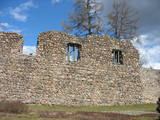 |
Der Bau der Valmiera–Burg wurde 1283 angefangen. Im Laufe des Nordkrieges (1702) wurde die Burg verbrennt, aber am Ende des 17. Jh. wurden die Außenmauern der Stadt abgebaut. Es sind die Ruinen der Burg und die Reste der anderen mittelalterlichen Befestigungsanlagen erhalten. |
|
 |
Saimniecības drava atrodas netālu no Isnaudas pagasta Bobišiem, dabiskā vietā, kur dabiskā vidē nav lauksaimniecībā izmantojamo zemju un citu objektu. Bišu iegūtā produkcija tiek pārstrādāta Zilupē, Sila ielā 4, kur saimnieki uzņem ekskursijas un var iegādāties saražotos labumus. Saimniecība ir bioloģiski sertificēta. Iegūst liepu un dažādziedu medu. |
|
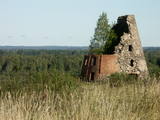 |
The area known as the territory of high hillocks has several heights – Lakta Hill (250 metres above sea level), Egļu Hill (268 metres above sea level), and Bākūži Hill (272 metres above sea level). They are connected by an earthen road – it’s worth hiking the trail to find the best viewing areas. A very fine view of the backs of hillocks in the Vidzeme highlands can be seen from the northern side of Lakta Hill.
|
|
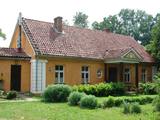 |
6 km südwestlich von Iecava befindet sich das Elternhaus von Eduards Virza (mit richtigen Namen: Jēkabs Eduards Liekna) (1883-1940), in das der Schriftsteller zusammen mit seiner Frau Elza Stērste 1901 zurückkehrte. Virza war einer der berühmtesten lettischen Dichter und Schriftsteller des 20. Jh., Publizist und Übersetzer von Poesie. Im Haus „Billītes“ entstanden viele Gedichte, und 1933 auch das legendäre Werk „Straumēni“, in dem das Leben des lettischen Bauern geschildert wird. Jetzt befindet sich im Haus „Billītes“ ein Virza-Museum. Dessen Begründer sind die Tochter des Schriftstellers Amarilis Liekna, deren Sohn Edvards Liekna, Tochter Anna Žīgure und Enkelin Diāna. Nach vorheriger Anmeldung können Besucher sich mit den Museumsexponaten und dem Werk von Virza bekanntmachen. |
|
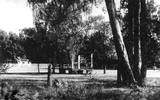 |
Vannūzis (Bath) – A building of the five-building complex “Kurhaus”. During the times of the Neibāde resort, this small building used to be a bath place. In order for the guests of the resort to be able to take a dip in the sea water even in bad weather, barrels of water were delivered by horses to the bath place. |
|
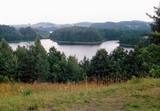 |
Vermutlich ein heidnischer Hügel. Schöner Blick auf die 6 Seenlandschaften. Ein Symbol vom Nationalpark. |
|
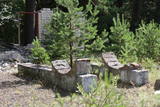 |
Der Posten der Grenzwache Ovīši 521 ist im Besitz vom Abwehrministerium der Republik Lettland und das Territorium ist für Zivilpersonen geschlossen. Nur einzelne Ruinen der Gebäude an der Düne sind für Interessenten zugänglich.
|
|
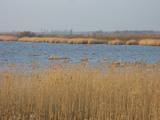 |
Ein seichter, eutrophischer (mehr als 60% Sättigung), lagunenähnlicher See, dessen Schutzgebiet den überwuchernden See und die ihn umgebenden Feuchtwiesen erhalten soll. Es gibt mehr als 60 Arten von Nistvögeln in dieser Gegend. Das Dammsystem am Südufer des Sees kann von den Besuchern als Beobachtungsstandort genutzt werden.
|
|
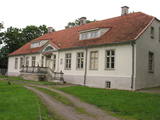 |
Muiža vēsturiskajos dokumentos pirmoreiz ir pieminēta 16. gs. Tagad redzamā vienstāva kungu māja ir vairākreiz pārbūvēta laikā no 17. – 19. gs. 1997. g. ēku vēlreiz atjaunoja un tagad tajā atrodas viesu nams un Vilsandi nacionālā parka apmeklētāju centrs, kur var iegūt ne tikai vērtīgu informāciju, bet arī apskatīt Vilsandi apkārtnē atrastās fosilijas. No Lonas muižas var uzsākt pārgājienu uz Vilsandi salu. Vienā no muižas ēkām ir izveidota Vilsandi nacionālajam parkam veltīta ekspozīcija. |
|
 3 Tagen
|
Это один из 6 маршрутов путешествий в серии «Насладитесь деревней!», который приглашает Примерное время прохождения маршрута: четыре – пять дней, в зависимости от количества выбранных достопримечательностей и времени, отведенного для их осмотра. |
|
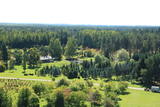 |
This arboretum is in a lovely location in the Vidzeme highlands. It covers 140 hectares of land and offers a look at interesting coniferous trees, lianas, lilacs, rhododendrons and peonies. The facility has a modern visitor information centres.
Unique species: The Tulip Tree (Liriodendron tulipifera), the Fringe Tree (Chionanthus virginicus), and the Kobushi Magnolia (Magnolia kobus).
|
|
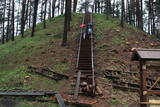 |
Viens no lielākajiem Augštaitijas pilskalniem, kas 2011. g. pēc vērienīgiem rekonstrukcijas darbiem ir izzināms jaunā kvalitātē - gan no infrastruktūras, gan arī ainaviskā viedokļa, jo iepriekš biezais pamežs (tagad retināts) traucēja uztvert iespaidīgo objektu. Arī no pilskalna plakuma paveras labs skats uz diviem blakus esošajiem ezeriem. Tā virsotnē apskatāms piemiņas akmens, kas vēsta par pirmā Lietuvas valsts prezidenta Antana Smetona (Antanas Smetona) apmeklējumu 1934. g. viņa 60 gadu jubilejā. Pilskalns it ticis apdzīvots jau I tūkstošgadē pirms Kristus. Uzskata, ka 14. – 15. gs. te atradusies hronikās aprakstītā Linkmenu pils. Jaunizveidotā taka pilskalnu savieno ar vēl vienu populāru apskates objektu – Ladakalni. |
|
 |
Das Restaurant befindet sich in der Altstadt von Liepaja, im Hotel Līva, und bietet eine Speisekarte mit lettischen Gerichten und Gerichten aus der ganzen Welt an. Für die Vorbereitung der Gerichte werden auch selbstgezüchtete Gewürzpflanzen verwendet. Lettische Küche: Leicht gesalzener Hering mit Quark, gefüllte dünne Pfannkuchen, Kartoffelpfannkuchen, geschmorte Schweinerippen, Hirschfleisch mit Wacholderbeeren, gebratener Entenschenkel, gebratenes Zanderfilet mit Buchweizen, geräuchertes Heringsfilet. Das besondere Gericht: Liepājas menciņi (Kabeljau von Liejapa) geräucherter Kabeljau mit Kartoffeln, Zwiebeln und Dillen in einem Keramiktopf. |
|
 |
Ein Ort in der Innenstadt von Tartu, an dem man kleine und leichte Speisen à la fish & chips genießen kann, die mit den Produkten der Peipussee-Gegend zubereitet werden. Im kleinen Laden werden die Essenstraditionen aus der Peipussee-Gegend mit der modernen Küche vereint. Dazu werden nur die besten örtlichen Produkte benutzt. Einen riesigen Erfolg genießen bereits fish & chips aus Zanderfilet, saftiger Burger und Wrap. |
|
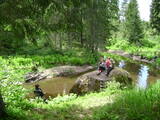 |
The trail tells about grey dunes which have survived thanks to the border restrictions and the presence of military. The trail starts from the parking place at the mouth of the Užava river. It is one of the few natural rivermouths in Europe. One can also see the „tacis”, an industrial installation for lamprey (Lampetra fluviatilis) fishing during their spawning migration period. The 3km long trail is circular. It winds for 1.5km from the Užava rivermouth to the North, along the coastline (the beach is covered with sand and pebbles), and returns to the starting point by a gravel road through grey dunes. Along the trail, one can observe a distinct white dune with rare plant species Linaria loeselii, Lathyrus maritimus, Anthyllis arenaria, Tragopogon heterospermus. About 1km from the rivermouth, in the sea, one can see a wrack of a sailing ship (parts of frame). The visibility depends on the flow of sand in the sea. The way back opens a beautiful view of the range of grey dunes. Unfortunately, Scots Pine starts taking over the area. There are three important biotopes of EU significance: „Fixed dunes with herbaceous vegetation 2130”, „Decalcified fixed dunes with Empetrum nigrum 2140” and „Dunes with Salix arenaria 2170”, forming a unique mosaic. Typical species here: mountain Alison ‘(Alyssum gmelinii), Pasqueflower (Pulsatilla pratensis), Sand Pink (Dianthus arenarius), Rosemary Leaved Willow (Salix rosmarinifolia), Dark Red Helleborine (Epipactis atrorubens), Kinnikinnick (Arctostaphylus uva-ursi). As a former military site, some military constructions can be seen here like horseshoe-shaped sand ramparts by the road in gray dunes. They were built to disguise military vehicles in case of sea attack. By the Kangroti graveyard, towards the Užava river, there is an underground pillbox. It is a one-man fortification to fire along the coastal perimeter. The Mouth of River Užava walking route is in the nature reserve „Užava” |
|
 12 Tagen
|
The tour combines the most beautiful southern parts of the Forest Trail in Lithuania and Latvia. The route starts in Druskininkai, Lithuania, and for the next day you will walk through forests of the Dzūkija National Park. After getting to Vilnius and Kurtuvėnai Regional Park, two sections of the Forest Trail will take you from Dengtiltis to Šaukėnai. Since it is among the most forested areas of Central Lithuania, the Kurtuvėnai Regional Park with its glaciated valleys is a wonderland of forests, waters and wetlands. The Forest Trail will run along small forest paths, tourist trails, beautiful tree alleys and wetlands. Next you will take public transportation to reach the Žemaitija National Park, where you will taketwo sections of the Forest Trail from the pilgrimage town of Žemaičių Kalvarija along the lakes of Plateliai, Ilgis and Beržoras to the town of Plateliai. It is one of the most beautiful towns of Samogitia taking pride in its manor park and the viewing platform on Lake Plateliai. Žemaitija National Park takes pride in its old pine and fir forests, as well as mixed forests. From there on the Forest Trail takes you along the riverside promenade in Kuldīga, continues through the nature park “Abavas senleja” from Renda to the wine and cider town Sabile and Kandava. The section along the Abava River Valley Nature Park is the most diverse river valley in Kurzeme in terms of landscapes and terrain. The final section of the tour takes you to the Ķemeri National Park, which is an important place for the protection of wetlands. As to the town – Ķemeri – it is the former balneological and sulphur springs resort. The tour ends on the seaside – the village of Bigauņciems, from where you can easily get to Rīga. Optionally, one can take a detour along the Lake Sloka trail with its bird-watching tower or pay a visit to the “Forest House” – the visitor’s centre of the Ķemeri National Park. |
|
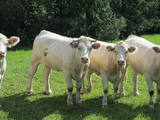 |
The farm produces vegetables, medicinal plants and honey. You can look at Charolais cattle and buy products. The lady of the house will talk about her experience in relation to her farm and biological farms that are in the neighbourhood. |
|
 3 Tagen
|
Dieser Teil des Waldweges bietet die Möglichkeit, Setomaa oder das „Land der Setos“ zu sehen, das von Setos bewohnt wird - einer ethnografischen Gruppe mit spezifischen alten Traditionen und einem einzigartigen Sprachdialekt. Wanderer auf dem Forest Trail können das traditionelle Gehöft von Setos besuchen und die Küche von Setos genießen. Die Wälder der Region sind besonders im Frühherbst reizvoll, wenn der Boden durch die blühende Heide lila gefärbt ist. Es besteht eine gute Chance, wilde Pilze und Beeren zu pflücken. Einer der schönsten Abschnitte dieses Weges in Setomaa führt entlang des Flusses Piusa, wo der Fluss von Sandsteinaufschlüssen umgeben ist. Sie werden auch die Piusa-Höhlen besuchen. Die Tour endet im Värska Resort - mit Sanatorium und SPA, die die Stärken der lokalen Natur nutzen: Mineralwasser und Seeschlamm. Das Mineralwasser von Värska ist in Estland und anderswo bekannt. |
|
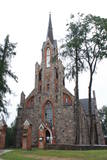 |
Found in the northern part of Cesvaine, the church was built of fieldstones in the Neo-Gothic style in 1879 by the architect Paul Max Bertschy. The church was restored in 1929 and again in the early 1990s. The altar painting, “Christ on the Cross” (1923) is by Jēkabs Bīne.
|
|
 2 Tagen
|
Die Region Aukštaitija ist eine der größten und ältesten Regionen Litauens. Seit dem 15.Jahrhundert wird sie «das echte Litauen» genannt. Auf dieser Reise werden Sie verschiedene regionale Köstlichkeiten genießen, die heutzutage in Aukštaitija angeboten werden. Im Bezirk Anykščiai werden Sie einen Heilkräuterhof besuchen. Dort gibt es Eichelkaffee und Kräutertee zu genießen. Ebenso ist die Einkehr im Fischerdorf Ginučiai vorgesehen, woher das Rezept für eine besondere Fischsuppe aus dem 17. Jahrhundert stammt. Im Bezirk Ignalina werden Sie eine Wassermühle und das Bienenkundemuseum besichtigen. Im Restaurant, das zum Netzwerk des Kulinarischen Erbes gehört, kann man den Gaumen mit den Spezialitäten der traditionellen Küche verwöhnen. Auch kann man selbst das Backen der traditionellen litauischen Süßspeise - Šakotis - ausprobieren. Nach dem Spaziergang entlang des Ufers des malerischen Zarasai-Sees begeben Sie sich zu einer Mühle. Dort werden Sie lernen, wie man Brot und Pfannkuchen aus Roggenmehl bäckt. Zum krönenden Abschluss der Reise ist der Besuch einer Brauerei geplant, die unfiltriertes lebendiges Bier braut. Ausgestellt wird dort auch eine Sammlung alter Brauerwerkzeuge. |
|


