
| Nr | Name | Beschreibung |
|---|---|---|
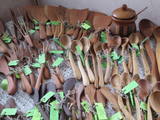 |
The spoon workshop offers useful objects such as wooden spoons, cutting boards, butter knives, pans, spatulas, etc. You can produce your own wooden spoon and look at finished spoons made of more than 17 different types of wood from Latvia. During the summer the owners offer “pancake tours” with tasty jams. You can purchase spoons and homemade wine. |
|
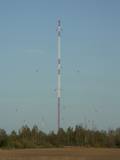 |
Das einzige sowjetische Militärobjekt solcher Ausmaß in Lettland - Fernmeldestation, die für die Gewährleistung der Verbindung mit der Armeeschiffe und Unterseeboote in den Gewässer weltweit vorausgesehen wurde. Im Zentrum des Militärobjektes war einer Turm, im ganyen Objekt – sechs Türme in Höhe von mehr als 200 m. Heutzutage sind nur manche von den Türmen erhalten geblieben und diese werden für Mobilverbindungen genutzt. Es geht ein Gerücht um, dass der Komplex nicht kein einziges Mal eingeschaltet wurde. Wenn man entlang des Weges Skrunda – Kuldīga fährt, - etwa 3 km vor dem Umweg von Kuldīga (Ortschaft – Raidstacija), ist der Komplex von Upīškalns gut sichtbar,.
|
|
 |
Atrodas 3 km dienvidos no Velēnas luterāņu baznīcas. Savdabīgo akmens velna skulptūru 1955. g. kā „pieminekli” meliorācijas darbiem veidojis vietējais iedzīvotājs Vilis Zvaigznītis. |
|
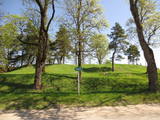 |
Is an ancient Courlandian castle hill and is found in the very centre of Alsunga. It was named in 1659 when General Berg from Kurzeme put cannons on it to attack Swedish forces that had fortified themselves in the Alsunga castle. The hill is 8 to 10 metres high and 24 x 54 metres wide, offering a lovely view of the St Michael Roman Catholic Church, as well as the Alsunga windmill lake that is alongside it. There is a distinct terrace around the hill, and it once was the foundation of wooden defensive structures. On the other side of the street, to the West of the castle hill, is a cemetery with fire graves of Courlandians that date back to the 11th to 13th century. Archaeologists examined the area during the middle part of the last century. The Suiti celebrate Easter and other holidays on the hill. |
|
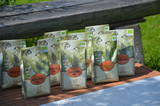 |
This is a family company in the Madona Administrative District, which offers natural herbal teas and spices. All of the ingredients come from
|
|
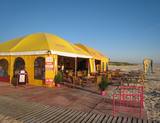 |
Beach cafe at the end of Jūrmalas Street, by the beach, in Liepāja. Live music in the Wind Garden on Wednesdays, Fridays and Saturdays. Offers breakfast, lunch, dinner, coffee and drinks. |
|
 |
Köstliche, hausgemachte Konserven und andere kulinarische Waren für alle, die lokale Produkte schätzen. Angeboten werden lokal zubereitete Gerichte und Konserven zum Kaufen. |
|
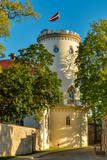 |
Cēsis is in the centre of the Gauja National Park, but it is not part of the park as such. There are many interesting places in Cēsis to visit and examine. The oldest part of the town is of key interest. The origins of Cēsis can be found at Riekstu hill, which is 18 metres high. Between the 11th and 13th century, there was a wooden castle here built by the Vendians. The hill is in the central part of the castle park, and it offers a good view of the park, pond and the ruins of the Cēsis castle, which can be accessed via a long cascade of stairs. The Cēsis castle (see below) was built in the early 13th century as a residence for masters of the Livonian Order, and it was one of the strongest fortresses in the Baltic territories. Alongside it is the New Cēsis castle, which was built in 1777 where the gate fortifications once stood. The Cēsis Museum of History and Art is in the building, alongside which is a visitors centre and the Cēsis Tourism Information Centre. From the tower of the castle, there is a fine view of the castle ruins, St John's Lutheran church and the northern part of the town. Opposite the New Cēsis castle are stables and a wheelhouse (both from the first half of the 19th century). The Cēsis Exhibition Hall is there today. You can look at the exteriors of the granary, the hut for coachmen, and the old brewery. On the other side of the street is the romantic Maija park, which was installed in the 1830s. The park is popular among parents with children, because there is a playground there. From this area, you can walk down some of the old streets of the town – Lielās Katrīnas, Mazās Katrīnas, Mazā Kalēju, Kalēju and Lielā Līvu streets, plus Līvu Square. The wooden buildings along the streets date back to the late 18th and early 19th century. Torņa Street, which weaves its way along the defensive walls of the Medieval castle, offers a look outside the church of a sculpture by Matiass Jansons, "As the Centuries Pass". Legend says that if you rub the lantern carred by the Old Man of Time, you can see the future. One of the most impressive buildings in Cēsis is St John's Lutheran Church, which was built in the late 13th century for the Livonian Order. It is a basilica built in the Roman style and with Gothic elements. The tower, which is 65 m high, was built in 1853. The building was reconstructed several times during the 20th century. Inside the building are grave epitaphs for masters of the Livonian Order and for bishops. The pulpit was installed in 1748, the oak altar followed in 1858, and the altar painting "The Crucified One" dates back to 1862. The stained glass windows around the altar are of great artistic value. The organ was built in 1907 by the E.F. Walker Company, and the instrument is one of the best concert organs in Latvia. A sun clock featuring the year 1744 is at the south-western corner of the church. It is worth climbing the church's tower. At the foot of the building is Rose Square, which began as a market square in the mid-19th century, remained in place until 1927, and was restored in 2008. This is the central square in the town today. During the Medieval Era, there were stockades here, along with the city's well. Rīgas Street has been the main street of the old town from the very beginning, and it is here that you will find the most architecturally outstanding buildings in town from the 18th and 19th centuries. They include the former Cēsis City Hall, the Fābers building, and the Princess building. At one end of the street is Līvu Square, where, during the 13th century, there was a church, a cemetery and a gate in the town walls. Today the square features a lighted fountain which is on the site of a 13th century well known as Lejas Šķimbēgs. At the other end of the street is a reconstruction of the foundations and surface elements of the Rauna gate that was a part of the town walls in the 14th and 15th centuries. The site offers a good idea about Medieval fortifications and the size and mightiness of gates therein. |
|
 |
Der Kanal von Kauguri ausgegraben
1933, mit dem Ziel das Gewässer von Džūkste
und Slampe nach Lielupe abzuleiten, zur
Abwendung vom Versumpfen.
|
|
 |
Tītuvēnu reģionālais parks (Tytuvėnų regioninis parkas) dibināts 1992. gadā. Parkam raksturīga ainavu daudzveidība – te ir sastopami lieli mežu masīvi, purvi, ezeri, upītes. Šejienes reljefa veidotājs tāpat kā citur Baltijas valstīs ir bijis ledājs, kas atnesis un atstājis aiz sevis garas laukakmeņu grēdas. Kopumā parkā ir konstatētas 603 augu un 787 dzīvnieku sugas. Parkā aug veci un dabiski boreālie (ziemeļu) meži, veci un jaukti platlapju meži ar ozoliem, liepām, kļavām, ošiem un gobām, sugām bagāti egļu meži, staignāju meži, nogāžu un gravu meži, purvaini meži un aluviālie (pārplūstošie) meži. Parkā esošās pļavas un tīrumi ir nozīmīga dzērvju atpūtas vieta migrāciju laikā, kad te pulcējās tūkstošiem putnu. Šiluvas baznīca un Tītuvēnu klosteris ir svētceļnieku galamērķis vairāk nekā 500 gadu garumā. |
|
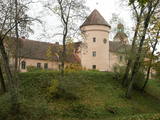 |
Jeder, der Lettland bereist, kennt die Ortschaft Ēdole bei ihrem Schloss. Die Anfänge des Schlosses sind im 13. Jh. zu suchen, aber die Anbauten des Schlosses sind im 16. und 19. Jh. entstanden, als der Innenhof eingerichtet wurde. Während der Umbauten, die in den 1830er Jahren durchgeführt wurden, hat die Fassade des Schlosses die heutige – neogotische Gestalt bekommen. Ab dem 16. Jh. bis zum Jahr 1920 befand sich das Schloss von Ēdole im Besitz der Familie der Barone von Behr. In den Aufständen von 1905 wurde das Schloss niedergebrannt, aber im Jahr 1907 – erneuert. Das Schloss von Ēdole ist mit vielen Legenden und Spukgeschichten verbunden. |
|
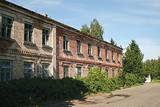 |
Das ehemalige Gebäude der Meeresschule – in der Meeresschule (1894-1914)
haben mehr als 1000 Studenten die Ausbildung erhalten. In der Sowjetzeit befand
sich hier ein Grenzschutzpunkt der sowjetischen Armee. Der Turm vom Grenzschutz
ist immer noch erhalten. Auf dem Weg zur Meeresschule kann man mit Wald
bewachsene Dünen sehen, die mit kleinen verstreuten Hütten eine interesante
Küstenlandshaft gestaltet. Den Weg, der die Meeresschule mit dem Meer verbindet,
hat man früher als Kapitänsallee oder den Weg der Kapitäne genannt.
|
|
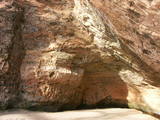 |
Die breiteste (12 m), die höchste (bis zu 10 m) und dem Volumen nach eine der gewältigsten Höhlen Lettlands. Die Länge beträgt 18,8 m. Eine Sage über die Rose von Turaida. Unweit befindet sich das Besucherzentrum. Der Nähe gibt es Touristeninformationszentrum Gutmanala. Geschäftszeiten: 01.05.-30.09. 9.00 – 19.00; 01.10.-30.04. 9.00 – 18.00. Die Preise für das Parken: 1 Auto EUR 2,50; 1 Minibus EUR 5,00; 1 Bus EUR 7,00. |
|
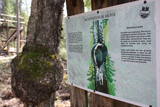 |
1,7 km gara lokveida taka, kas iepazīstina ar dažādiem meža biotopiem, to iemītniekiem un meža apsaimniekošanas pamatprincipiem. Apmeklētāju ērtības nolūkā ir izveidotas koka laipas un neliels skatu tornis. |
|
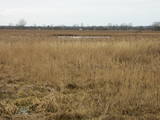 |
Der größte Teil dieses geschützten Territoriums besteht aus einem flachen und eutrophischen Wassergebiet, in dem viele Vogelarten nisten, darunter einige seltene und geschützte. Spezialisten meinen, dass hier zwischen 150 und 450 Paare der Lachmöwe regelmäßig nisten.
|
|
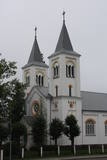 |
Der Bau des Gotteshauses im neoromantischen Stil fand von 1936 – 1939 nach einem Entwurf des Architekten Pawlow statt, sie wurde bereits vor Beendigung der Bauarbeiten 1937 eingeweiht. Es ist der Gottesmutter der Schmerzen (Mater dolorosa) gewidmet, dieser Thematik ist auch der Hauptaltar geweiht. In dem Gebäude befinden sich Heiligenbilder aus dem Anfang des 20. Jh., im Garten beim Eingang steht eine Statue der Gottesmutter von Fatima. |
|
 1 Tag
|
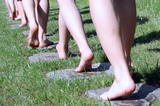
The Barefoot Path begins at the Valguma Pasaule Recreation Centre by Lake Valgums, which is surrounded by forest. The recreation centre includes a hotel and restaurant, and offers nature-based services such as the Barefoot Path and other walking trails. The Barefoot Path is a 2.6 km long trail through the natural environment, along which visitors walk barefoot and experience a variety of surfaces including pine cones, glass balls, small stones and shingles of various shapes, moss, fine sand, clay, river water, turf, gravel, reeds, chipped wood, pinewood logs, wooden poles and millstones. Walking barefoot has a number of positive health effects: it strengthens the immune system; it improves blood circulation and stabilises blood pressure; it strengthens the leg and foot muscles, joints and ligaments; and it enhances relaxation, and aids mental and physiological stability. The walk is led by an English-speaking guide. Before the walk, visitors receive a briefing. It is recommended that visitors wear comfortable outdoor clothing, appropriate for the weather. After walking the barefoot path, visitors usually feel energised, strong and happy. The walk finishes with a relaxing herbal foot bath. |
|
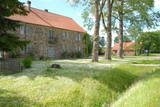 |
Unterwegs nach Turaida muss man an der Höhle Gūtmaņa ala (Gutmannshöhle) halten. Diese Höhle ist die breiteste (12 m), die höchste (bis 10 m) und in Bezug auf den Umfang – eine der größten Höhlen in Lettland (eine höhlenartige Nische), die auch ein bedeutender kulturhistorischer und sagenumwobener Ort (die bekannteste ist Sage über die Rose von Turaida) ist, wo man auf den Wänden und auf der Decke auch alte Schriften (die ältesten – aus dem Ende des 17. Jhs.) finden kann. Aus der Höhle fließt eine Quelle, die eine Heilquelle sein soll. An der Stelle, wo das rechte Ufer des Urstromtales von Gauja von Tälern mehrerer kleinen Bäche durchgespaltet wird, befindet sich das Museum-Schutzgebiet von Turaida mit hervorragenden Denkmälern, die im ganzen Baltikum bekannt sind und dessen Geschichte 1000 Jahre alt ist. Die Besichtigung der Denkmäler kann man mit dem Landgut von Turaida (zum ersten Mal im 16. Jh. erwähnt) anfangen, das ein ausgezeichnetes Beispiel der Landgüter der Region Vidzeme ist. Bis heute haben sich hier 21 Gebäude erhalten, die vom 18. Jh. bis zum Anfang des 20. Jhs. gebaut worden sind. Besucher können hier den Pferdestall, den Wagenschuppen, die Sauna, die Schmiede, den Fischkeller, die Kornkammer, das Aufseherhaus, das alte Wohnhaus des Gutsverwalters, das Wohnhaus der Diener, das Darrhaus und andere Gebäude des Landgutes besichtigen. Wenn man Richtung der Burg von Turaida geht, gelangt man an der Grabstätte der Rose von Turaida, mit der die Sage über die Maija von Turaida verbunden ist, die ihr Leben aus Liebe geopfert hat. Neben der Grabstätte wächst eine große Linde (im schlechten Zustand), die auf der Grabstätte von Maija gepflanzt worden sein soll. Wenn man weiter geht, kommt man an der evangelisch-lutherischen Kirche von Turaida, die hier das dritte Gotteshaus und eine der ältesten Kirchen aus Holz (1750) – ein einschiffiger Blockbau aus Holz mit einem Barockturm – in Lettland ist. In der Kirche kann man den Altar und die Kanzel (Mitte des 18. Jhs.), das Altargemälde Golgata (Ende des 17. Jhs. – Anfang des 18. Jhs.) und eine historische Ausstellung besichtigen. Auf dem Berg Dainu kalns (Volksliederberg) breitet sich der Park Tautasdziesmu parks (Volksliederpark) aus, mit dessen Einrichtung 1985 begonnen wurde, als das 150. Jubiläum des Volksliedersammlers Krišjānis Barons gefeiert wurde. Heute befinden sich in dem Park mehr als 26 von dem Bildhauer Indulis Ranka geschaffene Skulpturen aus Stein. Hier finden jährliche Folkloreveranstaltungen statt. Vor dem Bau der gemauerten Burg von Turaida (1214) befand sich hier die aus Holz gebaute Burg der Liven. Die Burg von Turaida gehörte dem Bischof von Riga und bestand bis zum Jahr 1776, als sie niedergebrannt ist. Im Jahr 1953 fingen hier größere Restaurationsarbeiten an, bei denen das Obergeschoß des Hauptturms, die Kornkammer (Ausstellung über die Geschichte des Kreises von Sigulda), der halbrunde Turm und der südliche Teil des Burgkomplexes restauriert wurden. Heute ist in den Räumen der Burg eine Ausstellung eingerichtet, die die historischen Ereignisse der Umgebung schildert. |
|
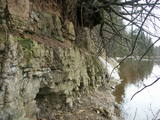 |
Dies ist ein einzigartiges geologisches Abjekt von paleontologischer Bedeutung. Bis zu vier Metern hoch enthält es Fossilien wirbelloser Tiere und Fischen.
|
|
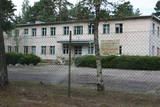 |
Auch heutiges Territorium der Grenzwache in Pāvilosta ist für Zivilpersonen geschlossen. Das Territorium wird für Bedürfnissen der Seestreitkräfte genutzt.
|
|


