
| Nr | Name | Beschreibung |
|---|---|---|
 |
Die Bauernwirtschaft Iesalnieki-1 befindet sich in der Gemeinde Vietalva der Region Pļaviņas. Der Hauptbereich der Wirtschaft ist Getreidezucht – Raps, Gerste, Weizen und Gräser. Gesamtfläche 180 ha. Interessant ist die Tatsache, dass zwei Brüder mit eigenen Kräften zusammen mehr als 800 ha bewirtschaften. |
|
 |
Saaremaa hat seit alten Zeiten starke Biertraditionen. In einem Gebäude mit Art déco-Elementen in Kuressaare, in dem sich einst ein Kraftwerk befand, zeigt heute die Brauerei Pöide die Kunst des Bierbrauens. Hier kann man ein paar Geheimnisse erfahren und in einem separaten Raum das fertige Produkt verkosten. |
|
 |
Based on the tower of a former Soviet army radar installation, there is an 18-metre viewing tower at the Southern breakwater of Ventspils (Medņu Street) today. The tower offers a good view of the port territory, with the sea gate at the mouth of the Venta River and the city beach. Binoculars are available at the tower. It is worth walking down the Southern breakwater to get a better look at the sea.
|
|
 |
In Otepää wurde am 4. Juni 1884 die estnische Fahne geweiht. Im Pastorat ist ein Zimmer der estnischen Fahne eingerichtet. |
|
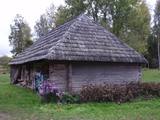 |
This is the home of singer and oral tradition keeper Lidija Jansone, who is a holder of the Latvian Order of Tree Stars and a fierce defender of the cultural heritage of the Suiti people. She will tell you about her community’s history and traditions and about the special bourdon singing of the Suiti. Lidija will also talk about how beer was once brewed by our ancestors for various celebrations. |
|
 10 Tagen
|
The tour takes through all three Baltic States – Lithuania, Latvia and Estonia. The route visits the capital cities and some of the most attractive cities and towns in Mid - Baltics. The tour starts in Vilnius, the capital city of Lithuania. Kaunas is the second largest Lithuanian city, standing at the confluence of the Nemunas and Neris Rivers. Riga, the capital city of Latvia, offers a variety of cultural experiences and entertainment. Sigulda is famous for its landscapes and medieval castles. Cēsis is one of the most charming towns in Latvia with many attractions ranging from medieval heritage to nice restaurants, exhibitions and festivals. Valmiera offers art galleries, museums, nature trails and Valmiermuža beer from the famous local brewery. Tartu in Estonia is a university town, with some very popular tourist attractions such as the interactive AHHAA science centre, the largest in Baltic countries. Finish the tour in Tallinn – the capital city of Estonia. Tourist information centres in cities and towns will help you with maps, information on sights, attractions and guided tours, food, shopping and public transport. |
|
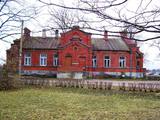 |
Adamovas Manor (ancient name –Adamhof, Odumova) is the cultural monument of the state importance.
It has two well preserved buildings of the 19th century. The Manor was built in 1851. Landlords
Korfs, Žemčužņikova and Karaulovs were the owners of the manor. There was discovered a mineral spring
in 1905. It was named in the honour of St. Helena. Mineral water gained the highest awards in London in
1912 and in 1913 in Paris. Currently, there is no mineral spring anymore. However, there is Adamova sanatorium
boarding-school for children with psychoneurological illnesses. A modern sports complex was built
in 2006 for organizing national sports competitions. We offer sauna, conference rooms, boat rental, and accommodation
for 120 people.
|
|
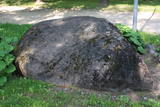 |
Atrodas Kalēju ielas malā. Savu popularitāti ieguvis ar nostāstu, ka Ziemeļu kara laikā pie tā pusdienojis Krievijas cars Pēteris I un Polijas valdnieks Augusts (Stiprais). |
|
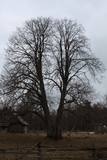 |
An impressive two-trunk tree at the Nigliņi homestead, this is one of the most impressive trees on the Liv Shore. The Liv language teacher Zoja Sīle was born here. The Medieval Old Cemetery Hill – once used as burial grounds – is nearby. |
|
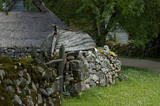 |
Das Dorf Koguva an der Westküste der Insel Muhu ist ein hervorragendes Beispiel für die estnischen Bauernarchitektur. Die relativ gut erhaltenen Bauerngebäuden und Steinzaunen liegen alle unter Baudenkmalschutz. Im Museum von Muhu kann man einen ehemaligen reichen Strandhof Tooma erkundigen, der vor allem als Geburtsort des Schriftstellers Juhan Smuul bekannt. Hier sind auch eine alte Dorfschule und Textilausstellung. |
|
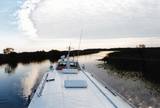 |
This is a quick boat ride from Tartu down the Emajõgi River to Piirissaare Island in Lake Peipsi (Peipsi järv). Along the lower reaches of the river are major wetlands which are of enormous importance for birds.
|
|
 |
Regīna Kalniņa is one of the best known craftswomen in Kurzeme. She weaves blankets and shawls and knits colourful mittens. She also sews Rucava and Nīca folk costumes. The process of weaving and knitting can be viewed. Regīna’s products are widely demanded in Latvia and in other European countries. |
|
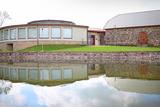 |
Ein zeitgemäßes und modernes Zentrum in einem historischen Scheunengebäude bildet einen einmaligen Komplex, in dem man eine Ausstellung über die Geschichte des Handwerks findet, das Glasmuseum, einen weiteren Ausstellungssaal, den längsten Gürtel der lettischen Volkstracht, einen Konferenzsaal, eine Wassergalerie. In den Werkstätten kann man Handwerkern der Umgebung, Töpfern, Texilherstellern, Glasbläsern bei der Arbeit zusehen und auch selbst mitwirken. |
|
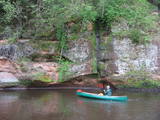 |
The Brasla River flows through a lovely valley that is approximately 300 m wide and up to 30 m deep. It is near the Inčukalns-Valka highway. The river has among the most beautiful rapids in the country, with mighty cliffs (the Brasla cliffs) that can be seen at nearly every curve in the river (except along the lowest reaches of the river). During the winter, various unusual frozen waterfalls can be seen in some of the cliffs, including the Krauļukalns cliff and the Jāņavārti cliff. On the left bank of the Brasla, opposite the Brasla fish farm, there are the Aņīte cliffs -- a series of sandstone cliffs that are 1 km long. The cliffs are between 2 and 35 m in height, and the sandstone cliffs are separated by ravines. On the right bank of the Brasla, there are major cliffs such as the Vāršavu cliff, the Kraukļukalns cliff, the Jāņavārti cliff, the Slūnu cliff, the Virtaka cliff and the Buļi cliff. How can you best learn about them? Boat down the river from the aforementioned highway or even from Straupe, which is further upstream. An alternative is hiking down the right bank of the river, though please take into account that the terrain is fairly extreme, and you are going to have to think about what to do when you arrive at the place where the Brasla River flows into the Gauja. |
|
 |
Baltijā lielākā keramikas fabrika. Tūristu grupām piedāvā ekskursiju pa ražotni. Blakus atrodas veikals, kurā var iegādāties keramikas izstrādājumus – gan praktiskas lietas, gan interjera priekšmetus un suvenīrus. |
|
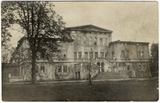 |
Muižas ansamblis veidots 19.gadsimtā, tās arhitektūrā atspoguļojās vairāku eklektisma formāli stilistisku virzienu uzslāņojumi, taču dominējošais bija baroka stils. Tā bija grāfa Kazimira Plātera-Zīberga (1808-1876), vēlāk grāfa Fēliksa Konstantina Plātera-Zīberga (1847-1928) rezidence. Pils un daļa saimniecības ēku tika iznīcinātas pirmā pasaules kara laikā, krievu armijas lielkalibra artilērijas apšaudes gaitā. Pārpalikušās drupas laika gaitā tika nojauktas. Līdz mūsdienām saglabājušies vārtu stabi, kas ir apmierinošā tehniskā stāvoklī. Muižā bijusi arī grāfa Zīberga 1697. gadā celta mūra kapela ar altāri un skaistām gleznām. Dievkalpojumus esot noturējis Ilūkstes prāvests. Bijušie īpašnieki: 18. gadsimtā barons A. Plāters-Zībergs, Kazimirs Plāters-Zībergs (1808-1876).
|
|
 11 Tagen
|
A panoramic tour of Lithuania, Latvia, Estonia and Finland with highlights of nature experiences in the National parks and nature reserves. A variety of landscapes, nature attraction sites, birds and wild animals, forests and seashore. The tour also offers some cultural and historical insights. |
|
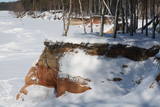 |
This is the most impressive and colourful set of cliffs along the Vidzeme coastline. Waves have created the steep shore that is as much as 6 m high, with several hundred meters of red sandstone cliffs with narrow caves, niches, grottos and other formations. The nearby Veczemu farm is where the Rīga Film Studio shot the films “Long Way into the Dunes” and “The Nest of the Old Fisherman.”
|
|
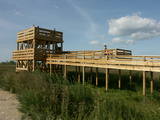 |
This is the only viewing platform in Latvia which is wheelchair-accessible. From the second level, you can see much of the restricted territory – areas of reeds, some wetlands, dunes and the estuary of the Daugava River. This is a good location for bird-watching.
|
|
 3 Tagen
|
Auf dieser Route geht es von der lettische Hauptstadt nach Kaunas, der zweitgrößten Stadt in Litauen, wobei viele schöne ländliche Gärten besichtigt werden können. Der Ziergarten der Familie Klūgs ist für seine Begonien berühmt. Im Institut für Gartenbau Dobele gibt es eine Kollektion von über 200 Fliedersorten zu sehen. Der Garten der schönen und praktischen Ideen ist stolz auf seine reichhaltige Kollektion an Nadelgehölzen und die Hausherren bieten an, Gewürze, getrocknete Früchte und Beeren zu verkosten. Der Hof „Rūķīšu tējas“ („Zwergentee“) ist einer der größten lettischen Produzenten von Arzneipflanzen (darunter Sonnenhut, Ringelblume, Kamille). In Kronauce stehen, zumindest in der Saison, der Pfingstrosengarten von Andris Berkins und der Tulpengarten „Viestardi“ auf dem Programm. Nächster Halt ist der Hof „Droši vesels“ („Mutig gesund“), wo Gemüse angebaut wird und wo aus Heilpflanzen Salben hergestellt werden. Die Besucher des „Minzehäuschens“ haben die Möglichkeit, Pfefferminztee, Plätzchen und Honig mit Minze und Minzesirup zu probieren. Im Gut Blankenfelde kann man eine einzigartige Glockensammlung besichtigen und natürliche Säfte, Sirups und diverse eingelegte Leckereien, alle vor Ort gefertigt, verkosten. In Litauen angekommen, steht der Besuch von Joniškis auf dem Programm, wo der Besuch der roten und weißen Synagoge, der Mariä-Himmelfahrt-Kirche und des kulturgeschichtlichen Museums empfohlen wird. Das Gut Jakiškiai ist bisher nicht renoviert, was dazu führt, dass viele Elemente authentisch erhalten sind, so z.B. Öfen, Türschlösser, Treppen und Türen. Im Museum der weißen Kräuter werden über 30 Pflanzenarten und -sorten angebaut. Der Botanische Garten der Universität Šiauliai zeigt das Erbe alter Kulturpflanzen und Vorgärten nach den Traditionen der Zwischenkriegs- und der Nachkriegszeit. Das Gut Burbiškis ist bekannt für sein jährliches Tulpenfest im Landschafts- und Skulpturenpark. Das ethnographische Dorfmuseum Kleboniškiai zeigt für die Region typische Häuser und Höfe. Das Gut Baisogala war einst königliche Domäne und gehörte direkt dem litauischen Großfürsten. Sein 12 Hektar großer Park gehört zu den schönsten in Litauen. Im Museum für den litauischen Dichter Mačiulis-Maironis gibt es zwei historische, dörfliche Obstgärten. Auf dem Hof „Garsi Tyla“ kann man auf dem Hof erzeugte „glückliche Lebensmittel“ kaufen und in dem alten 100-jährigen Garten spazieren und die Heilpflanzenbeete besichtigen. Das Litauische Institut für Gartenbau in Babtai ist nicht nur wissenschaftlich tätig, sondern auch in die Zucht involviert. Man kann hier daher viele neue Sorten von Obstbäumen und Beerensträuchern erwerben sowie Obst und Gemüse in der Saison. Im Hof und Park von Professor Tadas Ivanauskas namens Obelynė kann man eine Sammlung von etwa 300 Arten und Formen von Gehölzen besichtigen, hier wächst auch einer der ältesten Ginkgos in Litauen. In Kaunas kann man den ältesten Apfelbaum des Landes, einen Holzapfel, besichtigen. dieser hat mit einem Alter von fast 360 Jahren eine Höhe von 8 m und einen Brusthöhendurchmesser vom 2,85 m. Der botanische Garten der Vytautas-Magnus-Universität in Kaunas verfügt über die größte Orangerie in Litauen und zahlreiche Unikate sowie eine umfangreiche Blumensammlung. Die Reiseroute endet in Kaunas, das von 1920 bis 1939 einstweilige Hauptstadt von Litauen war. |
|


