
| Nr | Name | Beschreibung |
|---|---|---|
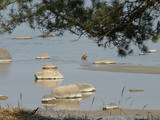 |
Die westliche Küste der Rigaer Bucht ist das ganze Jahr über ein wichtiger Zufluchts- und Nahrungsort für viele migrierende Vögel. Von den geschützten Vogelarten begegnet man hier am meisten dem Sterntaucher und dem Prachttaucher, der Brandgans, der Eisente und der Zwergmöwe. Das Gebiet ist auch sehr wichtig für den Schutz der Riffe. Es befindet sich gegenüber der Regionen Dundaga, Roja und Engure, sowie der Stadt Jūrmala. Die Fläche beträgt 132 173 ha. Das Territorium enthält den Meeresteil vom Naturpark „Engure“ und dem Nationalpark von Ķemeri.
|
|
 |
The craftsman offers useful household products such as terrines, pots to make pickles, dishes of sugar and salt, bowls, etc. You can learn about pottery traditions and watch as the kiln is opened. |
|
 |
Die Bauernwirtschaft Vecsiljāņi befindet sich in der Gemeinde Bebri der Region Koknese. Die Hauptbereiche der Wirtschaft sind Viehzucht und die Züchtung von Weizen, Gerste, Hafer, Roggen, Mais und Gräsern. Im Jahr 2010 hat die Wirtschaft angefangen, den harten Käse mit dem Namen Ievas siers herzustellen. Den Besuchern wird eine Käseverkostung und die Besichtigung der Wirtschaft und der Käseproduktionsabteilung angeboten. |
|
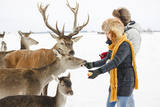 |
„Barono vila“ ist ein Stück Paradies: ein breiter und tiefer, fischbesetzter Teich, die Gehege voller Rot- und Dammhirsche, Schafe, ringsumher Wälder mit Beeren und Pilzen, klare Seen und die Schleifen des von Touristen sehr geschätzten Flusses Sventoji. Im Restaurant des Landhotels werden frische, hochwertige und natürlich schmackhafte Gerichte serviert, mit Wild und Hammel aus eigener Produktion, zudem gibt es im Backofen gebackenes traditionelles litauisches Roggenbrot sowie als Gericht des Hauses den auf offenem Feuer zubereiteten „Barons Pilaw“. |
|
 |
Das Café befindet sich an einem schönen Ort am Fluss Aleksupite: in dem ehemaligen hölzernen Rathaus mit einem Gewölbekeller. Lettische Küche: Salat aus Sprotten, Hering mit Quark, Topf des Bauers, Lammfleischtopf, Erbsentopf, gegrillte Schweinerippen, gebratene Stierhoden, Fischgerichte (Flunder, Zander), geschichtetes Roggenbrot-Dessert. |
|
 |
Das Café befindet sich im Zentrum von Madona. Für die Vorbereitung der Mahlzeiten werden Früchte und Gemüse aus dem eigenen Hof verwendet. Lettische Küche: Kalte Rote-Beete-Suppe, Ampfer- und Pfifferlingsuppe, graue Erbsen mit Speck, Hering, Gerstengrütze mit Fleischstücken, Pilzsoßen, Marmeladen (sieben Sorten). Das ganze Jahr über: Himbeeren- und Erdbeerendesserts. Mit Kartoffeln, Kürbissen, Äpfeln und Rhabarbern gefüllte dünne Pfannkuchen, Quarkfladen. Hausgemachte Säfte, Kräutertees, Eis-Cocktails. Das besondere Gericht: Kuchen aus hausgemachtem Biskuit mit frischen Beeren. |
|
 |
Krodziņš "Mežavējš" atrodas Rīgas - Liepājas šosejas 101. kilometrā. Krodziņa ēdienkartē iekļauti latviskie ēdieni. Latviešu virtuve: Skābu kāpostu zupa, biešu zupa, skābeņu zupa, aukstā zupa, kartupeļu pankūkas, plānās pankūkas ar ievārījumu, šmorētas cūkgaļas ribiņas, zemnieku cienasts, mājas kotletes, auzu pārslu kārtojums, rupjmaizes kārtojums. |
|
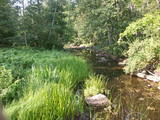 |
Ein ausgeprägtes Gebiet des unteren Flusslaufes der Vitrupe mit kleinen Sandsteinfelsen und vielen seltenen Arten von Pflanzen und Mollusken. Besucher können das Ķirbiži – Waldmuseum besuchen mit Informations- und botanischen Pfad. Dieser schlängelt sich an beiden Flussufern entlang und erlaubt den Besuchern, die typischsten Vertreter der Pflanzenwelt der Region zu betrachten. Die prächtige Vāloži – Eiche stellt bildet hier den Schwerpunkt.
|
|
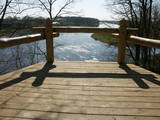 |
The Mežotne castle hill is on the left bank of the Lielupe River and opposite the Mežotne Castle. This was one of the largest Semigalian fortified castle hills during the 9th to the 13th century, and an ancient town alongside the hill covered 13 ha of land. The castle hill has been improved. A pontoon bridge across the Lielupe allows hikers and bikers to reach the castle (between May and October). Vīna Hill is approximately 500 m to the South of the castle hill, and a wooden pathway leads to it. |
|
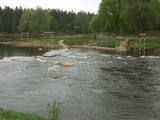 |
Das ist ein Territorium, das einzigartig in der lettischen und baltischen Ebene ist und das sich zwischen Valmiera und der Region von Gulbene erstreckt. Hier befindet sich das unbegradigte Gauja-Flusstal mit einem dichten System von alten Nebenflüssen. Die Wiesen auf den Flussbänken sind wichtig für die biologische Vielfalt. Hier gibt es Bestände an Eichen und Laubbäumen. Viele seltene und geschützte Vögel leben und nisten hier – der Wachtelkönig, der Specht usw. Das Territorium ist ausgezeichnet geeignet zur Vogelbeobachtung, für Naturstudien, ökologischen Tourismus und für verschiedene Arten des aktivem Tourismus.
|
|
 |
Saimniecība atrodas Kokneses novada Bilstiņos. SIA "Rīta putni" nodarbojas ar paipalu olu un gaļas delikatešu ražošanu. Reģistrēti divi zīmoli "Olalā" - paipalu olas un to produkti un "Bučers"- paipalu gaļas produkti. Saimniecībā ir veikals "BĀRS un BODE", kurā iegādāties svaigākos produktus un pavadīt mirkli ar saimniekiem un laiku ar draugiem, kā arī nogaršot paipalu olu omleti vai grilētu paipalu gaļu. Saimnieki rīko dažādas interesantas degustācijas. Ir arī dārzs ar eksotiskiem augiem un stikla siltumnīcu. Siltumnīca ir pieejama rezervācija nelielām svinībām, fotosesijai vai meistarklasēm. |
|
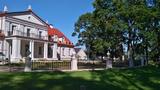 |
Der Park des Gutes Ilzenbergas, so wie er heute besteht, geht auf eine Anlage der zweiten Hälfte des 19. Jahrhunderts zurück. Die Struktur wird durch das deutliche Relief zwischen den Seen Ilgis und Apvalasas geprägt. Bei der Rekonstruktion wurde Wert darauf gelegt, die räumliche Gliederung unverändert zu belassen. Der Park umfasst ein Territorium von 10 ha und besteht aus zwei Teilen. Zum einen das annähernd rechteckige Gelände am Herrenhaus, eingerahmt von einer Reihe Winterlinden und mit Grünanlagen aus einheimischen und fremdländischen Gehölzen. Zum anderen aus naturnahem, waldartigen Grünanlagen. Die größte in diesem Park wachsende Eiche wurde als staatlich geschütztes Naturerbe eingetragen. Dieser mächtige Baum hat einen Stammumfang von 6,3 m, einen Durchmesser von 2 m und eine Höhe von 30,5 m. |
|
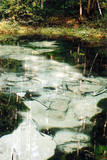 |
Three little lakes can be found on the left bank of the Pirita River with many erupting “eyes” of streams, each with its own colour (bluish-green, white, dark). This puts together various colour combinations. These are often known as the most beautiful streams in Estonia. Some pump out as much as 20-30 litres of water per hour. It is said that the waters are good medical resources, particularly for the eyes. There are improvements in the area of tourists.
|
|
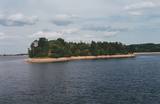 |
Before its flooding, the canyon of the Daugava River between Pļaviņas and Koknese was one of the most outstanding and beautiful parts of the Baltic terrain, and Oliņkalns hill was one of the largest castle hills in Latvia. The Andrejs cliff as up to 20 metres high, and it was part of the Daugava canyon. Before the area was flooded because of the construction of the Pļaviņas hydroelectric power plant, there were rapids near the hill that made it hard for rafters to sail down the river. Today it is a small island in the reservoir of the plant (it can be seen from the side of the Rīga-Daugavpils highway (A6) opposite Stukmaņi). It is separated from the shore by 300 metres of river, under which the Dūņas valley is now resting. A small part of the ramparts of the castle hill can still be seen on the island along with the ruins of an open-air stage and a few metres of the dolomite cliff that have remained above water. It is thought that the Alene castle was on the hill in the 13th century. Latvian mountain climbers installed a memorial stone in 1998 opposite Oliņkalns hill. |
|
 |
Ogu un augļu dārzs, dažādu ievārījumu, sulu, sīrupu ražošana un tirdzniecība.
|
|
 |
Baznīca šajā vietā – blakus Livonijas ordeņa pilij (nav saglabājusies) atradās jau ~ 1380. gadu. Tagad redzamais dievnams (patiesībā – atliekas) tika nopostīts pēc 2. pasaules kara un uzspridzināta 20. gs. 70. gados. Tā drupas ir iekonservētas un virs altārdaļas uzstādīts balts koka krusts. Atrodas Salaspils dienviddaļā starp Rīgas HES dambi un ūdenskrātuvi. |
|
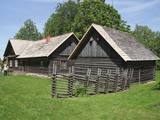 |
The Museum of Francis Trasuns „Kolnasāta”. The museum of the promoter of Latgalian revival,
prominent cultural worker, pastor and politician F. Trasuns (1864 – 1926) was established in his house „Kolnasāta”. There is also an exposition about Jānis Klīdzējs; a collection of old household items. „Kolnasāta”
is the place of many cultural events in Latgale.
Working hours: Mon– Fri : 8.00 - 16.00, Sat., Sunday : on request |
|
 |
Das Restaurant befindet sich am Strand und bietet einen umfassenden Blick auf die Stadt Jurmala. Die Grillterrasse ist in der Form eines stilisierten Schiffsteuers gebaut worden. Das Restaurant arbeitet mit lokalen Bauern und Fischern zusammen. Lettische Küche: Kalte Rote-Beete-Suppe, Fischsuppe, geräucherter Aal mit Sauerrahm aus dem Lande, Entenleber, dickflüssige Kartoffelsuppe mit Pfifferlingen, gebratener Zander, Hirschrücken in Senfsoße. |
|
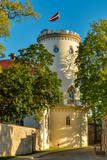 |
Cēsis is in the centre of the Gauja National Park, but it is not part of the park as such. There are many interesting places in Cēsis to visit and examine. The oldest part of the town is of key interest. The origins of Cēsis can be found at Riekstu hill, which is 18 metres high. Between the 11th and 13th century, there was a wooden castle here built by the Vendians. The hill is in the central part of the castle park, and it offers a good view of the park, pond and the ruins of the Cēsis castle, which can be accessed via a long cascade of stairs. The Cēsis castle (see below) was built in the early 13th century as a residence for masters of the Livonian Order, and it was one of the strongest fortresses in the Baltic territories. Alongside it is the New Cēsis castle, which was built in 1777 where the gate fortifications once stood. The Cēsis Museum of History and Art is in the building, alongside which is a visitors centre and the Cēsis Tourism Information Centre. From the tower of the castle, there is a fine view of the castle ruins, St John's Lutheran church and the northern part of the town. Opposite the New Cēsis castle are stables and a wheelhouse (both from the first half of the 19th century). The Cēsis Exhibition Hall is there today. You can look at the exteriors of the granary, the hut for coachmen, and the old brewery. On the other side of the street is the romantic Maija park, which was installed in the 1830s. The park is popular among parents with children, because there is a playground there. From this area, you can walk down some of the old streets of the town – Lielās Katrīnas, Mazās Katrīnas, Mazā Kalēju, Kalēju and Lielā Līvu streets, plus Līvu Square. The wooden buildings along the streets date back to the late 18th and early 19th century. Torņa Street, which weaves its way along the defensive walls of the Medieval castle, offers a look outside the church of a sculpture by Matiass Jansons, "As the Centuries Pass". Legend says that if you rub the lantern carred by the Old Man of Time, you can see the future. One of the most impressive buildings in Cēsis is St John's Lutheran Church, which was built in the late 13th century for the Livonian Order. It is a basilica built in the Roman style and with Gothic elements. The tower, which is 65 m high, was built in 1853. The building was reconstructed several times during the 20th century. Inside the building are grave epitaphs for masters of the Livonian Order and for bishops. The pulpit was installed in 1748, the oak altar followed in 1858, and the altar painting "The Crucified One" dates back to 1862. The stained glass windows around the altar are of great artistic value. The organ was built in 1907 by the E.F. Walker Company, and the instrument is one of the best concert organs in Latvia. A sun clock featuring the year 1744 is at the south-western corner of the church. It is worth climbing the church's tower. At the foot of the building is Rose Square, which began as a market square in the mid-19th century, remained in place until 1927, and was restored in 2008. This is the central square in the town today. During the Medieval Era, there were stockades here, along with the city's well. Rīgas Street has been the main street of the old town from the very beginning, and it is here that you will find the most architecturally outstanding buildings in town from the 18th and 19th centuries. They include the former Cēsis City Hall, the Fābers building, and the Princess building. At one end of the street is Līvu Square, where, during the 13th century, there was a church, a cemetery and a gate in the town walls. Today the square features a lighted fountain which is on the site of a 13th century well known as Lejas Šķimbēgs. At the other end of the street is a reconstruction of the foundations and surface elements of the Rauna gate that was a part of the town walls in the 14th and 15th centuries. The site offers a good idea about Medieval fortifications and the size and mightiness of gates therein. |
|
 |
Die Wirtschaft beschäftigt sich mit der Züchtung von reinrassigen und gekreuzten Rindern für Zucht, Mast und Fleischherstellung, mit dem Verkauf von Milchschweinen und mit der Herstellung des Schweinefleisches und Züchtung von Getreidepflanzen und Kartoffeln, sowie mit der Imkerei. Schon mehrere Jahre züchten die Wirte in sechs Teichen der Wirtschaft Karpfen, Schleien und Orfe. In der Wintersaison kann man Fische in besonderen Becken des Fischhauses fangen, die eingerichtet sind, indem ein Bogen des Flusses Bērzene überschwemmt wurde. Die Wirtschaft bietet Einsicht und Vorlesungen in der biologischen Wirtschaft und Züchtung von Rindern für Fleischherstellung, darunter auch in der genetischen Arbeit mit der Erhaltung einer reinen Rasse, sowie Angeln in frischer Luft. Für Seminare und Vorlesungen sind im Fischhaus ein Seminarraum und eine Küche gebaut worden. In der Wirtschaft befindet sich und wird ein Pfad erhalten, der Oskars Kalpaks gewidmet ist und der ein geologisch und landschaftlich interessantes Gelände durchquert. |
|


