
| Nr | Name | Beschreibung |
|---|---|---|
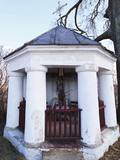 |
The Crucifix of Kurpinīki is known also as the place where Janis Streičs
shot some scenes of the movie „The Child of a Man”. Long time ago this crucifix
was situated in the courtyard of writer’s grandfather Donat Klidzejs in the USA.
|
|
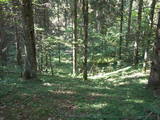 |
Bejas meža dabas liegums veidots no reljefa viedokļa - interesantā, pauguru un starppauguru ieplaku saposmotā teritorijā, kuru klāj vecs un varens egļu mežs. Bejas mežā atrodas viena no Alūksnes rajonā vairākām "Velna pēdēm" - dziļa, krāterveida ieplaka, ko veidojis kūstošais ledājs.
|
|
 |
Lohjansaari island is in the middle of the largest fresh water lake in southern Finland. Due to its fertile soil and warm micro climate, the area hosts several arboreta. You can visit apple orchards or spend the night at Martinpiha destination and enjoy a truly rural experience with the friendly local people. |
|
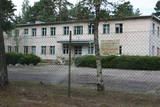 |
Auch heutiges Territorium der Grenzwache in Pāvilosta ist für Zivilpersonen geschlossen. Das Territorium wird für Bedürfnissen der Seestreitkräfte genutzt.
|
|
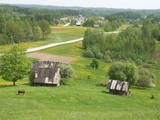 |
Das ist eine der am meisten von der subglazialen Depression ausgeprägtesten Landschaften in Lettland mit 11 Seen verschiedener Größe und Tiefe. Das ist eine faszinierend schöne Landschaft mit besonders eindrucksvollen Aussichten von Drusku – Burgberg. An einem klaren Tag kann man das Hanja – Hochland von Estland sehen. Das geschütze Territorium wurde eingerichtet, um das Gebiet des Nördlichen Nadelwaldgürtel zu schützen.
|
|
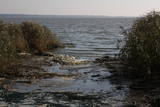 |
Das beinah 100 km langes und bis zu 36 km breites aus dem Süßwasser bestehende Haff, das im Norden mit der Ostsee verbunden ist. Das Haff trennt vom Merr die eindrucksvolle Kurische Nehrung. Ins Kurische Haff mündet der größte Fluss Litauens Nemunas ein. |
|
 4 Tagen
|
Eine professionelle landwirtschaftliche Tour, auf der man Wirtschaften kennenlernen kann, die Kühe, Schafe, Ziegen und Schweine züchten. Ein Tag zum Kennenlernen mit der Besichtigung von Riga (UNESCO Kulturerbe). Ein organisiertes Treffen mit Fachleuten des Ministeriums für Landwirtschaft der Republik Lettland und den Vertretern der nicht staatlichen Organisationen für Landwirtschaft. In der ersten Hälfte des nächsten Tages fahren wir in die Region Kurzeme. Besuch einer Bauernwirtschaft, die sich auf eine Herde von Fleischrindern spezialisiert hat. Die zweite Spezialisierung dieser Wirtschaft sind verschiedene Bereiche: Zucht von reinrassigen und gekreuzten Zuchtrindern, Mast und Fleischerzeugung, Milchschweinverkauf und Schweinefleischerzeugung, Anbau von Getreidepflanzen und Kartoffeln, sowie Imkerei. Am Abend besuchen wir die Altstadt von Kuldīga und den breitesten Wasserfall in Europa – die Stromschnelle des Flusses Venta. Am nächsten Tag fahren wir in die Region Vidzeme. Die erste Wirtschaft, die wir besichtigen, hat sich auf Viehzucht und intensive Landwirtschaft spezialisiert, aber die zweite – auf Milchviehzucht, den Anbau von Getreidepflanzen und des Grases. Unterwegs besichtigen wir dir Ruinen der Burg von Koknese, die sich am Ufer des lettischen Schicksalsflusses Daugava befinden. Am Abend – Besuch einer der größten Ziegenwirtschaften in Lettland. Hier werden ungefähr 160 reinrassige Zuchtziegen (Alpenziegen, Anglo Ziegen, die Weißen Deutschen Edelziegen) und Ebber von Hausschweinen (für Zucht) gezüchtet. Führung und Verkostung von mehreren Käsesorten. Am nächsten Morgen besuchen wir eine der größten Wirtschaften für Schafzucht in Lettland, die gleichzeitig auch eine Biowirtschaft ist. Hier werden ungefähr 250 Lettische Schwarzköpfige Schafe gezüchtet. Die zweite Wirtschaft ist auf zwei Bereichen tätig: Sie baut Getreide und Grassamen an und beschäftigt sich mit Milchvieh- und Kälberzucht. Besichtigung der mittelalterlichen Burg von Cēsis, die die Residenz der Heermeister des Livländischen Ordens und eine der stärksten Befestigungen auf dem Gebiet der heutigen baltischen Länder war. Diesen Tag schließen wir im Landgut Ungurmuiža ab, das eines der bekanntesten Beispiele für barocke, im 18. Jh. gebaute Landgüter aus Holz in Lettland ist. |
|
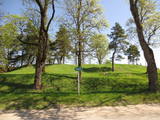 |
Is an ancient Courlandian castle hill and is found in the very centre of Alsunga. It was named in 1659 when General Berg from Kurzeme put cannons on it to attack Swedish forces that had fortified themselves in the Alsunga castle. The hill is 8 to 10 metres high and 24 x 54 metres wide, offering a lovely view of the St Michael Roman Catholic Church, as well as the Alsunga windmill lake that is alongside it. There is a distinct terrace around the hill, and it once was the foundation of wooden defensive structures. On the other side of the street, to the West of the castle hill, is a cemetery with fire graves of Courlandians that date back to the 11th to 13th century. Archaeologists examined the area during the middle part of the last century. The Suiti celebrate Easter and other holidays on the hill. |
|
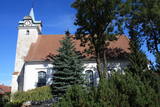 |
Als Treuegabe Herzog Jakob Kettlers an den polnischen König war das Gotteshaus von1640-1642 erbaut worden. In diesem ist unter anderem ein Beichtstuhl mit allegorischen Malereien (1691) erhalten, drei Altäre mit Schnitzereien im Rokoko-Stil und eine Skulptur “Madonna mit dem Kinde” aus dem 16.Jh.. Nach vorheriger Anmeldung kann die Kirche auch von innen besichtigt werden. |
|
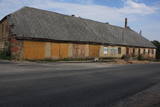 |
Atrodas Sakas un Liepājas ielas krustojumā. Ēka, kas šobrīd atrodas sliktā stāvoklī, celta 19. gs. vidū. |
|
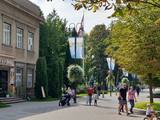 |
Die archäologischen Ausgrabungen zeugen davon, dass die Ufer des Flusses Ogre von Liven bewohnt waren. Zu einer größeren Ortschaft und zu einem bedeutenden Kurort entwickelte sich Ogre nach dem Ausbau der Eisenbahn Rīga-Daugavpils im Jahr 1861. Bis zum Ersten Weltkrieg haben in der Stadt Ogre ihre Dienstleistungen ungefähr 300 Sommerhäuser angeboten, die während des Krieges hauptsächlich zerstört wurden. Das nächste ‘große‘ Ereignis geschah im Jahr 1965, als in Ogre eine der in Europa größten Wirkwarenfabriken gebaut wurde, wo Gastarbeiter aus Vietnam und anderen Ländern arbeiteten. Heute hat die Stadt ihren Ruf als ein Kurort nicht wiedererlangt, aber sie ist zu einem ziemlich exklusiven Ort für den Bau von Privathäusern geworden. |
|
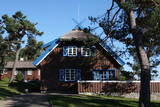 |
Ein zweistöckiges Holzhaus auf dem Uošvės-Hügel mit wunderschönem Blick aufs Haff. Hier hat drei Sommer der Träger des Nobelpreises, deutscher Schriftsteller Thomas Mann (1875 – 1955) verbracht. |
|
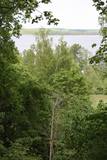 |
This is not a well known castle hill, but it offers one of the most unusual views of Lake Lielezers of Augstroze. There are ruins on the castle hill, and a short hiking trail has been installed to look at them. This is part of the ZBR.
|
|
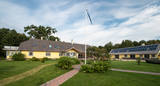 |
Nurka Farm is located in Luitemaa Nature Protection Area in Pärnu County. The farm complex that is over 100 years old has been renovated into a contemporary holiday farm with all modern conveniences. |
|
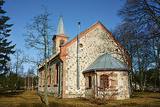 |
Es gibt eine Erzählung über einen dänischen Händler, der sich bei einem Schiffbruch am Kap von Kolka gerettet und als Dank in Kolka eine Kirche gebaut hat. In Kolka hat es mehrere Kirchen gegeben, die ihren Standort gewechselt haben. Das Fundament des heutigen aus Feldsteinen gebauten Gotteshauses hat der damalige Inhaber des Landgutes von Dundaga Karl Ludwig Ferdinand von der Osten-Sacken gelegt. Das Gotteshaus ist an der Stelle (oder in der Nähe) der hölzernen Kirche gebaut, die sehr stark im Krimkrieg gelitten hatte. Die ersten Bauarbeiten wurden von dem Baumeister Oto Zīverts im Jahr 1885 (Architekt Teodors Zeilers) angefangen. Während der Sowjetzeit wurde die Kirche gewaltsam ausgeraubt und in dem Gebäude wurde ein Lagerraum eingerichtet. Es ist wert, das moderne Altargemälde (Künstlerin Helēna Heinrihsone) zu besichtigen, dem kein anderes Altargemälde in keiner anderen Kirche ähnlich ist. Früher befand sich an der Stelle des Gemäldes ein Kreuz. Orthodoxe Christi Geburt-Kirche von Kolka. Die Angaben darüber, dass die Liven den orthodoxen Glauben angenommen haben, beweist eine Urkunde, die in den 1990er Jahren während der Restaurationsarbeiten im Turm der evangelisch-lutherischen Kirche (siehe auch weiter) gefunden und dort beim Bau der Kirche im Jahr 1885 hineingelegt wurde. Diese Urkunde erzählt, dass der Übertritt der Liven zum orthodoxen Glauben, dem sogenannten Glauben des Kaisers, „nicht mit der Glaubensüberzeugung verbunden ist, aber das ist ein Mittel, wie man an Vorteile für Grundstücke und an Genüsse gelangen kann.” Die orthodoxe Gemeinde hat schon im Jahr 1885 ein Grundstück vom Baron Osten-Sacken gekauft, auf dem im Jahr 1890 die Kirche, das Priesterhaus und ein Schulgebäude gebaut wurden. Alle Gebäude haben sich bis heute erhalten. Die Kirche hat ihre eigene Gemeinde und die Gottesdienste werden hier einmal im Monat abgehalten. Man kann Angaben darüber finden, dass Kolka das einzige Dorf an der livischen Küste war, wo in den 1890er Jahren eine orthodoxe Kirche gebaut wurde. Die Glocke hat ihren Platz im Jahr 1936 gefunden. Während der Sowjetzeit wurde die Kirche als eine Leichenhalle benutzt, aber heute dient sie ihrem ursprünglichen Ziel. |
|
 |
Das Café befindet sich am Rande der Umleitung von Jekabpils (A6). Lettische Küche: Kalte Suppe, hausgemachte Frikadellen, dünne Pfannkuchen. |
|
 12 Tagen
|
The tour combines the most beautiful southern parts of the Forest Trail in Lithuania and Latvia. The route starts in Druskininkai, Lithuania, and for the next day you will walk through forests of the Dzūkija National Park. After getting to Vilnius and Kurtuvėnai Regional Park, two sections of the Forest Trail will take you from Dengtiltis to Šaukėnai. Since it is among the most forested areas of Central Lithuania, the Kurtuvėnai Regional Park with its glaciated valleys is a wonderland of forests, waters and wetlands. The Forest Trail will run along small forest paths, tourist trails, beautiful tree alleys and wetlands. Next you will take public transportation to reach the Žemaitija National Park, where you will taketwo sections of the Forest Trail from the pilgrimage town of Žemaičių Kalvarija along the lakes of Plateliai, Ilgis and Beržoras to the town of Plateliai. It is one of the most beautiful towns of Samogitia taking pride in its manor park and the viewing platform on Lake Plateliai. Žemaitija National Park takes pride in its old pine and fir forests, as well as mixed forests. From there on the Forest Trail takes you along the riverside promenade in Kuldīga, continues through the nature park “Abavas senleja” from Renda to the wine and cider town Sabile and Kandava. The section along the Abava River Valley Nature Park is the most diverse river valley in Kurzeme in terms of landscapes and terrain. The final section of the tour takes you to the Ķemeri National Park, which is an important place for the protection of wetlands. As to the town – Ķemeri – it is the former balneological and sulphur springs resort. The tour ends on the seaside – the village of Bigauņciems, from where you can easily get to Rīga. Optionally, one can take a detour along the Lake Sloka trail with its bird-watching tower or pay a visit to the “Forest House” – the visitor’s centre of the Ķemeri National Park. |
|
 |
Krodziņš "Mežavējš" atrodas Rīgas - Liepājas šosejas 101. kilometrā. Krodziņa ēdienkartē iekļauti latviskie ēdieni. Latviešu virtuve: Skābu kāpostu zupa, biešu zupa, skābeņu zupa, aukstā zupa, kartupeļu pankūkas, plānās pankūkas ar ievārījumu, šmorētas cūkgaļas ribiņas, zemnieku cienasts, mājas kotletes, auzu pārslu kārtojums, rupjmaizes kārtojums. |
|
 |
Das Wirtshaus befindet sich im Schloss von Mezotne und bietet köstliche und feine Speisen und Getränke an. Es ist wert, sowohl die prachtvolle Innenausstattung des Schlosses, als auch einen der schönsten englischen Landschaftsparks in Lettland zu besichtigen. Lettische Küche: Kartoffelpfannkuchen, eingelegte Heringsrollen, Forelle mit Kartoffel in der Montur, gebratene Blutwurst mit Preiselbeersoße, graue Erbsen mit Speck, geschichtetes Roggenbrot-Dessert mit Moosbeerenmarmelade und Schlagsahne. Das besondere Gericht: Taler von Bauska: Schweinefleisch in der Form eines Talers mit Soße aus Bier von Bauska. |
|
 |
The pizzeria is situated in Talsi, not far from Talsu lake. Stender’s pizzeria with its nice comfortable setting offers special Stender’s pizzas which are baked according to the old traditions of pizza-making, incorporating the best of nowadays’ recognitions. Undoubtedly, it is impossible to do without pancakes and pots, as well as second-course dishes. Number of seating places:30 |
|


