
| Nr | Name | Beschreibung |
|---|---|---|
 |
Im Restaurant am Ufer des schönen südestnischen Sees Pühajärve können Sie die vom Chefkoch zubereiteten erstklassigen Gerichte genießen. Vor allem werden frische örtliche Produkte verwendet. Es werden auch besondere Kochveranstaltungen organisiert. |
|
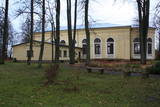 |
Dievnams celts (1851. g.) un vēlāk (1876. g.) paplašināts. Tas tika sagrauts 2. Pasaules kara laikā un pēcāk atjaunots. Līdz Latvijas neatkarības atgūšanai to izmantoja par skolas sporta zāli. Pēc draudzes darbības atsākšanas (1989. g.) sākās arī baznīcas un ar to saistīto tradīciju atdzimšana. Apskatāma no iekšpuses. |
|
 |
Kadarbiku estate is located in Harju, in the municipality Saue, in the village Tula (Tuula). Agriculture started to work here in 1989, while the family company Kadarbiku Köögivili OÜ was established in 2004. Kadarbik farms specializes in growing and processing vegetables. The farm uses 500 hectares of land, which grows carrots, cabbage, beets and various summer crops. They also make juices and smoothies. |
|
 |
Kalevipoeg ist der Held vom estnischen Nationalepos und gerade Kreis Jõgeva ist mit den Geschichten von Kalevipoeg verbunden. Hier soll sein Schwert im Fluss Kääpa liegen, sowie seine Rastolätze, Steine, Quellen, Moorgebiete, Pflüge, Pferdespuren etc. |
|
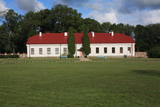 |
Atrodas Grāfu Plāteru parkā, blakus Krāslavas jaunajai pilij. Tas izvietojies vienā no 18. gs. celtajām muižas saimniecības ēkām. Muzeja ekspozīcija ir veidota interesantā veidā – 17 m garā laivā, kas (laiva ar pieciem airiem) ir pilsētas ģerbonis. Muzeja krājums iepazīstina ar Krāslavas novada vēsturi, sākot no akmens laikmeta līdz mūsdienām. Muzejā tiek organizētas Krāslavas mākslinieku izstādes. |
|
 |
Die Haupttätigkeit des bäuerlichen Betriebs ist Getreidezucht. Seit 2006 beschäftigt sich der Betrieb mit Milchviehzucht und seit 2008 – mit der Herstellung von Käse und Quark. Zur Zeit sind im Betrieb mehr als 200 Melkkühe, von deren Milch Rohmilch, Joghurt, Käse und Eis hergestellt werden. |
|
 |
Das Restaurant befindet sich im Zentrum von Talsi, am Rande der Lielā Straße. Hier kann man Gerichte aus dem Kochbuch der Großmutter, aus der Küche der Welt und ein breites Angebot an Weinen bestellen. Das Restaurant arbeitet mit lokalen Bauern zusammen. Lettische Küche: Sauerkrautsuppe mit gebratenen Schweinerippen, Graupensuppe mit Waldpilzen, Hering mit Quark, Graupengrütze, geschmorter Braten mit geschmortem Sauerkraut, Lammfleischbraten, Quarkfladen, in Lettland hergestellte Biersorten. |
|
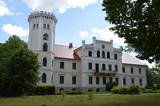 |
Skaistā ēka atrodas Lizuma centrā. Lizuma muižas īpašumi piederējuši dažādām dzimtām – vācbaltiešiem Tīzenhauzeniem, Malamiem un Volfiem. 1836. g. muižu iegādājas barons Otto Gotlībs fon Volfs, kura laikā muižas pils iegūst tagadējo veidolu – Tjudoru neogotikas stilu ar poligonālu torni. Jau no 1937. g. pilī izvietojusies Lizuma skola, kas ir viens no iemesliem, kādēļ saglabājusies ne tikai pati ēka, bet arī atsevišķi interjera elementi kāpņu telpā, Zilajā (Mednieku) zālē u.c. Pili ieskauj parks, kur atrodas muižas saimniecības ēkas – mūra klēts (te kultūras nams), 1876. g. celtais zirgu stallis (sporta halle), kalpu un dārznieka namiņš u.c. Bijušajā spirta brūzī ražo Gotiņas konfektes. Pils tornī izveidots Lizuma vidusskolas veidotais novadpētniecības muzejs. |
|
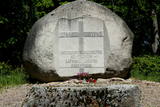 |
Er befindet sich am Rand der Landstraße A9, hinter der Lestener Kreuzung 0,5km in Richtung Riga. Der Stein (Autor: Ojārs Feldbergs) war 1991 an der Stelle des ehemaligen Hauses „Rumbas“ aufgestellt worden zum Gedenken an die Verteidiger der Kurländischen Festung, die einer 10fachen Übermacht der sowjetischen Armee trotzten und somit etwa 300 000 lettischen Kriegsflüchtlingen die Möglichkeit gaben, dem darauf folgenden sowjetischen Terror zu entfliehen. |
|
 |
In einem Bauernhof am Ufer des Flusses Miegupīte wurde eine Pizzeria im Freien und in einem restaurierten Pferdestall ein Ort für Feierlichkeiten eingerichtet. Es werden auch lettische Gerichte, Traditionen und Rituale angeboten. |
|
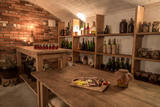 |
Die Gäste sind eingeladen den traditionellen, litauischen ethnographischen Keller zu besuchen. Hier wird die Verkostung von gepökeltem Speck aus eigener Produktion mit sauren Gurken aus ökologischem Anbau geboten, zudem kann man sich Frischkäse mit verschiedenen Beerenmarmeladen schmecken lassen und die ganze Sache mit auf dem Hof erzeugten Wein und Apfelwein abrunden. Im Angebot steht ferner Kräutertee aus Gemeinem Schneeball. |
|
 |
Der Bauernhof befasst sich mit der Ziegenzucht und Herstellung verschiedener Ziegenmilchprodukte, aus denen Ziegenkäse und andere Produkte hergestellt werden. Auf dem Feld neben dem Bauernhof werden auch Kartoffeln, saftige Erdbeeren und andere Produkte angebaut. In der Sommerlaube können ca. 15-20 Menschen am Tisch sitzen und gemütlich miteinander reden. Es wird eine leichte Kost angeboten, die zu 100% aus den Produkten des Bauernhofs zubereitet wird. |
|
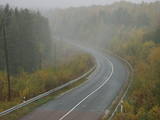 |
The tower is at the edge of the Dundaga-Mazirbe road, at the Šlītere Blue Hills. It offers a lovely view of lowland seashore forests, the local road, and a bit of the ancient shore of the Baltic ice sea.
|
|
 |
Lauku sēta atrodas Džūkijas nacionālajā parkā. Saimniecībā iespējams pašiem ar saimnieces nelielu palīdzību pagatavot tradicionālos dzūku ēdienus veco laiku maizes krāsnī. Kulinārais mantojums un izglītības programmas. Piedāvā arī nakšņošanu. |
|
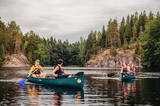 |
Within easy reach of the Finnish capital of Helsinki, visitors can escape into wild natural settings and enjoy typically Finnish scenery, with lovely lakes, green forests and rugged crags. The nearby Finnish Nature Centre Haltia spotlights the best of Finland's natural treasures from across the country. |
|
 |
Pupuchi ražotnē top kraukšķīga un veselīga uzkoda no cūku pupām - Pupuchi. |
|
 1 Tag
|
The smoke sauna is an important part of everyday life in the Võru community in Estonia. It is the centre of a rich set of traditions including the actual bathing customs, the skills of making bathing whisks, building and repairing saunas, and smoking meat in the sauna. The sauna is a building or room heated by a stove covered with stones and with an elevated platform for sitting or lying. It has no chimney, and the smoke from the burning wood circulates in the room. People usually go into the sauna together and remain until they are sweating. Water is thrown on the heated stones to produce hot steam-laden air and bathers beat their bodies with whisks to remove dead skin and stimulate blood circulation. After sweating, whisking, relaxing and possible healing procedures, people cool themselves outside and rinse their bodies with water. The procedure is then repeated. The smoke sauna tradition is primarily a family custom, usually practised on Saturdays, but also before major festivals or family events. Its main function is to relax the body and mind. Families take turns hosting each other. Usually an older family member is responsible for preparing the sauna, accompanied by the children who gradually acquire the necessary skills. The smoke sauna tradition is part of the UNESCO Representative List of the Intangible Cultural Heritage of Humanity. |
|
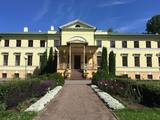 |
The Naukšēni People’s Museum, where we tell intelligent people about those who were born at the NAUKŠĒNI DISCO, arrived here and stayed here. We’ll look at how they talk, sing, think and love. |
|
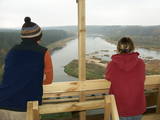 |
The viewing tower was built quite recently. At its foot is a location for relaxation. It offers a good view of one of the curves of the Daugava River – the Adamova curve. A bit beyond is the Curves of Daugava Nature Park. Along the tower is the “Saulkrasti Trail” bicycle route.
|
|
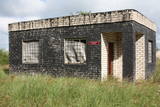 |
In der Zeit der Sowjetunion befand sich die radiotechnische Kompanie von Lūžņa im Bestand von der Küstengrenzwache. Eine sehr gute Aussicht auf den ehemaligen Militärkomplex von dem Parklpatz im Zentrum von Lūžņa aus. Manche Gebäude werden als Wohngebäude genutzt.
|
|


