
| Nr | Name | Beschreibung |
|---|---|---|
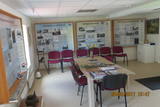 |
In dieser Austellung befinden sich Exponate, die von der Geschichte der Gemeinden Džūkste und Lestene zeugen, von Geschehen im Zweiten Weltkrieg und deren Folgen. Der Eintritt ist frei, Spenden erwünscht. |
|
 |
Z / S "Kaņepītes" is a family company founded in 1992. The farm takes its name from the name of the house given to it in 1924. Organic farm where cereals are grown and processed into food. The production of the products is small, but the technique has an ancient atmosphere, a stone, wooden mill that gives a special taste and aroma to flour and oatmeal. Now the assortment already has 30 different product types. |
|
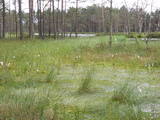 |
Das ist eins der größten Moorgebiete in Lettland und liegt zwischen den Orten Babīte und Olaine. Der größte Teil des Gebietes besteht aus Torf. Relativ unberührt ist der nördliche Teil des Sumpfes, wo es einige sehenswerte Sumpfseen gibt, die die Landschaft des Moores bilden. Das Moor ist eines der wenigen in Lettland, wo der westliche und der östliche Moortyp nebeneinander existieren. Das ist ein wichtiger Ort für geschützte Vögel. Ein Naturpfad und ein Aussichtsturm werden hier in nächster Zukunft eingerichtet.
|
|
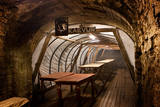 |
Das unterirdische Museum ist die spannendste Attraktion im Grubenpark-Museum von Kohtla. Machen sie eine unvergessliche Tour durch die unterirdischen Arbeitsplätze der Grubenarbeiter, besuchen sie das Sprengstofflager, fähren sie mit dem echten Bergbau-Zug und erfahren sie mehr über Bergbautechnologie. In der unterirdischen Kantine haben sie die Möglichkeit ein echtes Grubenarbeiter-Dinner zu geniessen. |
|
 |
Die Gäste erwartet ein gesundes, für die Gegend charakteristisches Öko-Essen. Hier kann man das nationale Kulturerbe, verschiedene Legenden kennen lernen sowie Leckereien und Souvenirs kaufen. |
|
 |
Das Restaurant „Kest" ist wie eine gastronomische Reise. Aus dem Wunsch nach gastronomischen Entdeckungen bereitet Küchenchef Māris Jansons seit mehr als zwei Jahrzehnten verschiedene Mahlzeiten zu. |
|
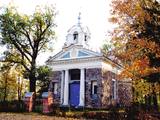 |
Kulnevskaya (Ilzeskalns) Orthodox Church was built in 1832 by Kulnevs, the landlord of Ilzenberg
(Ilzeskalns) manor house. He was also the brother of Jacob Kulnevs. The Church has an iconostasis with
icons of the 19th century. The rectangular building has semicircular niches at its sides. The members of Kulnevs
family are buried here. The place of tomb is a rare phenomenon in Orthodox churches of Latvia.
|
|
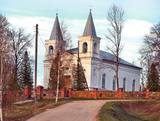 |
Sts. Simon and Judas Roman Catholic Church of Dricāni was
built in 1859 on the top of the hill. There is the wooden altar of the Holy Spirit, decorated with woodcarvings, wooden statuettes and the icon of Simon and Jude.
|
|
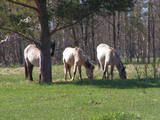 |
Für den Zweck der Bewirtschaftung der Niederungsauen des Pape-Sees und der Vermehrung der biologischen Vielfalt sind hier Konik-Wildpferde angesiedelt wurden. Die kann man mit einem örtlichen Guide kennenlernen. |
|
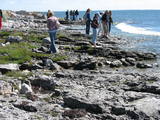 |
Wurde für den Schutz der Inselgruppe Vilsandi (ung. 100 kleine Inseln) gegründet. Die größte ist 6 km lange un bis 2 km breite Vilsandi Insel. |
|
 |
Der Hof von Jadvyga Balvociute ist ein zertifzierter ökologischer Hersteller von Kräutertees. Besucher sind das ganze Jahr über willkommen, jedoch sind der Frühling und Sommer besser für einen Besuch geeignet. Frau Balvociute hält 45-minütige Vorträge zu Kräutern, an die sich eine 30-minütige Exkursion durch die Pflanzenkollektion im Freien anschließt. |
|
 |
Bioloģiskā saimniecība nodarbojas ar Irbeņu ogu audzēšanu un dažādu to produktu ražošanā kā pulverus, sulas, tinktūras, eļļas, sejas maskas un kapsulas. Irbene ir vērtīgs ārstniecības augs, kur izmantojamas ir pilnīgi visas tā daļas – lapas, ogas, sēklas, stumbrs, miza, sakne un ziedi. |
|
 |
The organic farm Zemturi is a 30 min drive from Kuldiga. The farm is mainly engaged in breeding rabbits and is designed as a place for children to see, learn about rabbits, birds and other pets. The hosts have created two thematic trails, one for pets and poultry and the other for trees and flowers. Sauna lovers have access to the sauna, also fishing opportunities can be used. Overnight stays with family or a small group of friends are also offered. Excursions for big and small. |
|
 |
Die Wirtschaft bietet die Besichtigung von verschiedenen Arten von Ponys u.a. Tieren (Zwergziegen, Ziegen) an. Ein besonderes Angebot für Schüler – Ausflug „Lerne die Ponys kennen”. Die Kinder können auf den Ponys reiten, Forellen füttern, sowie an der Lehrveranstaltung über die Verpflegung der Tiere teilnehmen.
|
|
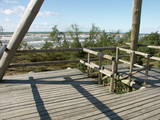 |
Die größte graue Düne Lettlands, die ein Schutzbiotop von europäischer Bedeutung ist. Eine Aussichtsplattform. |
|
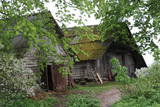 |
Maza apdzīvota vieta ar dažām viensētām uz pussalas (salos tulkojumā no lietuviešu valodas nozīmē „sala") starp vairākiem ezeriem. Salos II ir viens no sešiem Augštaitijas nacionālā parka etnogrāfiskajiem ciemiem. Ciems patiks tiem, kas meklē ļoti nomaļas vietas ar vecām guļbaļķu dzīvojamām un saimniecības ēkām. No Salos II pa sauszemes maršrutu var doties pārgājienā līdz Ladakalnim un Ginuču pilskalnam (sk. iepriekš). |
|
 |
Ogu un augļu dārzs, dažādu ievārījumu, sulu, sīrupu ražošana un tirdzniecība.
|
|
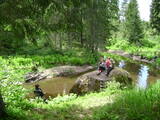 |
The trail tells about grey dunes which have survived thanks to the border restrictions and the presence of military. The trail starts from the parking place at the mouth of the Užava river. It is one of the few natural rivermouths in Europe. One can also see the „tacis”, an industrial installation for lamprey (Lampetra fluviatilis) fishing during their spawning migration period. The 3km long trail is circular. It winds for 1.5km from the Užava rivermouth to the North, along the coastline (the beach is covered with sand and pebbles), and returns to the starting point by a gravel road through grey dunes. Along the trail, one can observe a distinct white dune with rare plant species Linaria loeselii, Lathyrus maritimus, Anthyllis arenaria, Tragopogon heterospermus. About 1km from the rivermouth, in the sea, one can see a wrack of a sailing ship (parts of frame). The visibility depends on the flow of sand in the sea. The way back opens a beautiful view of the range of grey dunes. Unfortunately, Scots Pine starts taking over the area. There are three important biotopes of EU significance: „Fixed dunes with herbaceous vegetation 2130”, „Decalcified fixed dunes with Empetrum nigrum 2140” and „Dunes with Salix arenaria 2170”, forming a unique mosaic. Typical species here: mountain Alison ‘(Alyssum gmelinii), Pasqueflower (Pulsatilla pratensis), Sand Pink (Dianthus arenarius), Rosemary Leaved Willow (Salix rosmarinifolia), Dark Red Helleborine (Epipactis atrorubens), Kinnikinnick (Arctostaphylus uva-ursi). As a former military site, some military constructions can be seen here like horseshoe-shaped sand ramparts by the road in gray dunes. They were built to disguise military vehicles in case of sea attack. By the Kangroti graveyard, towards the Užava river, there is an underground pillbox. It is a one-man fortification to fire along the coastal perimeter. The Mouth of River Užava walking route is in the nature reserve „Užava” |
|
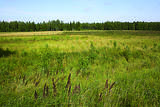 |
Die Seewiesen von Dūmele – ein mit Sagen und Erzählungen umgewandter
Platz über den ehemaligen Vīdala See (Dieviņa ezers- Gottessee), dessen Wasser
1838 ins Meer gelassen wurde. Interessant ist, dass nach dem Ablass am Seeboden
alte Baumstuempfe und Schiffsreste gefunden wurden.
|
|
 |
The farm produces dried pork blood sausage, and other meat products. You can take a tour and purchase the products. |
|


