
| No | Name | Description |
|---|---|---|
 |
Rancho Riisa is located in Soomaa National Park (Soomaa Rahvuspark), where there are a lot of fruits of the forest to be used in cooking. After a stroll through the national park and a refreshing sauna, the hosts will offer the best meal in Soomaa traditions. |
|
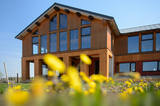 |
Holiday house Ugaraja Kotkaapesa is a cosy place where the owners offer homemade dishes to their guests from ingredients grown locally. The holiday house has a large lounge and sauna, and the area is suitable for hiking. |
|
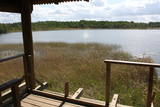 |
This is on the north-western shore of Lake Lielezers of Limbaži, at the start of the Lielezers nature trail. The tower opens up a view of the lake and its lovely shores. It is worth walking the trail, which is several kilometres long, because it is an interesting one. This is part of the ZBR. |
|
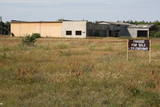 |
The job for the No. 15 Radio Technology Brigade at Saraiķi was to defend Soviet Latvia’s shoreline back in Soviet times. Today the facility is owned by the Defence Ministry, and the No. 17 Home Guard Battalion uses it for training purposes.
|
|
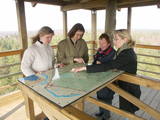 |
This hill in the Tīreļpurvs swamp is an historical object of national importance – the only area in Latvia that is restricted for cultural and historical purposes. There is unique evidence here of World War I fortifications and the so-called Christmas Battle that was fought here.
|
|
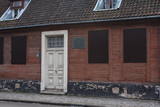 |
Находится на ул. Кунгу, д. 24.Одно из старейших зданий города - деревянный сруб с черепичной крышей, построенный во второй половине XVII века и прозванный в народе гостиницей мадам Хойер. Здесь в 1697 году во время путешествия «Великого посольства» в западную Европу останавливался (инкогнито) русский царь Петр I. Находящееся по соседству здание на ул. Кунгу, д. 26, является вторым старейшим жилым зданием Лиепаи (1699 г.) – жилой дом бургомистра города. Во время Северной войны здесь останавливался король Швеции Карл XII. Оба здания подлежат осмотру только снаружи. |
|
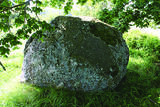 |
The great Black Plague rock, which has engraved text that can still be seen
to a certain extent – it tells future generations about the local pastor who died
from the plague, about how the parsonage was established at Sīkrags and then
moved to Mazirbe. The rock is also a monument to six pastors of the nearby
congregations. All the three stones tell about the horrors of the Black Plague in
1710, the texts have been engraved during the parson Peterson in 1711-1734.
|
|
 |
The peat cement factory. This is an
abandoned but unique industrial
landscape. Follow markings when crossing
the factory’s territory.
|
|
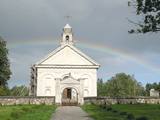 |
Divine Providence Catholic Church of Rikava (Baltini) was built in Doric style in 1929 by the donations
of landlord Alexander Riks. The church has icons „St. Antony” and „Jesus Christ appears to Mary
Magdalene”. Beside the church there is a cemetery and family vault of Riks.
|
|
 |
Built in the 18th century and rebuilt in the mid-19th
century, the parsonage was the place where the Liv flag was first consecrated. Renovations
of the parsonage are underway at this time. Since September 2009, it has been used
by the Latvian Evangelical Lutheran Church as a rest home for its Recollection Centre.
|
|
 |
Saaremaa has had strong beer brewing traditions since olden times. In Kuressaare, the building with Art deco elements where electricity was once made, is now a home for the beer brewery Pöide that demonstrates the art of beer brewing – you will learn several secrets and taste various beers in the special tasting room. |
|
|
|
Located at the Lake Burtnieks southern shore, these are wetland meadows which are regularly flooded and which are important places for various birds, including the corn - crake, to nest. This is part on the environmentallyrestricted area which covers the meadows of Lake Burtnieks. |
|
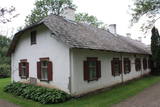 |
Between 1883 and 1891, the estate that was once owned by the Šadurskis family was rented by the father of the great poet Rainis, Krišjānis Pliekšāns. Rainis spent his youth at the estate, as reflected in the poet’s The Land of My Youth Days. Rainis translated Pushkin’s Boris Godunov while at the state. In honour of the poet and his contributions in the world of literature, an exhibition, “Rainis’ High School and University Years,” was opened at the estate in 1964. The restored cattle shed today offers a look at the work of potters in Latgale. |
|
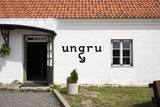 |
Ungru is a seaside hotel in the north of Hiiumaa. There is a high-class restaurant on the ground floor. The second floor has 4 rooms with all amenities. Dauble Deluxe beds with sea views. |
|
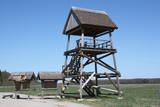 |
This barrow is on the western side of the Dunduri meadows and was built on the parking lot of the former collective farm. From the second level of the tower, you will have an excellent view of the meadows all the way to the Džukste River and the Kauguri canal. There are livestock accustomed to life in the wild, although they will sometimes be quite distant. This is a bird-watching location from the springtime until the second half of the summer. |
|
 |
Farm is located ~1 km to the north of Puikule near to the former Limbazi railway, in the territory of North Vidzeme Biosphere Reserve. The farm breeds sheep of the Latvian dark-head breed from which wool, hats, scarves, souvenirs etc. are made by felting. They can be purchased in the farm. Sheep graze in nearby meadows, thus promoting plant diversity in the area. About the role of pets in maintaining biodiversity can also be read on the bench in the yard. In the barn house is a collection of household items. Visitors can take a guided tour and buy souvenirs. |
|
 3 days
|
This is the most challenging Forest Trail section, especially on the second day. Here, on the coast of the Gulf of Finland, rises the North-Estonian Klint – a steep, rocky and forest-covered cliff that stretches non-continuously to Tallinn and further to the islands of West-Estonia. The Forest Trail runs on top of the cliff and occasionally descends into valleys. It crosses the deep and vast Pühajõgi valley in Toila-Oru park and comes to Toila, a popular coastal resort. One of the most unusual sections of the Forest Trail in Northern Estonia, which leads along the foot of the impressive North-Estonian Klint in good weather, then climbs to the top of the klint in the villages of Valaste and Saka, revealing breathtaking views of the Gulf of Finland. |
|
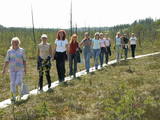 |
This is a highland swamp with several little lakes. At the SE of the area is a wooden trail.
|
|
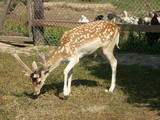 |
The owner will give you a tour during which you will see African ostriches, fallow dear, the Soay breed of sheep, exotic birds and fowl. You can establish contacts with the animals and purchase souvenirs. |
|
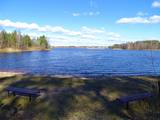 |
This was an island after the Rīga hydroelectric power plant created a reservoir, and before that it was a peninsula on the Left Bank of the Daugava. During World War I, there were massive battles between Latvian Riflemen and a much larger German army on Death Island. On December 25, 1916, the Germans used poisonous gas against the Latvian troops. In honour of this, the architect Eižens Laube designed a monument to fallen Latvian riflemen on the northern shore of Death Island. It was unveiled in 1924. Death Island can be reached by boat, and the trenches and graves there are of interest. There is a pier for boats on the north-western shore of the island, and nearby is a location for leisure. Some of the trenches and dugouts have recently been restored. The battles were described by Aleksandrs Grīns in his masterpiece, “Snowstorm of Souls.” |
|


