
| Nr | Name | Beschreibung |
|---|---|---|
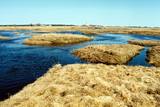 |
This is one of Estonia’s most beautiful karst fields, covering 125 hectares which feature different karst processes – subterranean streams, the dry Jõelähtme River bed, karst streams, funnels, ditches, caves, cliffs, a unique rock “mushroom,” etc. During the spring, the field is flooded, but at other times of the year, its contents are easily visible.
|
|
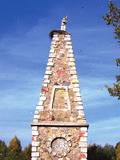 |
Das Denkmal wurde errichtet zu Ehren des Jubeljahres der katholischen Kirche, das 1825 in Rom für die ganze Welt verkündet wurde.Auf einem hohen, pyramidenförmigen Postament steht eine Christusfigur, die das Kreuz trägt. Das Postament wurde 1828 unter dem livonischen Kanoniker, Dekan von Rezekne und Schriftsteller Jāzeps Kirkillo errichtet. 1918 wurde das Denkmal renoviert und die Christusfigur mit dem Kreuz erstellt. Eine weitere Renovierung fand 1990 statt. |
|
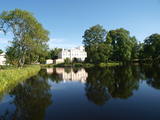 |
Das von dem Adelsgeschlecht Pistolkors im Jahre 1880 gebaute Schloss wurde renoviert und erwartet Besucher in einer noch nie gesehenen Pracht in seinem Gästehaus 78 km von Riga entfernt. Bankettsäle, Seminarräume, Sauna, Pool, Billard. Gepflegte Naturlandschaft.
|
|
 8 Tagen
|
Diese Reise bietet die Möglichkeit, sich mit dem Alltag auf einem modernen Bauernhof vertraut zu machen, der alten Gewerbe- und Arbeitstraditionen anwendet. Alle Produkte, die auf dem Land angebaut werden, sind auf dem Rigaer Zentralmarkt zu finden. Deshalb beginnt die Reise gerade hier - auf einem der größten und ältesten Märkten Europas. Auf dem weiteren Reiseplan stehen der Besuch mehrerer Bauernhöfe und Verkostungen von deren Erzeugnissen - aus natürlichem Saft gemachte Bonbons, Käse, Getreideprodukte, Joghurt, Eis. Ein traditioneller Bauernhof und das Technische Museum Auf jedem Bauernhof gibt es eine kleine Exkursion. Die Reiseroute enthält auch die Besichtigung der vom Architekten Rastrelli entworfenen Perle der Barock- und Rokokoarchitektur - des Schlossmuseums Rundāle mit dessen Park und Rosengarten. Sehenswert in Bauska ist die Ausstellung der historischen Messgerät im Rathaus, das Schloss Bauska und die Bierbrauerei. In Litauen erwarten die Besucher Bauernhöfe, die sich mit Lavendel-, Heilpflanzen- und Hanfanbau beschäftigen und deren Erzeugnisse vor Ort erworben werden können. Die Stadt Anykščiai bietet Reisenden einen Spaziergang auf einer Wanderbrücke oberhalb der Baumwipfel. Die archäologische Stätte Kernavė gehört zum UNESCO-Welterbe. Den Abschluss der Fahrt bilden die im 14.-15. Jahrhundert errichtete Wasserburg Trakai und Vilnius. |
|
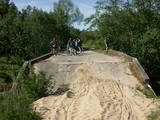 |
Der Kanal von Kauguri ausgegraben
1933, mit dem Ziel das Gewässer von Džūkste
und Slampe nach Lielupe abzuleiten, zur
Abwendung vom Versumpfen.
|
|
 1 Tag
|
Diese Tour ist nur für erfahrene Wanderer geeignet. Die Reiseroute umkreist die Suurupi-Halbinsel, in deren dichten Wälder das militärische Erbe verschiedener historischer Epochen verborgen ist. Der Baltische Küstenwanderweg schlängelt sich durch dicht bewachsene und steinige Strände, Birkenhaine, dann weiter entlang ehemaliger Pionierlagern und den von Sandsteinfelsen beschützten Buchten mit spitzen Erdzungen. Am Ende der Route ragt eine der eindrucksvollsten Freilegungen der estnischen Küste empor – die Felsen von Rannamõisa. Von den Felsen aus eröffnet sich ein herrlicher Blick auf die Kakumäe-Bucht und die Türme der Altstadt von Tallinn. |
|
 |
The cafe is situated in the southern part of Vecpiebalga. The interior decorations are made of oak and boast Latvian symbols, as well as stained glass. Working hours: Monday- Thu 8:00 - 22:00, Fri, Sat 8:00 - 01:00, Sun. 8:00 - 22:00 |
|
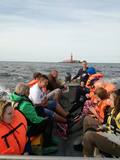 |
Piedāvā izbraucienu ar zvejnieku laivu līdz Kolkas bākai. Iespējama iepazīšanās ar zvejas procesu. Iepriekš saskaņojot, iespējams jūrā sagaidīt saullēktu vai saulrietu. |
|
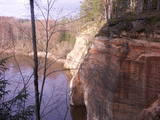 |
The viewing area on the Ērgļi (Ērģeles) cliffs offers an impressive view of Latvia’s most monolith sandstone cliffs (up to 22 metres high) – this is the highest location in the Gauja River valley. Please be very careful and don’t go anywhere near the edge of the cliff!
|
|
 |
Atrodas Raganas centrā pie degvielas uzpildes stacijas, viesnīcā „Raganu ligzda”. Piedāvā mūsdienīgu Latvijas virtuves ēdienkarti. Kompleksās pusdienas. Sadarbojas ar vietējām zemnieku saimniecībām. |
|
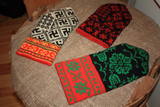 |
Die ständige Ausstellung Die Traditionen der Anfertigung und des Tragens der Tracht von Bārta zeigt die Vielfalt der Kleidung von Mädchen, Frauen und Männern, sowie die Vielfalt der Kleidungselemente. Die Besucher können an den Stickarbeiten der Muster und an den Webarbeiten von Hemden von Bārta teilnehmen. Zusammen mit dem ethnographischen Ensemble von Bārta werden hier auch Bildungsprogramme Die Tracht von Bārta und Die singenden Frauen von Bārta angeboten. |
|
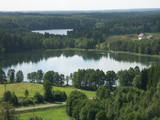 |
This territory is rich with forestland and lakes (some 285 in all). There are extensive opportunities for active recreation or calm leisure.
|
|
 |
On the third Saturday of each month from 9:00 to 13:00 the Green market takes place in Gulbene, where there are gathered outworkers, craftsmen and farmers from different districts of Latvia. There are offered goods made by the outworkers, seasonal vegetables and fruit, as well as beauty and design products, including other useful household and pretty goods. |
|
|
|
The Apakšceļs road – a lonely, forested and ancient road between
Košrags and Dūmele, with lots of interesting stories about the old Pitragupe
windmill, which never did grind any grain (the foundations are still there), and
about the boiler of a wrecked ship which a local baron used to produce tar.
This used to be a horse path which crossed the Bažas swamp. The great rock
of Dūmele is impressive, indeed.
|
|
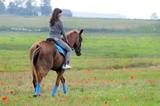 |
Schoolchildren up to the 6th grade are offered tours during which they can learn about animals, feed them and pet them. Older students will learn about the evolution and biology of horses, as well as about work with horses. Easy hikes are offered to tourists. |
|
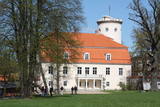 |
The history of Cēsis begins at the Riekstu hill, which is 18 m high and the surrounding area. There was a wooden castle built by the Vendian tribe that stood there from the 11th to the 13th century. The hill is in the central part of the castle’s park, and it offers a fine view of the park, a pond and the ruins of the Cēsis Castle. A long staircase leads to the hill. The Cēsis Castle was built in the early 13th century as the residence of masters of the Livonian Order, and it was one of the most fortified forts in the Baltic region. Alongside is the New Cēsis Castle, which was built in 1777 in a place where gate fortifications had been before. The building houses the Cēsis Museum of History and Art, and an annex contains the Castle Visitor Centre and the Cēsis Tourism Information Centre. From the tower of the castle, we get a good view of the castle ruins, St John’s Lutheran Church and the northern stretches of the city. Opposite the new castle is the stable of the Cēsis Castle Estate and a wheelhouse (both from the first half of the 19th century). Today these house the Cēsis Exhibition Hall. Other buildings include a granary, a hut for coachmen and an old brewery. On the other side of the street is the romantic May park, which was installed during the 1830s. Streets in Cēsis include Lielā Katrīna, Mazā Katrīna, Mazā Kalēju, Kalēju and Lielā Līvu streets and Līvu square with wooden buildings from the late 18th and early 19th century. Torņa Street stretches along the walls of the Medieval castle. Outside the church is a sculpture, “As the Centuries Pass By,” and legend has it that anyone who rubs the lantern of the Old Time Man can see the future. One of the most impressive buildings in Cēsis is St John’s Lutheran Church, which was built in the late 13th century by the Livonian Order. The Roman-style three-segment basilica has elements of Gothic design and a 65 m steeple that was installed in 1853. The building was reconstructed several times during the 20th century and contains grave plaques relates to masters of the Livonian Order and local bishops. The pulpit dates back to 1748, the oak altar was manufactured in 1858, and the altar painting “Crucified One” was painted in 1862. The windows of the altar part of the church contain artistically valuable stained glass. The organ was manufactured in 1907 by the E.F. Walker firm, and it is one of the best concert organs in Latvia. The solar clock with the number 1744 is in the south-wester corner of the church. It is worth scaling the viewing tower of the church. At its foot is Rose Square, which was a market square from the mid-13th century until 1927 and was restored in 2008. This is the central square in the city. During the Middle Ages, a punishment pole and the city well were here. Rīgas Street has been the main street in the old part of the city from the very start, and here we find most of the architecturally distinguished buildings from the 18th and 19th century – the former city hall, the Fābers house and the Princess house. At one end of the street is Liv Square, where there a church, cemetery and the Rīga gate in the city’s walls existed in the 13th century. Today the square is decorated by a lighted fountain at a place where a well was found in the 13th century. On the other end of the street we find a reconstruction of the foundations of the Rauna gate from the 14th and 15th century, offering a good look at Medieval walls and the size and strength of the gates. It is commonly claimed that the national flag of Latvia was born in Cēsis, but it must be emphasised that the flag that is mentioned in chronicles was designed in Cēsis in 1279 as the ideological prototype of the current Latvian flag, while the story of the first national flag actually comes from Valmiera, where it was sewn in 1916. |
|
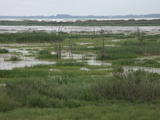 |
The Lake Lubāns depressions which are alongside the lake’s western and south-western parts feature little-changed forests and swamps, where many rare and protected birds nest. Many uncommon and protected habitats are in the region.
|
|
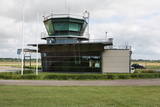 |
The current Ventspils airport began its life as a military object. Today regular passenger flights to and from Rīga have been suspended, and the airport is only used for small planes.
|
|
 |
A small part of the impressive fortifications of Liepāja, these encircle the city’s perimeter and its shoreline. They’re found at the Olimpija stadium. See also Objects No. 30077, 30078, 30079, 30080 and 30098.
|
|
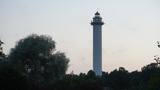 |
(formerly Pize and Pizā in Livonian). The current name of the village comes from a lighthouse (Mihailovskii majak) that was built during the age of the Russian Empire and named for the nephew of Tsar Alexander II. The lighthouse that is there now is the third one to be built on the site. It was built in 1957 and is the highest lighthouse in Latvia (57 m, can only be viewed from the outside). The Lutheran church in Mikeļtornis was built in 1893, and nearby is the Pize Saloon (1857), which is terrible condition. The saloon has a typical design from the 19th century and is the only venue of its type on the Livonian coastline. The first Livonian cultural activist, Jānis Princis (1796-1868), was born in Miķeļtornis, and he and son Jānis translated the Gospel of Matthew into the Western Livonian language. The two of them also wrote a collection of poetry, "Holy Songs and Prayers for Sailors." The only poetry book in Latvia prior to that was published by Blind Indriķis. A student of Vilhelms Purvītis, Livonian painter Andrejs Šulcs (1910-2006), was born at the Olmaņi homestead in Miķeļtornis. A monument to Livonian poets was installed at the local cemetery in 1978 and was the first monument dedicated to Livonians. There are plans to open an environmental object by artist Ģirts Burvis, "Century of Sailing Ships", in 2019. |
|


