
| No | Name | Description |
|---|---|---|
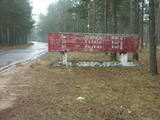 |
This facility is used for military and tactical training at this time. The facility can be used for automobile and motorcycle racing, testing drives, and security training, all of which must be arranged in advance. The surrounding nature reserve offers a chance to look at local plants and animals.
|
|
 |
Uibo farm offers customers fresh pork dishes, using as little preservatives and additives as possible, characterised by traditional Estonian flavours. |
|
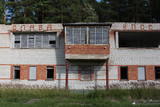 |
The firing range at Skujnieki was once used for summer sports, as well as training in the use of firearms. The Defence Ministry still uses the facility from time to time. The central building of the facility was built in 1982, and its façade is decorated with text in the Russian language: “Слава КПСС” (“All Honour to the Soviet Communist Party).
|
|
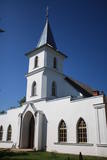 |
The Ilūkste Roman Catholic Church is to the North of Unity Square. The first stone church in Ilūkste was financed by the Plater-Sieberg dynasty of noblemen between 1754 and 1769. The current church was built in 1816. In 1861, it was taken over by the Orthodox Church, but it was returned to a Catholic congregation in 1920. The church was restored in 1921. The interior can be viewed during worship services. |
|
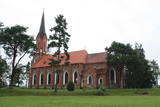 |
The Velēna Lutheran Church is at the crossing of the Smiltene-Gulbene-Lizums roads. It is said that the roof of the first wooden church at this location had a peat moss roof. The organ from the Sauer company still works, and it is one of the best organs in Latvia. The organist offers guided tours of the church. |
|
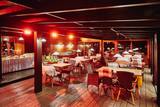 |
The restaurant is at the edge of the Vidzeme Highway (A2). It is a lovely log building with a straw roof and an antique interior. Dishes are based on ancient traditions merged with the requirements of modern clients. Latvian cuisine: Cold soup, dumpling soup, grey peas with bacon, wheat grain porridge, lampreys in mustard sauce, pike-perch grilled on coals, roast pig’s ear, roast pork leg, chicken livers in a creamy sauce, stacked rye bread, cottage cheese dessert with cranberry sauce. |
|
 3 days
|
Druskininkai tradicionāli ir bijusi kūrortpilsēta - tā piedāvā mežu, Nemunas krastu un ezeru ieskautu mūsdienīgu SPA viesnīcu kompleksu un ūdens atrakciju parku, kā arī plašu gājēju un veloceliņu tīklu. Turpat netālu atrodas iekštelpu slēpošanas kalns "Snoras Snow Arena", kurš ir pirmais un vienīgais ziemas izklaides centrs Baltijas valstīs un darbojas visu gadu.
|
|
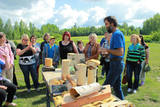 |
Tāšu meistars Jurijs Ivanovs ar lielu centību un degsmi pēc seniem paraugiem cenšas atjaunot labākās Zilupes novada tāšu apstrādes tradīcijas. Top novadam raksturīgi autentiski tāšu trauki ķiploku, putraimu, saldumu, sāls uzglabāšanai, paliktnīši kafijas krūzei vai pannai. Īsts meistarstiķis ir darbarīku rokturu izgatavošana. Darbnīcā varēsiet izgatavot tāšu glezniņu, tāšu tauri, uzrakstīt īpašu vēstuli kādam ļoti mīļam cilvēkam. |
|
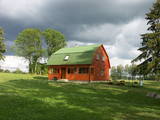 |
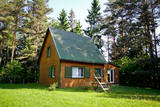
A summer house by lake Sila, in a separate building sauna and rest room with fireplace. Bathhouse - living room with open-fire, sauna, shower, double bedroom. Summer house – one room with twin beds, dry toilet. |
|
 4 days
|
This is a professional livestock farming tour to visit farms that breed cows, sheep, goats and pigs. During the introductory day, participants will tour the Latvian capital city of Rīga, which is on the UNESCO List of World Heritage, and meet with representatives of the Latvian Agriculture Ministry and agricultural NGOs. The next morning it’s off to Kurzeme to visit a farm that breeds meat cattle. The second farm on the list specialises in the breeding of purebred and mixed breed cattle for siring, fattening and meat production. It sells piglets and offers pork, grains, potatoes and beekeeping products. In the evening we will visit Kuldīga to see Europe’s widest waterfall on the Venta River. The next morning we will travel to Vidzeme, where the first farm specialises in livestock breeding and intensive farming, while the second specialises in dairy farming and the production of grains and grasses. We will visit the ruins of the Koknese castle, which stands along the banks of the legendary Daugava River. In the evening, we will visit one of the largest goat farms in Latvia, with some 160 purebred goats (Alpine, Anglo, German White Noble), as well as hogs for breeding. Several types of cheese will be available for tasting. The next morning, we will visit one of Latvia’s largest sheep farms. The biological farm has about 250 head of sheep. The second farm grows grain and grasses and engages in dairy farming and livestock breeding. We will visit the Medieval castle in Cēsis, which was the residents of the masters of the Livonian Order and one of the most fortified fortresses in the territory of the Baltic States. At the conclusion of the day, we will go to Ungurmuiža Estate, which is one of the most outstanding examples of 18th century Baroque wood construction in Latvia. |
|
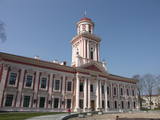 |
The late Baroque and early Classicism building was commissioned by Duke Peter Byron of Courland and Zemgale, and it was built between 1773 and 1776 on the basis of a design by a Danish architect. It was the castle of Duchess Anna. The first university in Latvia, Academia Petrina was established here in 1775 and named after Duke Peter. The first observatory was installed at the academy in 1772, and a high school was in the building during the age of the Russian Empire. Among graduates are distinguished Latvians such as Krišjānis Barons, Jānis Alunāns and Jānis Čakste, as well as the Lithuanian Antanas Smetona. The Jelgava Museum of History and Art took over the building in 1952, and in 1975 it was named after the Old Master Ģederts Eliass (1887-1975). The exhibition speaks to the history of the city and surrounding area during and after the period of the Duchy of Courland and Zemgale. Outside the impressive building are four cannons from the period of the duchy, as well as monument to Eliass that was designed in 1987 by the sculptor Jānis Zariņš. Another monument, “Lāčplēsis and the Black Knight,” was designed by the sculptor Kārlis Jansons and commemorates the liberators of Jelgava. |
|
 |
Suhka farm observes old traditions and serves local food. It also offers accommodation in a picturesque location. In addition, here you can learn of hiking routes in places you will not hear about elsewhere. |
|
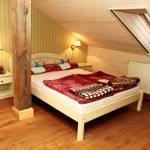 |
This guest house is in an old baronial estate on the banks of the Neris River. You will love the landscape, the opportunity to swim in the Neris River, or ride a bike. The owners are architects who teach classes about ethnic architecture. |
|
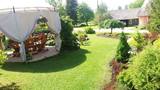 |
This farm welcomes groups and individual travellers for a smoke sauna, lunch, and a chance to taste Suiti bread, buns and special seed pastries that are based on ancient recipes. |
|
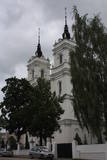 |
This is the highest point in the southern part of Daugavpils. A radius of approximately 300 m around 18. Novembra Street once housed the first Old Believer prayer house (1908-1928), the St Boris and Gleb Orthodox Cathedral (1905), the Daugavpils Mother of God Catholic Church (1905), and the Daugavpils Martin Luther Lutheran Church (1893). |
|
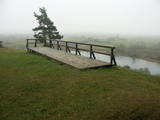 |
In Dagda, on the side of Daugavpils Street, there is a forested hillock that is the Lubāne castle hill. On the upper part of its southern side, there’s a viewing area which offers a view of the small Lake Lubenenis, the eastern part of Dagda, and the white tower of the local Catholic church. Legend has it that treasure is buried here.
|
|
 |
The restaurant is located half an hour's drive from Madona. Every time dinner "Evening on the Lake" is chosen by other chefs. |
|
 |
Holiday cottage and spa located by Vertukšnes lake, offering training and services focused on the practise of a healthy lifestyle. Black (smoke) sauna with traditional sauna rituals, massages, detoxification, weight reduction, and colour therapy Bioptron pro 1.
|
|
 |
Atrodas Cēsu rietumdaļā – pie ceļa, kas ved uz Cīrulīšiem. Piedāvājumā – plašs ēdienu klāsts no brokastīm līdz vakariņām. |
|
 |
Drinks are made from fruits and berries grown in Kurzeme region and hand-picked. 100% handmade. Our Story Apples Ciders Visitors Where to Buy |
|


