
| No | Name | Description |
|---|---|---|
 |
Vidzemes pakalnu ieskauta Smiltenes novadā, Gatartā slejas 200 gadus sena muiža – Gatartas muiža piedzīvojusi dažādus laikus, kopš 2025.gada 30.decembra tai ir jauni saimnieki, dodot iespēju ikvienam interesentam gan ekskursijās iepazīt muižas vēsturi, novērtēt senatnes mantojumu un saklausīt nākotnes vīziju. Muižas kompleksā ir kungu māja, klēts, ledus pagrabs, dārznieka namiņš, vistu namiņš un stallis. Kopējā teritorijas platība ir 9 ha, kurā ir unikāla ozolu birzs, dižozols un reljefā iegūluši dīķi. Muiža ik piektdienu laikā no plkst. 9:00 līdz 19:00 ir atvērta apskatei, citā laikā – vienojoties. Muižas kungu mājā ir 2 plašas zāles, kuras ir pieejamas dažādiem pasākumiem, šobrīd gan bez iespējas nakšņot. Teritorija pieejama visdažādākajām aktivitātēm, bet jo īpaši piestāv latviskās tradīcijas. Saimnieki ir atvērti visdažādāko ideju realizācijai. |
|
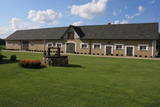 |
The birthplace of Latvia’s first prime minister and, later, president, Kārlis Ulmanis (1877-1942) was turned into a museum in 1993. The homestead has undergone unbelievable transformation during the past two decades. The landscape has been cleaned up, and buildings that were lost or were in poor shape have been rebuilt. There are a house, an ancillary building, a cattle shed and barn and a granary. The exhibition focuses on the life of Ulmanis, featuring an impressive collection of agricultural equipment and instruments, including Latvia’s largest wooden butter churn. |
|
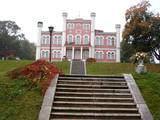 |
The Bīriņi palace was built in 1857-1860 as a family property of Counts von Pistolkors. The palace was designed by Riga architect F. W. Hess. Information can be found that in those times it was the most luxurious and modern historicism building in Vidzeme. The ensemble of the Bīriņi palace includes a wide park and forest of the19th century with plantings of alien species, an artificial lake Bīriņi, a family vault built in 1814 with a tomb monument to Counts von Mellin (aproximately in 1835), a watermill, manager's house, stables, etc. Obelisks to A. And N von Pistolkors are erected near the palace. Until today, there have been preserved valuable indoor decorative finishes of the second half of the 19th century. The Birini palace was rebuilt in the start of the 20th century after the project of Architect R. H. Zirkwitz. From 1926 to 1995, a sanatorium functioned there. Today, the palace complex is used for various events, there is located a hotel, restaurant and museum. |
|
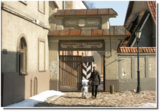 |
The biggest and the most impressive public decoration in the open air which was originally built in 2004 as the set for the film „The guards of Riga”and later as the set for the film directed by J.Streich „Rudolf’s inheritance”. Here you will also find the weapon museum Arsenal (contains weapons of different periods, uniforms and household goods), as well as the bakery "Laci". |
|
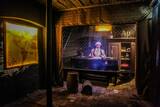 |
The tour at the “living Museum” is like a walk through history. Here, accompanied by a guide, it is possible to learn in interactive form about events during various periods in Kuldiga – about prison sentences, about Duke Jacob's ships, trade plans, about the glory and misery of Kuldiga. With the help of holograms, sound effects and other interactive elements, there is an opportunity to travel back in time and survive the sides of the history page full of joy, fear, horror and success. |
|
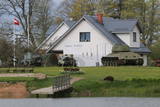 |
The Museum is situated in the place, where during the times of World War II the battles between the soldiers of Latvian and Soviet armies took place.The main subject of the museum is the history of Latvians during World War II and the battle of More. On the second floor of the museum the guide will tell you about the history of crafts and will show you the exhibition of household objects. Every year there are new exhibitions of the local craftsmen’s products . The visitors can buy souvenirs, jewellery and other crafts and goods. |
|
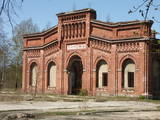 |
The norther part of the Liepāja fortress includes the so-called military port, which was opened to the public after the restoration of Latvia’s independence. The forts, defensive batteries, the Orthodox Sea Cathedral of St Nicholas, a water tower, a sports hall, the port’s prison, the northern breakwater, and the rotating bridge of Oskars Kalpaks are all interesting destinations. |
|
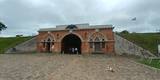 |
Found in the western part of Daugavpils and on the banks of the Daugava River, this is almost the only fortress in Northern Europe that has been preserved since the first half of the 19th century. Work on the fortress began in 1810, though it suffered much damage during the war of 1812 and because of flooding in 1829. The fortress was of strategic importance in terms of its location, not least in terms of the battle against Napoleon’s forces. It was consecrated in 1833, though construction work ended nearly half a century later, in 1878. The fort is divided up into squares, with the Parade Field in the centre of the whole fortress. After it lost its strategic importance in 1897, a warehouse was installed there. Prior to World War I, General Jānis Balodis, Colonel Frīdrihs Briedis and others served at the local garrison. In 1912, in honour of the centenary of the aforementioned war, a monument was unveiled in the park of the fortress. During the Soviet occupation, Red Army units took over the fortress, and a technical aviation school was established there. Even today, the fortress is a “city in a city.” It has a residential area, though the buildings are quite shabby. Both inside and outside the fortress are many elements that relate to military issues. Right now fundamental work is being done to reconstruct the buildings, water pipelines and streets of the fortress. The fortifications of the fortress are home to one of the largest colonies of bats in all of Latvia, and it is strictly forbidden to disturb them when they are asleep. Major restoration of the fortress has included the establishment of the Mark Rothko Art Centre. The distinguished artist was born in Daugavpils in 1903, when Latvia was still part of the Russian Empire. |
|
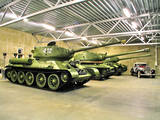 |
The Svente Baronial Estate in the Daugavpils District features a museum of military equipment, including a Josef Stalin tank, a T-34 tank, and armoured scouting vehicle, and other equipment.
|
|
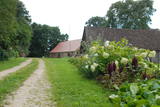 |
The Pilkalne Estate is in a remote location on the border of Latvia and Lithuania, 5 km to the Southwest of Nereta. Lovers of history certain must visit this estate. Why? One reason is that the grain kiln of the estate, which is gradually being restored, and the grain drying stove, a few wooden parts of which have been preserved, are unique in Latvia. The stable and servants’ home have also survived and are populated today. The buildings were built in the 18th century. The owner can tell you stories about interesting aspects of this location’s history. |
|
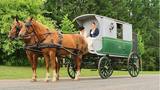 |
An age-old twisting postal road between Tartu and Võru takes travellers to Varbuse postal station dating from 1863. The Estonian Road Museum is housed in this well-preserved complex of a postal station which creates a wonderful setting for displaying the history of travelling and roads, traffic regulation and machinery. Cross-sections of road pavements disclose the secrets of road building. An outdoor display shows stretches of historic roads from Estonia and former Livonia creating an authentic ambience of the past. |
|
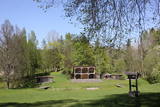 |
The location requires a drive through the Pērlis forest and sparsely populated areas. Silmači features an open-air stage, which was built in the 1980s for just one performance that was staged by the Latvian National Theatre during the Summer Solstice celebration in 1986. Ever since then, Rūdolfs Blaumanis’ famous play “Tailor Days at Silmači” has been performed here during the season. Alongside the stage is a museum that features information about the single performance in 1986. An original manuscript of the play (1902) can also be viewed. |
|
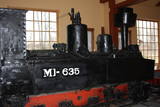 |
In 1916, during the German military occupation of Latvia, prisoners of war were put to work in installing narrow-gauge railroads via which the Germans exported Latvian timber. A narrow-gauge rail network was built through the forests and across the swamps of the Viesīte area. The track width was round 600 mm, and there was a total of 130 km of tracks to connect Viesīte (the central station) to Nereta, Aknīste, Jēkabpils and Daudzeva. The train was used after world War II to transport timber and passengers. The last trip along the line occurred on August 31, 1972.
You can tour the museum individually or with the assistance of a guide. You’ll see an Mi-635 locomotive, wagons for passengers and cargo, a platform to transport timber materials, and two trolleys.
|
|
 |
Angla Tuulikumägi (Windmill Hill) is the only site in Saaremaa which has retained its historical mill scenery with four post mills characteristic of the area and one Dutch-type mill. All windmills are open to visitors. |
|
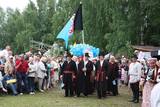 |
Mulgima or Mulgi is a cultural and historical region in the south of Estonia. The part of Viljandi county located south of the rivers Raudna and Tenasilma was considered to be region of Mulgimaa. In ancient times, Mulgi farmers were famous for their sharp minds and determination, which helped to buy land from German-Baltic nobles and become rich farmers. The icons of Mulgi culture - the dialect, the well-known men's long black jacket and the traditional Mulgi porridge - have survived to this day. |
|
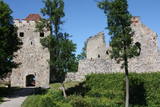 |
Exploring of Sigulda can be started with a visit to Sigulda castle ruins. The construction of the castle was begun by the Knights of the Sword Order in 1207, but in 1236 it was rebuilt for the needs of the Livonian Order. Sigulda castle suffered much from the wars in the second half of the 16th century and in the beginning of 17th century. During the Northern War, it is burned down and is no more restored. Today south-western building of the convent and the tower of the main gate, behind which is the inner forefront of the castle with open air stage, which offers impressive views over the Gauja valley. Currently the reconstruction of castle ruins is in progress. Construction of New castle (owner - Prince Kropotkin) in the South of the Sigulda took place from the 1878 until 1881. From 1923 - 1940 the building was the Palace of Writers, but during the Soviet years - Cardiology sanatorium. Since 2003 Sigulda district council is located there. The manor complex includes wooden house (middle of 19th century), which was Kropotkin's family home, barn (turn of the 18th - 19th century), gardener's house (19th century) and a stone fencing (19th century.) If we make our way from New Castle in a north-eastern direction, after almost 2 km we will reach Vejupite ravine. There you can see the shallow (3.6 m) but high (6.1 m) in Peter's Cave and deep Pucu ravine with Krauklupite. At the conjunction of ravines of both streams rises a Satezele hill fort (plateau 90 x 75 m), where in the beginning of 13th century was the oak castle of Liv land chief (eldest) - Dabrelis. Near can be found Krauklu gorge - ravine of Vejupite left bank, with 11 m high sandstone walls and 5.2 m deep Krauklu cave. At the conjunction of Vejupite ravine and Gauja valley columns Paradise (Gleznotaju) Hill - a very picturesque place, painted and photographed since old times! The Paradise Hill can be reached with a electric vehicle. In the west part of Sigulda is located Ferris wheel (works during the summer) and Air cableway (streetcar) - the only this type of vehicle in Baltics (built in the 1969). Its self-supporting cable extends in 1060 m length and without any support joins the Gauja River valley banks between Sigulda and Krimulda ~ 40 m above Gauja River. Here you can enjoy excellent views! In the south-western part of Sigulda one can walk to mighty Beites precipice, which is split by the deep ravine of stream. On the west side of the ravine lies Keizarskats, which is located ~ 67 m above the Gauja level and offers good views of Krimulda and Turaida castle. Sight place was arranged here already in the 1862 when Russian Tsar Alexander II visited Sigulda. In the eastern part of the ravine wooden Keizarkrēsls (Emperor Stool) is located. |
|
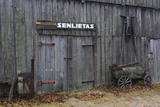 |
Atrodas Jūrmalciema austrumdaļā. Koka šķūnī sakrāti vietējo entuziastu savāktie Jūrmalciema iedzīvotāju sadzīves priekšmeti un amata rīki. Novadpētnieki te var uzzināt vērtīgu informāciju par ciema vēsturi un zvejnieku dzīvesveidu. |
|
 |
The former Ķemeri swimming facility used
to have a building of wooden bathtubs in the
19th century. The mud treatment facility which
is designed in the style of Classicism was
erected in 1924. The Ķemeri clinic was opened
here after World War II. A monument to Ivan
Pavlov, a distinguished Russian doctor and
physiologist is on the western end of the ruins,
and no one has taken much care of it, either.
|
|
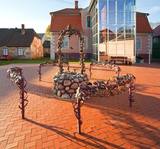 |
Befindet sich im alten Rathaus. Das größte Silberkunstwerk Baltikums (wiegt mehr als 30 kg) und andere dekorative Gegenstände sind zu sehen. Auf der Dachkammer ist die einmalige Malerei im Stil des Spätrokoko zu sehen. |
|
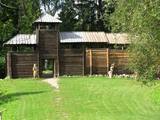 |
Kassinurme hills were formed during the last Ice Age, and an ancient stronghold and a sacred grove can be found in the hills. At the foot of the stronghold a stage has been built; a swing, tepees, a campfire place and a model of the stronghold are located in the forecourt. Nature, health and antiquities trails are located nearby. |
|


